Polyamory in the News
. . . by Alan M.


May 20, 2016

Thorntree Press, leading poly publisher, takes off


Three years ago I had my doubts when Eve Rickert and Franklin Veaux said they were going to start their own book-publishing company to bring out More Than Two, after dozens of publishers had rejected Franklin's proposal. How often does that work out?
But they've pulled it off big. They set up Thorntree Press, published More Than Two their own way keeping full control, marketed the book vigorously, found a distributor, and learned a lot. In the first a year and a half they sold more than 25,000 copies (in all formats) — amazing for new, self-published authors — and they just ordered a very large new printing.
That was the start. Thorntree Press now has nine books by various authors in publication, most of them poly related. Eve and Franklin have scheduled six more books for 2017; four of these will branch out to other relationship topics. They recently signed a bigger, better distributor to handle their books. Right now they're holed up in the woods sweating out another book of their own: Love More, Be Awesome. It won't be poly-specific; Franklin calls it "a kind of user’s guide for being a human being: tips and ideas for being awesome and living a life of compassion and kindness."

My impression is that Franklin is the mad visionary here and Eve is the pertinacious do-er who makes visions real. Before this venture, she had already been running her own science editing business (Talk Science To Me) on the edges of the book-publishing world.

They were just interviewed by Foreward Reviews magazine:


Polyamorously Yours... and Yours: Thorntree Press Redefines Relationships

By Howard Lovy

...The story of your founding is a familiar one for indie publishers. You sent your ideas to traditional publishers, who told you it couldn’t be done. So far, have the naysayers been right?

The idea for our first book, More Than Two, was shopped around to a large number of publishers and agents – about fifty in all. Many of them sent very similar replies, along the lines of, “We don’t see an interest in polyamory, and we don’t think a how-to book on this subject will sell, but if you’d like to submit a memoir, we’d love to publish that.”

We set up an indie publisher and did both books: the how-to and the memoir. The memoir [The Game Changer] has been modestly successful, but the how-to book has been a runaway hit, selling over 25,000 copies in its first eighteen months. Apparently the naysayers have been the exact opposite of right.

Apparently, millennials have rediscovered polyamory. It’s almost as if the ’60s never happened, though. Is the practice fundamentally different today than in previous generations?

Considerably so. Polyamory bears little resemblance to the “free love” movement of the 1960s.

Free love advocates talked about open sexuality, but often failed to acknowledge the realities: physical intimacy is, for most of us, the gateway to emotional intimacy. They didn’t really consider how to have multiple simultaneous committed romantic relationships.

Over the past couple of decades, the polyamory movement has grappled with exactly that question: Sex aside, what does it look like to have multiple romantic relationships? How is it possible to be in love with, and often be committed to, more than one person at a time? What relationship skills do we need to make it work? How can we relate to multiple romantic partners in ways that are healthy and that support positive, loving, long-lasting relationships? What does it mean to raise children and form families that are non-monogamous? How do the power dynamics work? Who does the laundry?

When we look at modern poly communities, which largely got their start in the early 1990s, we see a process of developing ways of relating and building healthy, dynamic relationships that go way, way beyond sex....

Don’t get us wrong, sex is fun and healthy and great, but you need more than sex to build a life. That’s what polyamory is about — building lives that just happen to involve more than two romantic partners.

Those of us who have been part of the polyamory movement for the past few decades have learned a lot of lessons and made a lot of mistakes. The millennial generation is, I think, the first generation that does not have to fight to try to build a new way of relating: Many of them are growing up in a world where polyamory is one choice among many, and there’s not a default assumption that everyone has to live the same way.

We think that’s amazing. We think the millennials are going to be an awesome generation. They are taking to polyamory naturally, and we they’re really going to show us how to do it well.

Stories From The Polycule is an INDIEFAB finalist. These are stories from real-life polyamorous relationships. What’s the biggest takeaway from this book?

There’s more than one “right” way to have a relationship. Families are different from each other. Different families can be totally different in form and function and the people in them can still be strong, vibrant, happy, and healthy.

Are there any upcoming titles you’re excited about?

We have two amazing books coming out this fall, Ask Me About Polyamory! The Best of Kimchi Cuddles  and  Purple Prose: Bisexuality in Britain.

Ask Me About Polyamory! is exciting because as a comic, it will be the most accessible introduction to polyamory on the market to date. The creator, Tikva Wolf, has a huge following for her Kimchi Cuddles webcomic, with over 15,000 Facebook followers and 300 supporters on Patreon, and the crowdfunding for her book was fully funded less than 48 hours after it launched. It’s a very different book than More Than Two, but we think it will easily be as successful.

Purple Prose is a big step for us because it’s the first book we’re doing that’s not focused on ethical nonmonogamy. We really want to expand our list to cover other topics in relationships and sexuality — we don’t want to get pigeonholed as only publishing poly books! Purple Prose is a step in that direction. It’s also an important book for us because — like Stories From the Polycule — it showcases many authors who are people of color, disabled, gender nonconforming.

Our 2017 and 2018 books are going to take us further with improving the diversity of topics we cover and writers we promote. We have books lined up on consent culture, breakups, reimagining classic romantic fairytales, intersectional nonmonogamy, and confronting birth and death within nontraditional families.

Nontraditional relationships are front-and-center in the news these days. Is this a good time to be Thorntree Press?

When we founded Thorntree Press, we wanted to amplify the voices of people who wanted to examine the polyamory (and more broadly, non-traditional relationship) movement. We seek out people who advocate values like empathy, compassion, communication, and respect, and we’re particularly interested in offering a platform to groups who traditionally have not had one.

Thorntree Press, for us, is an important part of that. Awareness of nontraditional relationships is skyrocketing. More and more people are realizing there’s more than one right way to live, and are looking for information about things like polyamory. We think this is a critical time in the development of polyamory, and we want to help create better awareness of how to make happy, healthy polyamorous relationships work.

This carries into other books beyond poly books. For example, almost no books on bisexuality exist — there isn’t even a BISAC subject category for bisexuality! The bookstore shelves are filled with gay and lesbian books, but there’s almost nothing for people who identify as bisexual — and that’s a lot of people! With Purple Prose, we’re hoping to change that.
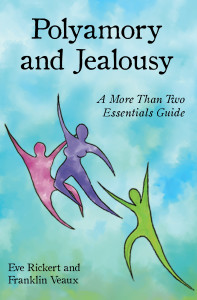
The original (May 12, 2016).


-----------------

Meanwhile, Eve writes us about "a bunch of things going on in Thorntree Press world":


Eli Sheff's book When Someone You Love Is Polyamorous: Understanding Poly People and Relationships was published last month. This is a 48-page, $5 booklet designed to explain polyamory to someone who doesn't know anything about it. The idea is that this is something you can give a friend or family member when coming out to them (or they can buy it for themselves if they're looking for answers).

Our transition to Independent Publishers Group (IPG) is now complete, meaning our books will get much broader access to bookstores, libraries, etc. (This also means that for Canadians, our books are all available at Chapters-Indigo. Finally.)

More Than Two has sold over 25,000 copies in all formats, and we've just ordered a third printing of 10,000 paperbacks (which is basically where your loan went — thank you!). We've sold rights in Korean, German and Italian, and are currently running a crowdfunding campaign for a Spanish edition with the help of some folks from Poliamor Madrid. (IPG is the largest distributor of Spanish-language books in the US, and has a distribution partner in Spain.) We've released some English-language perks for people who want to support the campaign but aren't interested in a Spanish-language edition.

Eli Sheff's Stories From the Polycule is up for two INDIEFAB awards with Foreword Reviews. It was also the first (and so far only) one of our books to get a Publishers Weekly review.

Ask Me About Polyamory: The Best of Kimchi Cuddles is available for pre-order, and Tikva will be signing advance copies at Atlanta Poly Weekend at the beginning of June. Signed copies are also available for pre-order from Malaprops in Asheville, NC.

There's a Goodreads giveaway running right now for When Someone You Love is Polyamorous. It closes May 26.

We have six books scheduled for 2017 — including new books from me & Franklin, Tikva and Louisa. Only two of those six, though, will be about polyamory or nonmonogamy.

I think that's everything. It's been a busy few months!


● Kitty Chambliss has posted a long interview with Franklin on her Loving Without Boundaries podcast: Part 1, Part 2 (May 19 and 25, 2016).

● It's a sign of More Than Two's reputation that people are attributing fake quotes to it to support whatever position they have. Eve is building a collection of false quotes from More Than Two, which should make fun reading. Be warned. . . .

[Permalink]

Labels: , , ,


February 12, 2016

The Washington Post follows up: "A therapist, a lawyer and a sex educator answer our questions about polyamory"


That nice Washington Post story yesterday? Maybe it did well (thanks, all of you who helped spread it on Facebook etc.!) — because this afternoon the writer followed it up with another. She used the same lede photo.

She chose the therapist, lawyer, and sex educator in the title well. They're Tamara Pincus, Diana Adams, and Franklin Veaux.


Clockwise, from top left: Rachel Ruvinsky, 22; Sam Brehm, 21; Bennett Marschner, 26; and Hannah Schott, 22. The group of friends carry on multiple relationships simultaneously. (Photo by Nikki Kahn/The Washington Post)

By Lisa Bonos

Polyamory: No, it’s not cheating. Or similar to polygamy. Or even having a few “side pieces.”

...I spent some time in December with four 20-somethings in the Washington area to learn what it’s like to be young and polyamorous. (You can read about them here.)

In the course of my reporting, I spoke to several experts on polyamory. Here are some of their views on who’s drawn to consensual non-monogamy and what types of challenges arise when it comes to raising a family or creating a life with multiple partners.

1. What types of people are drawn to polyamory?

Franklin Veaux, a sex educator and co-author of “More Than Two: A Practical Guide to Ethical Polyamory,” has five partners — and all of his partners have other partners. He notes that he knows people in their 20s up through their 80s who are in polyamorous relationships.

“In my experience,” Veaux said in a phone interview, “there’s a huge range of people drawn to polyamory. The only thing they have in common is that they don’t want monogamy.”

And they often have non-traditional ideas about relationships, he added. “There’s a lot overlap with polyamory and BDSM, polyamory and swinging.”

That doesn’t mean, however, that polyamorists are always casual about relationships; they take them very seriously. “It’s not for people who are afraid of relationships,” Veaux said, noting that that’s a common misconception about polyamory. “That would be like saying mountain-climbing is for people who are afraid of heights. If you’re scared of relationships, you’re certainly not going to do multiple relationships.”

2. Why is polyamory becoming more popular with young people?

Increasingly, sexuality is being understood as more of a spectrum than a gay-straight binary. In a 2015 YouGov survey, for example, more than half of millennials agreed that sexuality is a continuous scale. I asked Veaux whether this understanding of sexual fluidity could also mean that young people are more apt to view relationships as fluid and therefore be less focused on monogamy. “Absolutely,” he replied. “Millennials are growing up in a world where polyamory is a choice among many [types of relationships].”

“The fact that the gay and lesbian community has been so mainstream,” Veaux said, means that “people are more aware of the variety that’s out there, that there’s more than one way to have a relationship.”

When Veaux started getting into non-monogamy in the 1980s, “we didn’t have a language, we didn’t have a community, we didn’t have a way to find each other.”...

3. What about jealousy?

“If you’re an extremely jealous person, polyamory might not be for you,” says Tamara Pincus, a therapist in the Washington area who works with a lot of polyamorous clients and is poly herself.

It’s helpful for people to figure out what their jealousy is about, she advises, whether it’s stemming from a fear of being replaced or feelings of inadequacy; both responses can arise when multiple relationships are involved.

Pincus sometimes suggests coming up with “an after-care plan,” of what to do when someone comes back from a date, for how they might comfort a partner who’s jealous.

“People expect to be jealous,” Pincus adds. “I think people are more surprised when they’re not as jealous as they expect.”

Of course there are those who want to be polyamorous but the jealousy undermines the whole thing, Pincus says. “They’re not prepared for the amount of emotional work that’s it’s going to be.”...

4. How do you deal with co-parenting when more than two parents are involved?

Franklin Veaux doesn’t have children, but one of his partners has a daughter, who was 7 when they started dating and is 17 now. He doesn’t take a parenting role with the child. “I never wanted kids,” he says. All of his other partners are child-free.

When it comes to custody of kids, U.S. legal policy is structured around the two-person nuclear family and isn’t well-suited to protecting polyamorous families with three or four adults in children’s lives.

Still, Diana Adams, managing partner of Diana Adams Law & Mediation in New York, works with polyamorous individuals to come up with creative prenuptial, co-parenting and co-habitation agreements to give them “as much financial and legal stability as possible in a legal system that does not recognize their family form,” she says.

“I’ve seen many poly families create stable co-parenting relationships,” Adams notes. “It’s critical they don’t rush into that situation without professionals.”

The problems, she says, arise in such situations as when a couple with a child might have a girlfriend move in and it’s unclear: Is she a third parent or just a cohabiting friend? “Those kinds of muddled relationships are where the real problems lie,” Adams says, “both in co-parenting situations as well in sperm-donor agreements.”

Since polyamorous families don’t necessarily have legal rights, “you may be up against the proclivities of a specific judge” in a co-parenting or custody dispute, Adams notes. She tries to create contracts that a court would enforce, “but ultimately the judge would be looking at the best interest of the child as well as whatever agreement came before.”

5. Does the legalization of gay marriage open the door to plural marriage?

In Supreme Court Chief Justice John G. Roberts’s dissent in the court’s gay marriage decision, he posited that legalizing same-sex marriage could lead to next allowing polygamy. But none of the polyamorists I spoke to are rushing to advocate for it.

Plural marriage would be “helpful, but I don’t think it’ll happen anytime soon,” Veaux says. “It’s not something most poly people are pushing for.”

Veaux currently wears two rings, signifying his deep commitment to multiple partners, but he’s legally single. With the law allowing only two partners in a marriage, he doesn’t want to marry one person and put any one partner over another, he says.

“Now that we’ve achieved same-sex marriage there’s an awkward shift,” Adams says, an acknowledgement that heterosexual marriage between two partners “is not the only valid family form.”

“At this point,” Adams says, multi-partner marriage “seems like a far-off potential because there’s already so much backlash continuing from same-sex marriage.”


Here's the complete story (February 12, 2016).

----------------------------

I praised the people featured in yesterday's Post article for representing us so well. One of them was Bennett Marschner. Today he posted a comment. In case you missed it,


Hi! I'm the Bennett in the article. Thank you for saying such nice things, I was unnervingly aware that we were representing not just ourselves in those interviews. We definitely weren't poly wise at the start, but Rachel and I are coming up on three years now!

Ms. Bonos had a very tight deadline to meet and I'm sure editing for space in the magazine cut it down a bit. Before researching for the article, I believe she said she didn't really know anything about poly. Considering that, I think she did a great job on the article and a fantastic job approaching the subject respectfully and with an open mind!

The bit about youthful optimism that may crash and burn later was one part of the article we found puzzling, as when asked about the future, we all replied that poly was definitely going to be a part of our lives and identities going forward. I personally know more than a few older, more settled poly people – couples, triads, and at least one ... uh, quartet?

There were a few turns of phrase I wasn't thrilled about and there's a lot more to ALL of it than could be included in the article. It's been already been a long, amazing, and often difficult adventure and it's only just getting started and I'm actually still nervous about it even existing as a thing on the internet with my name attached to it....


[Permalink]

Labels: , ,


September 23, 2015

The Game Changer, Franklin's story of his poly life, is out today.


UPDATE April 2020: Recently some of Franklin Veaux's partners whose stories are told in The Game Changer have disputed those accounts and come forward with their own stories of relational harm in their connections with him.

----------------------

Franklin Veaux has had more influence on polyamory than probably anyone else in the last decade — first with his popular intro-to-poly website and his prolific blogging, and then with More Than Two, published a year ago with Eve Rickert as its co-author and deepener of ideas.

Franklin's stamp on the movement has been to spread recognition that poly relationships succeed when they put certain principles of ethics and autonomy dead center, even when this means sidelining couple privilege, one-sided rule-making, and efforts to maintain the "safety" of a primary couple at the expense of others.

Short version: ethics in relationships can be defined pretty exactly — as equal respect for everyone's agency and right to informed consent; setting your boundaries clearly in terms of your own self; and "Don't treat people as things"; as items to be used. Not even the people you don't know yet.

That last surely comes from Granny Weatherwax and her definition of sin in the Terry Pratchett novels: "And sin, young man, is when you treat people as things."1

The poly movement wasn't always as receptive to these severe insights as it is now. When Franklin faced up to a moral crisis and published the Proposed Secondary's Bill of Rights in 2003, the fury it aroused in the poly world was horrific. Twelve years later it's taken as received poly wisdom.

How did Franklin get to that key turning point in 2003?

Today is the publication date for his autobiography, The Game Changer: A memoir of disruptive love. If you assumed that the Game Changer is supposed to be Franklin, no, it's his wise partner "Amber": a fellow giraffe, who set him on his redirected path. No relationship, poly or otherwise, is proof against a game changer, nor should it try to be.

Franklin has started a 10-day book tour of the West Coast, then he and Eve will do a joint book tour in Europe for The Game Changer and More Than Two. The schedule.

-------------------------------

I've already posted Meg John Barker's long review of The Game Changer. Here are some more:

● In The Frisky, by Katie Klabusich (Sept. 14, 2015):


...A great read for anyone who’s ever felt slightly “off” or out of place — either with my brand of vague insecurity, or with an assuredness that more closely matches Veaux’s own determined approach to life and love. For me, it’s been more than just a pleasure read; when his More Than Two co-author and publicist Eve Rickert reached out to me this spring, I was navigating my first on-purpose poly relationship and getting the chance to figure out for real what I want and who I am. Being able to experience Veaux’s journey, missteps, early assumptions, and adjustments to how he approaches relationships has been invaluable.

“Amber was my giraffe. She was the first person I ever knew who really got me, understood me, saw me on a deep level,” Veaux writes. “Amber saw me. It’s impossible to express how transformative that was.

“The thing was, I was a giraffe too. And I had never believed there were other giraffes out there. Like Amber, I felt like I was living in a world of alligators. Meeting another giraffe … well, that was a very heady thing.”

...Poly people are definitely not the book’s sole audience; Veaux has plenty to offer monogamous folks as well. The emphasis on communication and consent in poly circles isn’t just for scheduling and logistics — both make relationships stronger and happier. I know, shocker, right?...


Read the whole review.


● By Louisa Leontiades:


Sometimes something happens in your life which upsets the world as you know it. For many of us in the polyamorous community, the first realisation that you can love many without cheating and in a long-term stable relationship, is such a revelation.

But one of the reasons polyamory is so powerful is that it not only upsets the biggest social norm of our time, but that it is a gift that keeps on surprising… pain, jealousy, break-ups and yes, the joy of loving many sends us on a never-ending journey of exploration of our innermost depths. Weaknesses and insecurities which may otherwise have remained hidden are exposed, and sometimes if we aren’t careful, exploited. The ‘secondary’s bill of rights’ sent the community reeling …and changed our lives....

Leaders in the polyamorous community today are those who demonstrate compassion, courage and integrity. But these things are born out of experience which – much of the time – we have to go through ourselves.

‘I hope we can learn from others’ experience.’ said Franklin. ‘Because whilst experience might be the best teacher, the price is really high. Someone has to make the mistakes, but not every single person does.’


Whole article (November 24, 2014).


● Powerful story by Rebecca Hiles: The Game Changer, AKA I Hate Franklin Veaux (June 16).


...I hate Franklin Veaux because he made me cry. Not just cry, he made me weep.

When Jon and I first started dating, I told him pretty explicitly that I wasn’t very good at monogamy. I told him all the things that could happen. All the ways I was going to break his heart. He was still good with it.... When we opened the relationship up, we didn’t have many rules. The basics of using protection and STI testing were our most important... but we only had one rule beyond that. Jon was my spouse, and I wouldn’t have any other spouse besides him.

But everything changed when I got [cancer].

I needed Kai, and I needed Jon and I needed them both to be equal and both to be my points of contact in case something went wrong. Kai was, for all intents and purposes, my second spouse. They were equal. Some people found it strange, or horrifying. They didn’t understand that even though I had been together with Kai longer, that I married Jon. They didn’t understand that my relationship with Jon (as a marriage) was no more or less important than my relationship with Kai.

I’m telling you this, because I need you to know where my brain is coming from when I am writing this review.... Sometimes you have to realize that breaking the rules of your relationships is what is going to save them....

If you are a person who believes strongly in hierarchy, this book is likely going to make you uncomfortable. It might even make you a little angry. I strongly suggest you keep reading. I strongly suggest that you find growth through the pain.... If this book makes you uncomfortable, makes you a little afraid I really, strongly suggest that you reflect on why that is....

Which brings me to how Franklin made me cry. In the book he wrote a sentence that resonated with me in a way that nothing else has in quite some time.

[Y]ou do not always get to have a comfortable relationship when you are in love with a dragonslayer.

With that quote, I was completely broken into a billion pieces because I identified so strongly with it. [The cancer-patient community often calls cancer "the dragon." —Ed.] I identified with being the dragonslayer. I immediately understood the heartbreak of being the dragonslayer, and watching someone love you, even when it’s hard. Even when it’s uncomfortable.

After reading that, I closed the book and threw it across the room. I was furious at Franklin for making me feel these feelings. I was angry at him for saying something that struck me that way. Angry at someone who has been an idol for me saying something that was so real and true and hit me in such a raw way. I was angry in much the same way that the people who were angry about the Secondary’s Bill of Rights were. But then I realized that I wasn’t angry, I was scared....


Read the whole article (June 16).


● By Elisabeth Sheff:


Reading The Game Changer was so thought provoking that it felt like having a deep and roving conversation with a very witty person about what it means to be truly authentic — only without the pressure to be clever yourself because half of it is happening inside your own head. This is a great read for anyone who has questioned the status quo or wondered what intriguing adventures wait on the road less traveled. Daring souls will appreciate Veaux’s frank wit and searing self-critique in this fascinating memoir of unruly love.


The whole review (June 12).


● By Jessica Burde of Polyamory on Purpose:


You know that “watching a train wreck in slow motion” feeling? I lost count of how often I got that reading this book. As someone whose been (more or less) involved in poly for over a decade now, I’ve made most of the easy mistakes. Franklin would start a new section with something like “and we decided this, and had no idea how we were setting ourselves up for disaster.” And I would already be mentally tracing the lines of disaster, shaking my head and thinking “Yup, I remember being that (naive/foolish/culturally brainwashed/oblivious).”

...In spite of the almost complete lack of surprise in any of the major “plot twists,” I had trouble putting the book down. As usual, Franklin has an engaging writing style, a way of working humor, self awareness, and bulls-eye insight into his narrative that makes for an engrossing read.

It seems that we, as a culture, understand that if we leave kids to teach themselves math or history or literature, few people will end up being good at those things. So we have developed formal systems of education to teach people, to help them become productive members of society. But we don’t teach them communication, compassion, forgiveness, empathy, or many other skills we need to become fully formed human beings. We leave kids to figure that stuff out on their own. The results are about what we might expect if we left them, say, to deduce the laws of algebra by themselves. The difference is that most of us need interpersonal skills a lot more than we need algebra.

Perhaps the most important thing I took away from The Game Changer is a new perspective on the poly approach to honesty and communication:

Self awareness is a prerequisite for open and honest communication. We can’t tell others the truth of our feelings and needs if we refuse to face them and admit them to ourselves.


The whole review (August 18).


● A review in Russian. Good luck using Google Translate — the book's title comes out as Mixing cards: memories of a devastating love.

● Franklin's February 2010 LiveJournal post that may have introduced the concept: Some thoughts on game-changers.


-------------------------------------------

1. The full passage, from Terry Pratchett's Carpe Jugulum. Granny the witch says,

'. . . And that's what your holy men discuss, is it?'
'Not usually. There is a very interesting debate raging at the moment about the nature of sin, for example.'
'And what do they think? Against it, are they?'
'It's not as simple as that. It's not a black and white issue. There are so many shades of grey.'
'Nope.'
'Pardon?'
'There's no greys, only white that's got grubby. I'm surprised you don't know that. And sin, young man, is when you treat people as things. Including yourself. That's what sin is.'
'It's a lot more complicated than that—'
'No. It ain't. When people say things are a lot more complicated than that, they means they're getting worried that they won't like the truth. People as things, that's where it starts.'
'Oh, I'm sure there are worse crimes—'
'But they starts with thinking about people as things...'

[Permalink]

Labels: ,


August 31, 2015

Stories from the Polycule and more


Meg John Barker, a senior lecturer in psychology at Open University in London, wrote a very substantial and thoughtful review of the two new poly books about to appear from Thorntree Press: The Game Changer by Franklin Veaux, publication date September 23 [Update: Some of Franklin's former partners have challenged his accounts as false], and Stories from the Polycule edited by Elisabeth Sheff, pub date October 15.

Meg John is a longtime queer and poly researcher and community organizer. They've agreed to let me reprint virtually all of the 3,000-word review here as a guest post. Thanks!


Polyamory book reviews: Useful ideas for all relationships

By Meg John Barker

...These books are particularly interesting given that the authors were previously responsible for two of the most important books on polyamory in recent years: probably the best self-help style book on polyamory currently available, and the most in-depth academic study of polyamorous families to date. The former is More Than Two by Franklin Veaux and Eve Rickert (the same title as Franklin’s successful blog). The latter is The Polyamorists Next Door by Elisabeth Sheff, who writes the Psychology Today column of the same name.

I found their latest outputs just as interesting. The Game Changer is an in-depth exploration of one person’s experience of shifting from a fairly hierarchical to more egalitarian polyamory. Stories from the Polycule is an accessible collection of all kinds of experiences of open non-monogamy. They provide a rich description of one person’s lived experience of polyamory, and a sense of the diversity of experiences that are possible within open non-monogamy.

This is important because many popular accounts of polyamory focus on rather similar narratives. As with many marginalised groups, poly people generally tell a public story that challenges common prejudices against them. So, for example, we often hear poly stories that contradict the stereotypes that polyamory is all about sex (by focusing on love), that it’s doomed to failure (by focusing on long term relationships), and that it’s weird (by focusing on the kinds of poly that are closest to monogamy).

This is understandable in a world where poly people are still stigmatised and afforded few legal rights. However, it means that the accounts we hear can be rather shallow, sterile, and samey. It was very refreshing – therefore – to read Franklin’s story of both the pains and pleasures of polyamory and alternatives to more conventional forms of poly; and in Elisabeth’s collection to read about the ups and downs of poly, the sexual side of relationships, and the multiplicity of possible constellations. These books offer exciting alternatives to the ‘one true way’ versions of polyamory that can be found in some poly communities, and the search for a universal explanation for why people are poly that are often found in academic work on the subject.

I’ll say a bit more about each book in turn, in particular on why I think they offer something to our understanding of all relationships, not just polyamorous ones.

The Game Changer

Franklin Veaux’s memoir gives us a more detailed account of something that he alluded to in More Than Two: His own journey towards the version of relationships that he’s living now, and the ways in which he – and others – got hurt along the way. One of the strengths of More Than Two is that it doesn’t present polyamory – or relationships in general – as easy: the book is clear about the many common mistakes that people make when opening up their relationships.


In The Game Changer Franklin describes how he got together with a partner early on who was more-or-less okay with his non-monogamy as long as he agreed to a number of contractual rules. These included her being his primary partner, her being able to veto at any time any of his partners she wasn’t happy with, and other partners not living with them or sleeping the night with him. Franklin agrees to this, thinking he is incredibly fortunate to find somebody who is open to him being non-monogamous at all. They both end up having other relationships, but these are obviously restricted in how close they can become.

Franklin and his partner stay together for years, but Franklin increasingly realises how much the relationship is rooted in fear: his partner’s insecurities about Franklin leaving her, and his own fear of never finding anybody else who will agree to his non-monogamy. He also realises how much people are being hurt by the arrangement: particularly the secondary partners who are vetoed without any explanation, or denied any possibility of developing their relationships.

I was fascinated at how similar this story was to the accounts of Simone de Beauvoir and Jean-Paul Sartre’s non-monogamous relationships, which I researched for a book chapter a year or so back. Apparently, towards the end of her life, Simone de Beauvoir said, of her relationship with Sartre:

If the two allies allow themselves only passing sexual liaisons then there is no difficulty, but it also means that the freedom they allow themselves is not worthy of the name. Sartre and I have been more ambitious; it has been our wish to experience ‘contingent loves’: but there is one question we have deliberately avoided: How would the third person feel about the arrangement? (de Beauvoir, cited in Rowley, 2006, p. 299-300)

It sounds like she is saying here that only a polyamorous style of non-monogamy (where people love other partners rather than just having sex with them) can be a fully free style of relationships, but that even then there is a big question over the how free the further partners beyond the ‘primary partnership’ can actually be (Simone and Jean-Paul used the distinction ‘essential/contingent’ rather than ‘primary/secondary’ to describe a similar thing).

In The Game Changer Franklin swiftly finds that limiting himself to ‘sex but not love’ won’t work – and manages to get his partner to agree to him being able to love other people. But for much of their relationship he still neglects to consider de Beauvoir’s question of how the third person feels about the arrangement. It’s only through talking with many of these secondaries that he finally begins to overtly challenge this: first by creating a ‘Secondary’s Bill of Rights’ on his blog – which infuriates many people in his local poly community – and eventually by divorcing his first partner and moving to a more egalitarian style of polyamory where partners don’t have control or veto over each others’ relationships.

As I was reading The Game Changer, this quote from Terry Pratchett’s Granny Weatherwax kept coming to my mind:

Sin … is when you treat people as things, including yourself, that’s what sin is.

This is the lesson that Franklin is learning throughout the events described in his memoir. And, of course, it is one that many of us have learnt – and continue to learn – through our adventures in relating – whether monogamous or non-monogamous, coupled or single, sexual or not.

Clearly it isn’t cool to treat secondaries as things: they end up getting badly hurt. But equally, Franklin discovers the problems inherent in him and his partner treating each other as things. She treats him as a thing by endeavouring to control him and make him be what she wants him to be, even though that isn’t what he is. And he does a similar thing back by constantly trying to get her to be somebody who is open to his form of non-monogamy. Finally – and perhaps most difficult to spot when we’re doing it – is treating ourselves as things. Again, both Franklin and his partner attempt to turn themselves into what their partner wants them to be, at the expense of their own freedom and authenticity. And we see how much this hurts both of them, and how it simply isn’t sustainable in the long term.

Of course, as many of the existentialists have pointed out, humans generally default to treating people as things (‘objectification’ if you want the technical term). We have a strong tendency both to try to make others into what we want them to be, and to try to make ourselves into what we think others want us to be. It is no criticism of Franklin and his partner – or of Simone and hers – that they fell into treating other people, and themselves, as things. And it is deeply impressive that they noticed they were doing it and made a life project of trying to find another way, and to live it as much as possible.

Reading it on this level, The Game Changer is not just a polyamory memoir, but a sustained meditation on the existential themes that affect us all. How do we navigate our relationships – of all kinds – in ways which balance our human desires for both freedom and safety? Can we find ways of relating in which we explicitly counter our tendency to treat others – and ourselves – as things? Can we develop a relationship ethics which moves away from a hierarchical model whereby we objectify people more the further away they are from us (friends more than lovers, secondaries more than primaries, strangers more than friends, etc.)? How can we be with our own fear and jealousy, boredom and restlessness, when they threaten to destroy our relationships? How can we be with the knowledge that relationships will change over time, and the insecurity inherent in that? And how can we relate with each other ethically when the cultural norms around us encourage a fear-based, hierarchical, way of relating?

Franklin’s memoir provides one set of answers to these questions, and Elisabeth Sheff’s Stories from the Polycule makes it clear that there are many other possible answers.

Stories from the Polycule

This collection presents 49 accounts from different poly people about their relationships and experiences. Divided into sections, the book includes stories about how people began being poly, different poly family constellations, experiences of having children in poly families – including several accounts from children themselves – how people navigate difficult times and breakups, stories of long-term poly relationships, and ‘racy bits’ about the sexual side of poly.


High points in the book for me included Maxine Green’s account of her appearance with two of her metamours on breakfast television – which I remember well, and which was a nice UK moment in a collection of otherwise mostly North American accounts. It was a shame not to see some of Maxine’s own poly comics included as they are some of my favourites (and a big inspiration behind my own forays into comics). Also it was great to see the likes of Andrea Zanin, Julie Fennell, and Elisabeth Sheff herself breaking down the distance between research and researched by including powerful accounts of their own relationship experiences in the book. Finally, as with Elisabeth’s previous book, this collection presents an important challenge to the common assumption that polyamorous parenting is somehow more questionable than monogamous parenting. As with the research on same-sex parents in the past, it is clear that there is no evidence to support the idea that poly parenting is in any way inferior.

As I mentioned earlier, the main strength of this book is that it gives a good sense of the diversity of polyamory: both the range of ways of doing openly non-monogamous relationships that people have developed, and the numerous different reasons that people have for pursuing them. This is helped by the inclusion of a number of comics in addition to the written stories, many of which illustrate this diversity beautifully. It was great to see a couple of the popular Kimchi Cuddles poly comics, along with this incredibly helpful cartoon from Kirstin Rohwer, which I’ve shared before:


Kirstin’s comic highlights the one limitation that I found with Stories from the Polycule, which – I think – could easily by rectified in a future book (Further Stories from the Polycule?) The book seemed to me to be rather focused on stories from relationships in the second couple of rows of Kirstin’s cartoon: people in open relationships, polyfidelitous relationships, and hierarchical versions of poly (such as the kinds of primary/secondary arrangements that Franklin describes). I felt that there were fewer stories representing egalitarian forms of polyamory and very few on solo poly or relationship anarchy.

Open non-monogamous relationships can be roughly divided into two forms, nicely illustrated in Franklin’s shift from one to the other in The Game Changer.

The first kind are those which seem to take the cultural norm of monogamy as a starting point, but chisel bits off it in order to create something that better fits the people concerned. For example, swinging and open relationships chisel off the rule about sexual fidelity; polyfidelity chisels off the rule about a relationship being between two people; hierarchical polyamory chisels off the rule about ‘forsaking all others’. However, these versions generally do accept the common assumptions that romantic relationships are more important than other kinds of relationships, and that some kinds of rules of engagement are necessary to protect the people concerned.

The second kind of openly non-monogamous relationships are those that endeavour to start from a different place than conventional monogamy: often a different set of assumptions about human beings and relationships. For example, they might assume that people are fundamentally free and independent; that nobody can belong to anybody else; that relationships inevitably change over time; that no form of relationship is inherently more important than any other (e.g. friends vs. lovers, sexual vs. non-sexual); and that relationships should be grounded on trust, communication and ongoing negotiation. Relationship anarchy is a form of open non-monogamy that explicitly starts from these kinds of assumptions. But we can see that the form of egalitarian polyamory Franklin ended up with has a similar foundation, as do many forms of solo poly.

Research seems to support the genuine existence of this kind of split. In his studies on open non-monogamy, Mark Finn has found that people roughly divide into those who seek ‘freedom-of-contract’ and those who seek ‘freedom-from-contract’. The first group are the ones who look to rules and contracts to make their relationships feel free-enough and safe-enough. The second group are those who feel that independence, trust and ongoing negotiation will be more likely to create the safe-enough and free-enough relationships that they’re looking for.

Both models can become rigid and brittle if they are held too tightly. A few years back I ran a workshop at a poly conference where we talked about the poly ‘crab bucket’. The crab bucket is another Terry Pratchett idea that I draw on in my writing about relationships. Pratchett pointed out that you don’t need a lid on a bucket of crabs. Crabs generally do not want to leave the security of the group, and if any crab does try to escape over the rim of the bucket, the other crabs will drag it back down.


I extend the metaphor to imagine what happens if a crab does escape the bucket. Being alone on the beach is not a comfortable or safe place to be, so most crabs will find another bucket to climb into. This is a good metaphor for the move from of monogamy to poly, or from one version of poly to another. We often tend to grab hold of a new set of norms rather tightly and insist that everyone else in our community follows them too.

At my workshop it quickly became apparent that people were familiar with two different kinds of poly crab buckets. The norms in one bucket were about dividing people into different kinds of relationships (e.g. primary and secondary), having rules and contracts (e.g. specific date-nights for each relationship, keeping certain kinds of activities sacred for certain relationships, etc.), and seeking ‘unicorns’ to create the perfect poly constellation (e.g. the ‘hot bi babe’ who would have to fall in love with both members of a heterosexual couple).

In the other bucket, the norms were more about controlling certain forms of emotional expression (e.g. it not being acceptable to express jealousy or insecurity), insisting that people adhere to the same model of non-monogamy even if it doesn’t feel comfortable to them (a kind of poly-er than thou attitude), and sometimes imposing a rhetoric of equality on what actually feels rather hierarchical (e.g. people stating that all their partners are equal whilst spending a lot more time with one than another, or saying that they have just ‘changed their relationship’ in what feels a lot like a break-up).

Many of these issues with the second crab bucket stem from failing to recognise how difficult it is to completely step outside of culture. Whilst – as we’ve seen – there are many good reasons to try to find new ways of relating, it probably isn’t possible to completely escape the models that surround us in wider society. Also, we risk becoming just as restrictive and controlling as rules-based models can be if we don’t recognise our tendency to create new crab buckets, and if we fail to examine our own models with the same critical eyes with which we examine others’.

Obviously this division into two forms of open non-monogamy is an over-simplification, and – as with all binaries – it can usefully be challenged. Arguably it should be more of a continuum from the first to the second form of non-monogamy than two separate boxes. And there may be relationships which don’t even fit on that spectrum at all. As I’ve written about elsewhere, there are also big issues with the monogamy / non-monogamy binary. There are monogamous models that look more like the freedom-from-contract way of relating, just as there are non-monogamous models that are very rules-based. It would be more accurate to view relationships on a number of different dimensions rather than attempting to come up with such hard-and-fast divisions.

Going back to Stories from the Polycule, I would love to see a further book that included as many accounts from egalitarian and solo poly people, relationship anarchists, and others exploring these kinds of models, as accounts from the more open-relationship / hierarchical-poly end of the spectrum. However, for now, Stories from the Polycule remains a very helpful addition to the poly literature indeed.

-----------------------------------------

Here's the original article on Barker's site Rewriting the Rules (August 17, 2015).


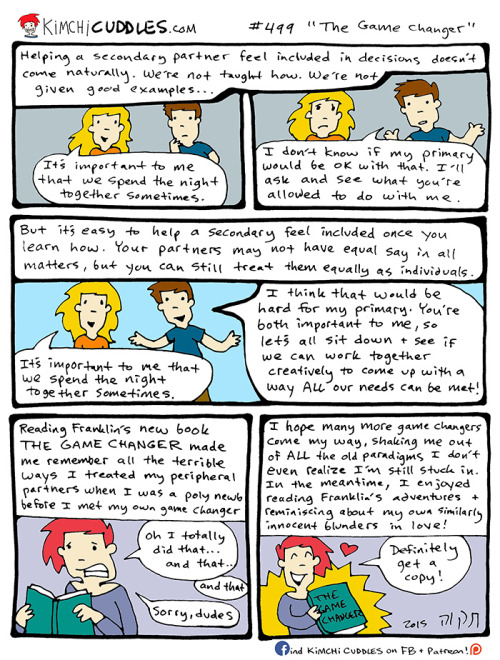
P.S.: Kimchi Cuddles also just reviewed The Game Changer, as follows:


---------------------------

UPDATE April 2020: Recently some of Franklin Veaux's partners whose stories are told in The Game Changer have disputed those accounts and come forward with their own stories of relational harm in their connections with him.

[Permalink]

Labels: ,


May 1, 2015

Two new poly books out today


The best thing to happen to poly book publishing since Janet Hardy's Greenery Press (which brought out her Ethical Slut in 1997) is Eve Rickert and Franklin Veaux's Thorntree Press. They founded it in 2013 to publish their hit More Than Two after established publishers weren't willing to do it right. They use crowdfunding for capital, based on their reputation, and our donations have returned good value indeed for building and deepening the polyamory movement.

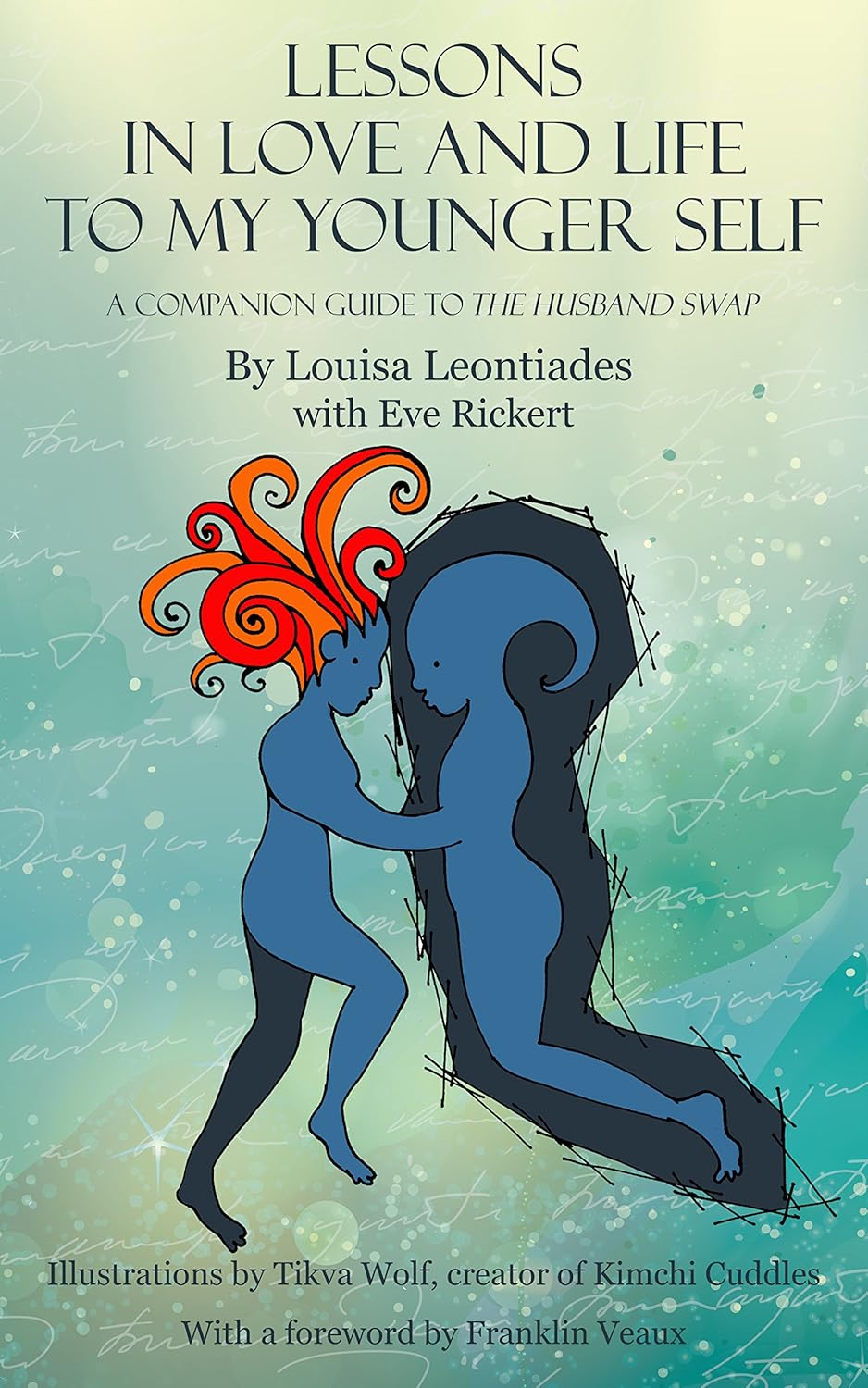
Today is the publication date for their next two books: the revised and improved second edition of The Husband Swap: A true story of unconventional love, Louisa Leontiades's tumultuous cautionary tale of the quad that brought her to poly, and its new companion e-book Lessons in Love and Life to My Younger Self: A Companion Guide to The Husband Swap. (There's an interview with Leontiades today on the website of The Independent in the U.K.)

They want publicity help today. This is from an email they sent to the 368 supporters of their 2015 Indiegogo campaign:

_____________________________________


Two Thorntree books go on sale today!

Help us support Louisa Leontiades by telling your friends.

Thanks to your support, our first two 2015 Thorntree Press books go on sale today: The Husband Swap and Lessons in Love and Life to My Younger Self, both by Louisa Leontiades. The Husband Swap features a foreword by Noel Figart, blogger at The Polyamorous Misanthrope, and Lessons was illustrated by Tikva Wolf, creator of Kimchi Cuddles, with a foreword by Franklin Veaux (and substantively edited by Eve Rickert).

We need your help today giving these books a boost! The first few days after a book goes on sale are always critical, so make sure your friends know about these books by sharing the links on your social media feeds:
...Thank you for all your support!
Sneak peek! Stories From the Polycule

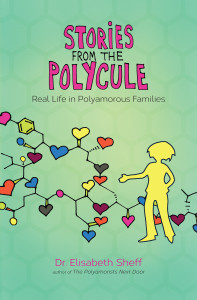
We're excited to have just signed off the front cover of Stories From the Polycule: Real Life in Polyamorous Families by Dr. Elisabeth Sheff, due out October 15. The cover features artwork by Tikva Wolf and a design by Val Heimpel. We'll be sending out pre-order information soon!

And speaking of covers: Check out Franklin Veaux's recent blog post about the cover design for The Game Changer.
_____________________________________

● Around the same time Stories from the Polycule comes out in October, they will also publish a small e-book by Sheff: Coming Out Poly: A Handbook for Family and Friends. "The book will also be available as a printable PDF pamphlet, perfect for handing out at the end of those emotional conversations."

● Franklin Veaux's memoir The Game Changer is finished and has a publication date of September 23.

● The audiobook version of More Than Two should be available on Audible, Amazon and iTunes within a week or so.

● They've issued a call for proposals for their 2016 and 2017 book offerings.

Eve notes,


We're not just a poly publisher! We're publishing other titles that approach sex, relationships, BDSM, etc., from a non-mainstream and rational perspective. In spring 2016 we'll be publishing our first non-poly-specific book, a BDSM memoir by Emily Bingham. We're hoping to expand our list to include a wider diversity of titles in the future.


[Permalink]

Labels: , ,


February 24, 2015

At the Poly Living con: Addressing abuse in the poly community


I'm home from Loving More's Poly Living conference in Philadelphia. Cons often develop an informal theme, not necessarily the one on the cover of the program. At Poly Living this year, the theme that emerged was abuse in poly relationships and how the community should respond.

The theme was set by the brilliant keynote speech and workshop presentations by Franklin Veaux and Eve Rickert, authors of the turning-point poly book More Than Two. They were onstage for a total of 3½ hours during the weekend and, as usual, held their audiences every minute.

"So there was a time, long ago, when I had this naive idea that polyamorous relationships were less likely to be abusive than monogamous relationships," Franklin said in his talk at the opening on Friday night. "Isolating a person is one of the hallmarks of abuse — so I thought, well, if you’ve got more people in a relationship, it’s harder to isolate people, right? You have more eyes on a potential problem, right?"

Against this happy effect, he said he's come to realize, there is a dark countereffect. Because abusers are often influential and charismatic, and because groupthink is one of the commonest bugs of human nature, an abuser can sway an entire group against a person he or she is mistreating, belittling, controlling, or gaslighting. (Gaslighting: Sabotaging a person's confidence in their own perceptions and memories.) This can make abuse in a poly situation much more encompassing and difficult to escape.

That was only part of Franklin's keynote; it was titled "Telling Our Stories, Changing the World." But the theme kept recurring. Since the mid-1990s, he said, "I've watched the poly community grow and change around me into this incredibly strong, vibrant thing it is now." But that strength and confidence ought to give us the courage to tackle dark sides of poly openly. For all our successes, he said, "what we have not done in our community is come to terms with the possibilities of abuse in our community. It is a mistake to think we are any more immune to abusive relationships than other relationship models." In fact, there is no research (yet) on this question at all.

The next morning, Eve and Franklin went into greater depth in their 90-minute workshop "Abuse in Poly Dynamics." It was packed. Here are Eve's 29 powerpoint slides, which are unfortunately brief (and slides 19–21 should be relabeled "Questionable Poly Advice" to match what she said about them). The discussion that followed was also productive, with many in the audience offering insights from personal experience, and psychology professionals in the audience filling in gaps.

Then on Sunday they presented "Putting the Ethics in Ethical Non-Monogamy" (a new updated version), broadening their earlier topics into wider, more general principles for defining and living the good poly life. And life in general. This too was crowded. Closing line: "Now that poly is surfacing in the world and taking off, we are at a point where we have to be clear about our ethics and values as a community, if the community is to survive and thrive."

-----------------------------

Later they posted,


As part of our presentation on abuse in polyamorous relationships, we talked about ways communities can cultivate values that are resilient [against] beliefs that lead to abuse. One of these is to internalize and promote the Relationship Bill of Rights. We've finally made the Bill of Rights available in full on the More Than Two website: www.morethantwo.com/relationshipbillofrights.html.


-----------------------------

Of course lots more went on at Poly Living all weekend. Four simultaneous tracks of classes/workshops ran all day, so you had to miss 3/4 of them — from coming out poly, to practicing vulnerability, to transitioning a relationship (when the black-and-white model of traditional breakups doesn't apply), jealousy management, a roundtable on poly activism, gender explorations, applying faith principles to decision-making, poly parenting, "Creating a 'New Culture' Based on Love and Freedom," and more. Total attendance was 209 people.

The evening after the conference, Loving More hosted an informal social gathering for Polyamory Leadership Network members, featuring get-to-know-each-other games. The PLN, by the way, defines poly "leaders" simply as "people who do cool things without waiting for permission." Is that you? You can read more and maybe send in an application.

------------------------------

Much of what Franklin and Eve discussed plays off Franklin's article a couple weeks ago on the MoreThanTwo site, Some thoughts on community and abuse. Excerpts (with my highlighting):


I realize [the topic] is a bit of a downer, and it’s not a lot of fun to talk about. Most of the poly community is awesome, and polyamory itself is wonderful and rewarding.

But I believe the community — by which I mean all the folks who are interested in polyamory and who get together to talk about this multiple relationship thing that we do — is at a crossroads. I’ve made no secret of the fact that I am not impressed with the way the organized BDSM community walks the walk when it comes to abuse. It certainly talks the talk about consent, safety, and respect, but in more than sixty years I don’t think it’s managed to turn that talk into a meaningful culture of consent.

...Right now I think the poly community has come to a place where we can either content ourselves with talking about respect and consent the way the BDSM community has, or we can work to make it a cornerstone of the social groups we create. I look at the kink scene and the path it’s taken, and I’m afraid. I don’t want the poly scene to become like that.

...Dealing with people who abuse is hard. It’s hard to stand up and speak out when you see something happening in your community that’s not okay, but that doesn’t involve you directly. It’s hard to get involved. It’s hard to tell someone, “Look, you’re not welcome in this space because you did that thing you did.”

And hard as that is, it’s only the start.

...The thing we don’t like to admit is that people who abuse are not necessarily evil. They’re not necessarily bad people. If you ask someone, “What makes a person abuse?” you will hear a lot of answers like “some people are just monsters.” That black-and-white, Marvel Comics caricature of what “an abuser” looks like helps nobody. Often, people who abuse are friends. Often, people who abuse are themselves hurting. Often, people who abuse genuinely do have good things about them. Often, they’re not committing physical violence, and the abuse is hard to spot.

See, here’s the thing. Abusers often sincerely believe themselves to be victims.

...Every person who commits abuse that I’ve ever met, without exception, is someone who is in a lot of pain. They feel that the abuse they do isn’t abuse — it’s a reasonable and natural response to the pain they’re in.

As people working in domestic violence prevention will tell you, abuse is about power and control. Lots and lots and lots of people, abusers and non-abusers alike, believe that if your partner does or says something and it makes you feel uncomfortable, threatened, jealous, or hurt, it’s okay for you to control them in order to deal with your feelings.

Look around. This idea has a lot of social currency.... The idea that if you feel something bad, it means someone else is doing something wrong and you should be able to make them stop doing it … well, that’s the root of all abuse.

[Not quite all. Franklin pointed out during the weekend that true predators do exist: psychopaths born without a conscience (often estimated at 1% to 4% of the population), who camouflage themselves in the larger mix.]

And people who abuse genuinely feel that if they tell a partner to do something and the partner doesn’t do it, they’re the ones being abused.

There’s an essay that sums this up brilliantly at The Community Response to Abuse:

“I was victimized by acts of control” is not the same as “I was victimized by the other person’s resistance to my control.”

Because a person who abuses is in genuine pain, and genuinely feels victimized, and sincerely cannot distinguish between “victimized by someone else’s control” and “victimized because I can’t control someone else,” it’s really, really hard to show these folks why their actions are wrong.

...In order to crack the problem of abuse, you have to cut all the way down to why we think it’s okay to control other people, and that’s extremely difficult. Look at all the people who agree with this idea! Look at how many social messages say that if someone does something that makes us uncomfortable, the best way to handle it is to control that person! Every social message we’re confronted with reinforces this idea.

So people who abuse aren’t (necessarily) monsters. They’re just like us. They’re hurting. And that presents one hell of a problem — one that we need to be able to talk about, and get a handle on, if we are to make safe spaces for survivors of abuse.

Yes, we need to be willing to step up when we see abuse.... Our first priority needs to be to protect and make safe spaces for survivors, to believe survivors, and to support survivors.

But if that’s all we do, if we think it stops there, we can end up perpetuating the cycle....

That’s not good enough.

Survivors of abuse need support. Abusers also need support. They need a different kind of support, though. They need someone to hold them accountable. They need someone to challenge their feelings of entitlement to control. They need someone to call them on their bullshit. And even if, for whatever reason, we can’t get through to them, we still need to work to change the cultural idea that controlling others because you’re hurting is okay.

...It’s not enough to cast out the person who abuses. That often does need to happen, don’t get me wrong. But that’s the beginning of accountability, not the end.

I’m not sure what the rest of the path to accountability looks like. But I really, really want to learn. And I really hope that other people in the poly community want to learn, too. I’m asking for a lot. I get that. But we need to be able to do this.

The cycle has to stop.


Really, go read the whole article (Feb. 10, 2015). He asks ask for your thoughts and input there.

● Here is the article that he references midstream: The Community Response to Abuse, by Shea Emma Fett (Jan. 30, 2015). This too is well worth your time.

● That post was a followup to Fett's Abuse in Polyamorous Relationships, including six Poly Traps (Nov. 22, 2014).

● Here are Eve's Resources on abuse in polyamorous relationships that grew out of the weekend. See the interesting comment there, by Liz, that women and men may abuse in similar numbers, but that this is not visible because men are more able to inflict obvious injury when aggressors, and are more ashamed to admit they are being abused when victims.

● Also helping to prompt this discussion was Cunning Minx's Polyamory Weekly podcast Episode 418, Emotional Abuse in Polyamorous Relationships (Jan. 23, 2015):


An incredibly difficult topic to deal with; this episode has been months in the making....

Shannon Perez-Darby, Youth Services Program Manager for The Northwest Network of Bisexual, Trans, Lesbian & Gay Survivors of Abuse, shares her advice on how to recognize abuse of all kinds and how to respond when you or someone you love might be surviving emotional abuse.


● There's now a hashtag: #AbuseInPoly

● Added April 2015: Dawn Davidson's connection of links, with commentary: Abuse in (poly) relationships: A link roundup.

[Permalink]

Labels: , , , , , ,