Polyamory in the News
. . . by Alan M.


April 7, 2016

"Polyamory commands intimacy, not just a fling." And, how to steer our bandwagon?


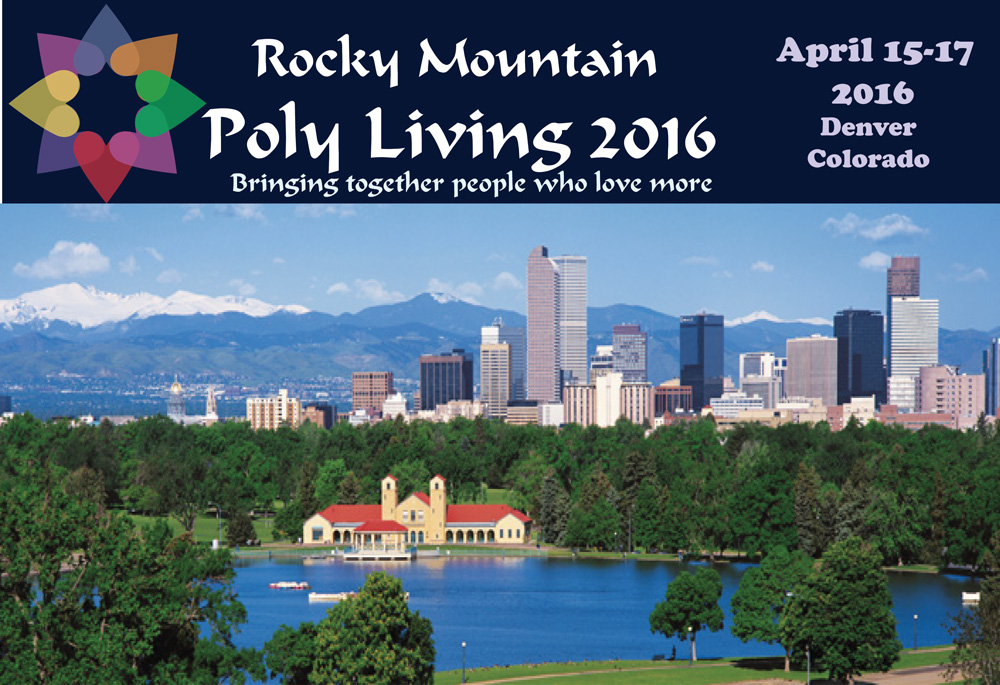
I'm writing my keynote speech that will kick off the Rocky Mountain Poly Living convention in Denver a week from tomorrow, on April 15. It will be about where the poly movement is heading, now that large swaths of the public are hearing about the concept favorably and many seem eager to try it. Perhaps too eager, knowing too little and bringing wrong assumptions.

The multi-love bandwagon that we worked for years to barely budge is gaining speed and beginning to outrun us. Is it rolling where we intended? Where, and how, should we try to steer it? I'm wrestling with the talk and I'd like your thoughts.

Please don't wade into the definition-of-polyamory swamp. What course corrections do you think the movement needs? Post in the comments below or write me at alan7388 (at) gmail.com. Tell me if it's OK to quote you by name in the talk, which will go online.

-------------------------------

Here's one person with strong thoughts that I mostly agree with, writing at Luna Luna magazine a couple days ago:


Polyamory commands intimacy, not just a fling

Elias Goldensky, 'Portrait of Three Women,' ca. 1915
By Ghia Vitale

...And suddenly, the mainstream dating world knows about polyamory.

...One of my biggest hang-ups about poly dating is the same issue other experienced poly people struggle with: the risk of becoming collateral damage in someone else’s quest for self-discovery, novelty, freedom, and most importantly, love. A recent spike in popularity has saturated the poly community with widespread interest.... Many newbies embark upon their poly journey with pure intentions; others mistake our permanent lifestyle for whatever they wish would fulfill their temporary and misguided desires.

How do I know their desires are misguided? I know because I’ve been directly implicated in these personal quests for self-fulfillment that end in nothing except breakups.

...While people are more than happy to enjoy my company as a fling, the idea of having multiple significant others that are actually significant is beyond most people’s comprehension, and it seeps through their behavior. Once I let them know there’s zero chance of a monogamous future happening (or even a monogamish one), the tone of our interaction changes drastically. All of the sudden, our relationship is no longer headed in any kind of committal direction and I lose my viability as a “serious” partner.... Don’t get me wrong; I’m all about free love and I believe each relationship being a unique expression of love. But even though we’ll both claim we want poly relationships, I’m the only person who means it. What they actually mean is that they want to indulge in multiple relationships at once without strings attached. That’s fine, but that’s not polyamory.

It’s always different variations of the same scenario: I meet someone who claims to be poly-curious, poly-friendly, or “open to being with a poly partner.” Then they realize they’re not as poly as they thought they were, that they just wanted to date around and explore before meeting a monogamous partner. Whether or not I consented to [that] never mattered, so I’ve learned how to recognize [early] the unique smell of this trainwreck smoke....

Even educating these people about poly doesn’t seem to make them go back into the hookup culture that better suits their yearnings.

Polyamory is about maintaining multiple relationships, not just the freedom to have as many flings. Too many people enter polyamory with the “playing the field” mindset.... They only see polyamory as a situational means to their temporary ends. Yes, polyamory absolves you from having to choose 1 person over another, but there’s so much more to it than that. Polyamory is far more about building and maintaining connections than it is about drive-by romances and hooking up....


The whole article (April 4, 2016).

My thoughts? You can certainly be poly and be looking for flings. But polyamory is not the word for Tinder swipes or old-fashioned dating around, as too much of the wider world is assuming. It's not even the same as open relationships, though there's a lot of overlap. Polyamory involves something more: loving relationships (-amory) that encompass more than two people where there's at least an assumption of respect and concern for everyone all around. Even if some of you have never met, or maybe even dislike each other. "Polyamory" implies a recognition that "We're all in this together."

That feeling may be enthusiastic or minimalist, but it's there. The broader categories of "open relationships" or "consensual non-monogamy" or "dating around" do not carry that implication.

Why does this matter? Because if, as the word goes more public, polyamory comes to mean random hookup culture or ordinary dating the field and this goes unchallenged, we will no longer have a word for our great concept, or even a way to find each other.

Thoughts?

The Poly Living conferences are run by the Loving More nonprofit, the closest thing this sprawling movement has to a central organization. Ideas at these conventions matter. Come help steer the bandwagon.

[Permalink]

Labels: , , ,


February 24, 2015

At the Poly Living con: Addressing abuse in the poly community


I'm home from Loving More's Poly Living conference in Philadelphia. Cons often develop an informal theme, not necessarily the one on the cover of the program. At Poly Living this year, the theme that emerged was abuse in poly relationships and how the community should respond.

The theme was set by the brilliant keynote speech and workshop presentations by Franklin Veaux and Eve Rickert, authors of the turning-point poly book More Than Two. They were onstage for a total of 3½ hours during the weekend and, as usual, held their audiences every minute.

"So there was a time, long ago, when I had this naive idea that polyamorous relationships were less likely to be abusive than monogamous relationships," Franklin said in his talk at the opening on Friday night. "Isolating a person is one of the hallmarks of abuse — so I thought, well, if you’ve got more people in a relationship, it’s harder to isolate people, right? You have more eyes on a potential problem, right?"

Against this happy effect, he said he's come to realize, there is a dark countereffect. Because abusers are often influential and charismatic, and because groupthink is one of the commonest bugs of human nature, an abuser can sway an entire group against a person he or she is mistreating, belittling, controlling, or gaslighting. (Gaslighting: Sabotaging a person's confidence in their own perceptions and memories.) This can make abuse in a poly situation much more encompassing and difficult to escape.

That was only part of Franklin's keynote; it was titled "Telling Our Stories, Changing the World." But the theme kept recurring. Since the mid-1990s, he said, "I've watched the poly community grow and change around me into this incredibly strong, vibrant thing it is now." But that strength and confidence ought to give us the courage to tackle dark sides of poly openly. For all our successes, he said, "what we have not done in our community is come to terms with the possibilities of abuse in our community. It is a mistake to think we are any more immune to abusive relationships than other relationship models." In fact, there is no research (yet) on this question at all.

The next morning, Eve and Franklin went into greater depth in their 90-minute workshop "Abuse in Poly Dynamics." It was packed. Here are Eve's 29 powerpoint slides, which are unfortunately brief (and slides 19–21 should be relabeled "Questionable Poly Advice" to match what she said about them). The discussion that followed was also productive, with many in the audience offering insights from personal experience, and psychology professionals in the audience filling in gaps.

Then on Sunday they presented "Putting the Ethics in Ethical Non-Monogamy" (a new updated version), broadening their earlier topics into wider, more general principles for defining and living the good poly life. And life in general. This too was crowded. Closing line: "Now that poly is surfacing in the world and taking off, we are at a point where we have to be clear about our ethics and values as a community, if the community is to survive and thrive."

-----------------------------

Later they posted,


As part of our presentation on abuse in polyamorous relationships, we talked about ways communities can cultivate values that are resilient [against] beliefs that lead to abuse. One of these is to internalize and promote the Relationship Bill of Rights. We've finally made the Bill of Rights available in full on the More Than Two website: www.morethantwo.com/relationshipbillofrights.html.


-----------------------------

Of course lots more went on at Poly Living all weekend. Four simultaneous tracks of classes/workshops ran all day, so you had to miss 3/4 of them — from coming out poly, to practicing vulnerability, to transitioning a relationship (when the black-and-white model of traditional breakups doesn't apply), jealousy management, a roundtable on poly activism, gender explorations, applying faith principles to decision-making, poly parenting, "Creating a 'New Culture' Based on Love and Freedom," and more. Total attendance was 209 people.

The evening after the conference, Loving More hosted an informal social gathering for Polyamory Leadership Network members, featuring get-to-know-each-other games. The PLN, by the way, defines poly "leaders" simply as "people who do cool things without waiting for permission." Is that you? You can read more and maybe send in an application.

------------------------------

Much of what Franklin and Eve discussed plays off Franklin's article a couple weeks ago on the MoreThanTwo site, Some thoughts on community and abuse. Excerpts (with my highlighting):


I realize [the topic] is a bit of a downer, and it’s not a lot of fun to talk about. Most of the poly community is awesome, and polyamory itself is wonderful and rewarding.

But I believe the community — by which I mean all the folks who are interested in polyamory and who get together to talk about this multiple relationship thing that we do — is at a crossroads. I’ve made no secret of the fact that I am not impressed with the way the organized BDSM community walks the walk when it comes to abuse. It certainly talks the talk about consent, safety, and respect, but in more than sixty years I don’t think it’s managed to turn that talk into a meaningful culture of consent.

...Right now I think the poly community has come to a place where we can either content ourselves with talking about respect and consent the way the BDSM community has, or we can work to make it a cornerstone of the social groups we create. I look at the kink scene and the path it’s taken, and I’m afraid. I don’t want the poly scene to become like that.

...Dealing with people who abuse is hard. It’s hard to stand up and speak out when you see something happening in your community that’s not okay, but that doesn’t involve you directly. It’s hard to get involved. It’s hard to tell someone, “Look, you’re not welcome in this space because you did that thing you did.”

And hard as that is, it’s only the start.

...The thing we don’t like to admit is that people who abuse are not necessarily evil. They’re not necessarily bad people. If you ask someone, “What makes a person abuse?” you will hear a lot of answers like “some people are just monsters.” That black-and-white, Marvel Comics caricature of what “an abuser” looks like helps nobody. Often, people who abuse are friends. Often, people who abuse are themselves hurting. Often, people who abuse genuinely do have good things about them. Often, they’re not committing physical violence, and the abuse is hard to spot.

See, here’s the thing. Abusers often sincerely believe themselves to be victims.

...Every person who commits abuse that I’ve ever met, without exception, is someone who is in a lot of pain. They feel that the abuse they do isn’t abuse — it’s a reasonable and natural response to the pain they’re in.

As people working in domestic violence prevention will tell you, abuse is about power and control. Lots and lots and lots of people, abusers and non-abusers alike, believe that if your partner does or says something and it makes you feel uncomfortable, threatened, jealous, or hurt, it’s okay for you to control them in order to deal with your feelings.

Look around. This idea has a lot of social currency.... The idea that if you feel something bad, it means someone else is doing something wrong and you should be able to make them stop doing it … well, that’s the root of all abuse.

[Not quite all. Franklin pointed out during the weekend that true predators do exist: psychopaths born without a conscience (often estimated at 1% to 4% of the population), who camouflage themselves in the larger mix.]

And people who abuse genuinely feel that if they tell a partner to do something and the partner doesn’t do it, they’re the ones being abused.

There’s an essay that sums this up brilliantly at The Community Response to Abuse:

“I was victimized by acts of control” is not the same as “I was victimized by the other person’s resistance to my control.”

Because a person who abuses is in genuine pain, and genuinely feels victimized, and sincerely cannot distinguish between “victimized by someone else’s control” and “victimized because I can’t control someone else,” it’s really, really hard to show these folks why their actions are wrong.

...In order to crack the problem of abuse, you have to cut all the way down to why we think it’s okay to control other people, and that’s extremely difficult. Look at all the people who agree with this idea! Look at how many social messages say that if someone does something that makes us uncomfortable, the best way to handle it is to control that person! Every social message we’re confronted with reinforces this idea.

So people who abuse aren’t (necessarily) monsters. They’re just like us. They’re hurting. And that presents one hell of a problem — one that we need to be able to talk about, and get a handle on, if we are to make safe spaces for survivors of abuse.

Yes, we need to be willing to step up when we see abuse.... Our first priority needs to be to protect and make safe spaces for survivors, to believe survivors, and to support survivors.

But if that’s all we do, if we think it stops there, we can end up perpetuating the cycle....

That’s not good enough.

Survivors of abuse need support. Abusers also need support. They need a different kind of support, though. They need someone to hold them accountable. They need someone to challenge their feelings of entitlement to control. They need someone to call them on their bullshit. And even if, for whatever reason, we can’t get through to them, we still need to work to change the cultural idea that controlling others because you’re hurting is okay.

...It’s not enough to cast out the person who abuses. That often does need to happen, don’t get me wrong. But that’s the beginning of accountability, not the end.

I’m not sure what the rest of the path to accountability looks like. But I really, really want to learn. And I really hope that other people in the poly community want to learn, too. I’m asking for a lot. I get that. But we need to be able to do this.

The cycle has to stop.


Really, go read the whole article (Feb. 10, 2015). He asks ask for your thoughts and input there.

● Here is the article that he references midstream: The Community Response to Abuse, by Shea Emma Fett (Jan. 30, 2015). This too is well worth your time.

● That post was a followup to Fett's Abuse in Polyamorous Relationships, including six Poly Traps (Nov. 22, 2014).

● Here are Eve's Resources on abuse in polyamorous relationships that grew out of the weekend. See the interesting comment there, by Liz, that women and men may abuse in similar numbers, but that this is not visible because men are more able to inflict obvious injury when aggressors, and are more ashamed to admit they are being abused when victims.

● Also helping to prompt this discussion was Cunning Minx's Polyamory Weekly podcast Episode 418, Emotional Abuse in Polyamorous Relationships (Jan. 23, 2015):


An incredibly difficult topic to deal with; this episode has been months in the making....

Shannon Perez-Darby, Youth Services Program Manager for The Northwest Network of Bisexual, Trans, Lesbian & Gay Survivors of Abuse, shares her advice on how to recognize abuse of all kinds and how to respond when you or someone you love might be surviving emotional abuse.


● There's now a hashtag: #AbuseInPoly

● Added April 2015: Dawn Davidson's connection of links, with commentary: Abuse in (poly) relationships: A link roundup.

[Permalink]

Labels: , , , , , ,


February 23, 2013

One-hour poly documentary airs
March 5 on Oprah Winfrey Network


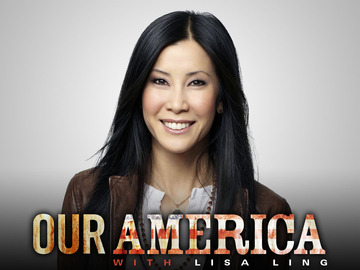
Our America with Lisa Ling

Oprah Winfrey's people have been sniffing around the edges of the poly community for years, but they never did a show, and they were apparently working under an edict not to allow the word "polyamory" on the air if they did. I wondered why? Too Greeky-Latiny? Too scandalous? Would it be too much like an endorsement to call it by its real name?

That's water under the bridge now. Last August, the Oprah Winfrey Network's "Our America with Lisa Ling" contacted Robyn Trask, director of the Loving More nonprofit, about doing a show on poly people. Trask checked out their previous handlings of alt-sex topics, found them good, and agreed to help them locate people.

The resulting one-hour show is called "I Love You & You...& You." It will air Tuesday March 5th (moved up from the 12th) at 10 p.m. Eastern Time, 9 Central. It will re-air two hours later, and again on subsequent dates. Schedule. Channel finder.

The program will feature three polyfamilies: Trask and her life partner Jesus V. Garcia and their partners and kids, an outspoken young quint in the Philadelphia area, and a triad in Vancouver whom I know less about.

Jesus, Robyn, John
Members of the first two groups were among the 180 people at Loving More's Poly Living conference in Philadelphia last month, and they shared what they could in advance. Robyn, Jesus, and two of their kids (a teen and an adult) were favorably impressed with Ling and her film crew, who followed them around their Colorado home and community for three days. "Overall it was a fun experience and very different from other TV crews I have worked with," says Robyn.

One of the Philadelphia group is well-known on the poly internets as Shaunphilly, an atheist-skeptic humanist who runs the Polyskeptic blog. There, he writes,


Polyskeptic is about to OWN you!

We here at polyskeptic have been involved, over the last few months, with a project that will hit reality in just a few weeks. Over a few days, separated by some weeks, there were cameras, a camera crew, and even a person whose name you might recognize — Lisa Ling — in our home in order to ask us questions about being polyamorous....

Now, we have no way of knowing what kind of response we will get from friends and family or the polyamorous community itself. We will have an opportunity to find out what some of the polyamorous community has to say right after it airs, as [two weekends] after it airs we will be in Atlanta for the Atlanta Poly Weekend conference March 15-17. Whether we will be minor celebrities, run out of town with flaming torches and pitchforks, or merely treated as a few schmucks who were on TV once is yet to be seen. My guess is that we will be world-famous, wealthy, and more awesome than we already are overnight.

I may be biased....

I got a chance to meet Kamala Devi and Michael McClure from last year’s Showtime series at the Poly Living Conference.... My recent experience in interacting with [folks at Poly Living] has made it clear how many polyamorous people appreciate the exposure of this lifestyle, as coming out as polyamorous can be a real concern for many people. We, here at polyskeptic, have not hid our identities, and now that we are about to be on television (even if only on a cable channel many people don’t watch) we will have little choice about being out to the world. This privilege of ours is not universal, and for the same reasons atheists need to be out of the closet when they can, the same is true for polyamorous people.

I hope that you all watch, and I would be interested in feedback about the episode, which we have not seen yet.


Here is his original post (Feb. 15, 2013). It includes the season-promo video clip from which this still of the group is taken; Shaun is second from the right:

The quint you'll soon be meeting.

Gina, in the center, posted about coming out at work in preparation for the show:


Being Honest About Loving More

“So…I figured I should just come in here and say something before I lost my nerve to say it…”

I sat down in the chair next to my boss’ desk, felt awkward for a second and then just bulldozed through it.

Gina in foreground. Click for readable enlargement.
“Well, my family and I are going to be featured in a documentary next month about alternative lifestyles… namely, non-monogamy. Wes and I each have long-term partners outside of our marriage. They live with us. My boyfriend’s wife also lives with us. It doesn’t really have anything to do with work, but I figured it was about time that I came clean so that I didn’t have to hide my life anymore.”

He took it very well. It didn’t particularly seem to faze him in the least.

“Cool!” he said, “Seriously, if it makes you happy and doesn’t cause a problem at work, it doesn’t matter to me at all.”

I chatted for a bit about the documentary and how hilarious and sometimes stressful the process was, and then we talked a bit about some work projects, and I went on back to my desk.

A few minutes later I came out to two more coworkers with whom I have worked for years. The reception was similar. One was pretty quiet about it, but ultimately seems to be OK. The other had a ton of questions and I made it clear that no questions were off limits, that he could ask about whatever he wanted.

I went out to lunch today with another coworker and told her. She took it well too and was happy that I felt comfortable enough to open up to her about such things.

I live a charmed life.

**********

...[At Poly Living's closing ceremonies] I was made aware how important being out is to a community such as this.

Robyn Trask, the head honcho over at Loving More, called Shaun and I out into the center of the room to tell everyone that we were some of the people who would be in the documentary (her family is also being featured). We got a round of applause and some comments from people thanking us for being willing to be out like that…to have our lives put on display so that people can know the awesomeness that is poly family.

I hadn’t really realized what a relatively big deal the documentary might be, and I hadn’t considered that it was somewhat special of us to agree to participate. Perhaps it’s that I blog a lot about my personal life or perhaps because I have grown up being on stage that I don’t always remember how hard it is to put yourself out there. Don’t get me wrong…I have been nervous about the documentary.... My mind went to the worst places. I began to fear that I would lose my job: Gina fired for being peculiar.... I went through with it anyway though because I knew that it was important. Visibility is important to movements and there is most certainly a polyamory movement in our midst…one that needs strong and confident voices and those who have the privilege to be able to share their lives with the public without fear.

...Next month our family will be heading down to Atlanta for the Atlanta Poly Weekend, and I am looking really forward to it. Not only will it be my birthday weekend (and we will likely be meeting a whole host of awesome fun people to celebrate my turning 32 with), but we might be semi-celebrities there, which might be pretty entertaining. But most importantly, I will be able to enjoy it as a fully integrated member of the community, someone living honestly and out as a polyamorous person…a person who would be so much worse off if the support system a polyamorous life has offered me were not here. I can speak knowing that I am not hiding anywhere anymore, and that is a pretty nice birthday present to give myself.


Read her whole post (Feb. 11, 2013).

The Philadelphia quint.

The full show may eventually become available on the web after its initial airings; check here.

[Permalink]

Labels: , , , , ,