Polyamory in the News
. . . by Alan M.


June 22, 2024

Queer & poly animals rewrite "natural law." Research on why ENM succeeds. What an AI thinks we look like. Poly & psychedelics, new compersion book, more.


___________________________

First, announcements:

  From OPEN: "The Open Workplaces Initiative is a project between OPEN and the Modern Family Institute to foster inclusive workplaces for all family and relationship structures. 

"We're thrilled to announce our new Open Workplaces Office Hours, held weekly on Wednesdays at 4 PM PST / 7 PM EST. ...Connect and collaborate with the OPEN team and other non-monogamous professionals. Join us to discuss workplace advocacy, career-building, and more!

"...Our newly updated V2 Open Workplaces Toolkit is packed with actionable guidance and template policy language.


  Also from Open:  "[Less than] FOUR WEEKS until we kick off the global Week of Visibility for Non-monogamy! July 15 - 21.

"We just published the global event directory, with over a dozen in-person and virtual events and more being added every week! It's not too late to organize something for your community, too. Check out the Event Host Guide for helpful guidance, then register your in-person event or virtual event to add it to the directory.

"Here are the awesome events and activities that members of the community have planned so far:

VIRTUAL EVENTS

  • Panel: Identity & Inclusion in the Non-monogamy Movement. Tue. July 16: RSVP on Luma or Plura
  • Panel: Peek Inside our Polycule. Tue. July 16: RSVP
  • Workshop: Is There a Right Way to do Non-monogamy. Wed. July 17: RSVP on Plura
  • Workshop: Creating & Evolving Non-monogamous Boundaries. Wed. July 17: RSVP
  • Panel: Non-monogamy Myths and Misconceptions. Wed. July 17: Tune in live on IG
  • Panel: Are You Out. Thu. July 18: RSVP
  • Mass Media and Non-monogamy. Thu. July 18: RSVP
  • More events being planned including "Current Research on Consensual Non-monogamy," "The History & Culture of Non-monogamy Panel," and more – stay tuned!

IN-PERSON EVENTS

  • Poly Poly Oxen Free! Wed. July 17 at Brooklyn Art Haus in Brooklyn, NY: Get tickets.
  • Picnic in the Park! Sat. July 20 at Edgewater Park in Cleveland, OH: RSVP on PluraFacebook, or Eventbrite.
  • Polyamory Picnic Social! Sat. July 20 at Victoria Park in London, England: RSVP.
  • Naughty Gym Kayak Trip! Sat. July 20 at North Alabama Canoe & Kayak in Brownsboro, AL: RSVP.
  • Sunday Rooftop Brunch! Sun. July 21 at Whiskey Business in Chicago, IL: RSVP on Plura or Facebook.
  • More events being planned in Oakland, CA; Pittsburgh, PA; Indianapolis, IN; Martigny, Switzerland; New York, NY – stay tuned!

"Share your story:

"We're inviting you to share a story that highlights your experience with non-monogamy, and a photo of you and your partner(s) and/or family. By doing so, you'll be helping to create more visibility for real-life non-monogamous families, relationships, and individuals.... Or share online with the hashtag #NonMonogamyVisibility,"


  As always, you can find the next 12 months of polyamory/ENM conventions, campouts, retreats, and other regional gatherings at Alan's List of Polyamory Events.  Any missing? Let me know! Write to alan7388 AT gmail.com

______________________________


Now, on with Polyamory in the News.

● The Peacock Network is out with a fun 1-hour documentary, Queer Planet. Fun and important. Many hundreds of animal species are well documented to show homosexual and bisexual behavior and pair bonds — and also, sometimes, to form polyamorous family units raising their young. Nature is not just MF couples like you were told as a child.

So much for natural law, that 13-century concept originating from Thomas Aquinas justifying why governments should outlaw "unnatural acts." If it happens in nature it's natural by definition. Oops.


Some flamingo parents form triads and quads
to hatch and raise their chicks.

My wife Sparkle Moose has a zoology PhD. "Let me tell you about nature," she says with a grin. She gives talks.

This matters because at the US Supreme Court, the Federalist Society, and other centers of orthodox Catholic legal thought, there's talk of bringing back natural law (fundamental to Thomism) as a "non-religious" legal foundation for anti-gay and anti-poly laws. That lots of animals have gay sex was, in fact, one of the arguments presented to overturn anti-sodomy laws in the Supreme Court's 2003 Lawrence v. Texas decision. But that was then, this is now.

The purpose of invoking natural law will be, as always, to try to hide the howitzers of Catholic doctrine under secular-scientific looking camouflage netting.

As Moose can tell you, 13th-century biology is to modern biology as 13th-century astronomy is to modern astronomy. Earth does move, and bad facts still make bad law.


●  Here's a piece that's had a lot of internet notice: Why Are Non-Monogamous Relationships Thriving? A Psychologist Answers (Forbes, June 8)


"A surge in non-traditional relationships serves as an augury of
their appeal, despite the prevailing stigma. (Getty)"


By Mark Travers

Non-monogamous relationships have been gaining interest and popularity among people looking for love. ...

[But] a 2023 study published in the Journal of Family Theory and Review concluded that individuals in non-monogamous relationships are considered to be more promiscuous, perverted and untrustworthy than people in monogamous relationships. ... However, the glaring question remains—why are non-traditional relationships gaining popularity and flourishing despite unfavorable perceptions?

The following antecedents and consequences of non-monogamy help account for their surge, according to the study.

1. Why Do People Choose Non-Monogamy?

Several factors act as precursors to individuals preferring to stray from conventional relationship structures.

   –  Sexual demographics. People who are white, younger, members of sexual minority groups, non-binary or transgender are more likely to seek out non-monogamous relationships.

   –  Value-based differences. Individuals who perceive an abundance in romantic alternatives and hold liberal political and religious views are more open to breaking traditional relationship norms. ... Individuals high in openness exhibit a greater desire for non-traditional relationships, showcasing a preference for variety, change and new experiences.

   –  Unfulfilled needs also encourage individuals to gain diversity in their romantic lives. A 2020 study published in Current Sexual Health Reports found that 42% of participants believed their non-monogamous relationships provided the benefits of diversified need fulfillment. ...

2. What Do People Get From Non-Monogamy?

Non-monogamous relationships owe their popularity, in part, to the positive relationship and sexual outcomes they yield.

Individuals in non-monogamous relationships experience greater satisfaction and commitment than their monogamous counterparts. Non-traditional relationships result in greater satisfaction—boasting better communication, and more openness and need fulfillment than conventional relationships. A 2015 study published in Sexual and Relationship Therapy found that adults aged 55 and above were happier in non-exclusive, unconventional relationships compared to those in monogamous relationships. Non-monogamous older adults also reported more sexual frequency and better health than their traditional counterparts. ...

As society continues to evolve, it is essential to acknowledge and respect the diversity of relationship styles and the autonomy of individuals to choose the relationship that best suits them. It’s important to prioritize open communication, trust and mutual consent if we attempt to explore alternative ways of forming intimate connections. Engaging in thorough self-reflection and open dialogue can help establish clear boundaries and expectations. Ultimately, the success of non-monogamous relationships hinges on a foundation of honesty and empathy for all parties involved.


Two books

●  Writes longtime CNM researcher Marie Thouin to friends and colleagues,


I'm thrilled to announce the publication of the first-ever comprehensive scholarly book on compersion: What Is Compersion?: Understanding Positive Empathy in Consensually Non-Monogamous Relationships.

This book is the culmination of nearly a decade of research; I consider this book a hybrid between a scholarly text and a practical roadmap on compersion. While the book is heftily referenced, the bulk of the content is based on STORIES from the study participants I interviewed between 2018 and 2023. So, I trust this book will appeal to scholars, therapists/counselors, and non-monogamous folks alike (as long as they’re at least a little bit nerdy).


From the publisher's description:


Each chapter features compelling stories from real CNM people.... Thouin addresses the broader social context, explaining how understanding compersion is a groundbreaking step toward a world that supports relational diversity and freedom. By disrupting the idea that jealousy is the only valid response to intimacy beyond monogamy, the existence and practice of compersion builds the foundation for a completely new paradigm of loving relationships. ... Indispensable for CNM individuals, therapists, counselors, and scholars, this book is also invaluable for anyone curious to learn about positive empathy, intentional relationships, and radical love.


Thouin just did a podcast interview with the Multiamory crew (June 18, Episode 484, 1 hour).


●  And here's a book for therapists being newly republicized. The Many Faces of Polyamory: Longing and Belonging in Concurrent Relationships by Magdalena J. Fosse (2021). With polyamory a hotter topic now, the book's academic publisher (Routledge) is doing a fresh sales campaign. From their press release:


[The Many Faces of Polyamory] continues to inspire clinicians and patients alike... offering fresh perspectives and clinical insights into the longing to belong within concurrent relationships. The exploration of nonmonogamy within therapeutic settings is both complex and vital in a world where traditional relational norms are changing and evolving.

...Dr. Fosse is the current president of the Psychodynamic Couple and Family Institute of New England (PCFINE), and she is devoted to educating clinicians interested in developing skills and competence in couples therapy. 

...In The Many Faces of Polyamory Dr. Fosse offers  insight into understanding the dynamics of love, sex, jealousy, and compersion among those engaged in polyamorous and consensually nonmonogamous relationships. ... providing readers with a nuanced understanding of how to navigate these relationships....


●  And on another therapeutic cutting edge, or perhaps bleeding edge: Psychedelics and polyamory: an open marriage by Jules Evans (Ecstatic Integration, June 2, paywalled.)


We know that psychedelics can shift people’s metaphysical beliefs. What about shifting their attitude to monogamy?

Do psychedelics make people more open to polyamory? That topic is very much not on the research agenda at the moment, in fact it’s barely discussed. MAPS and other campaigners want to avoid all the controversies of the 1960s, and to show that psychedelics save marriages, strengthen the military, boosts the economy, and so on. The overlap between psyc… [paywall]


Much as I'm partial to psychedelics, mixing this mix is a mental-health explosive. Standard procedure in responsible psychedelic guiding and tripsitting, professional or amateur, is the agreement "No sexual contact during the session, except [maybe] between long-established partners."

This is for hard reasons. The 1960s counterculture, for instance, was famously lax about this mix, sometimes leading to emotional wreckage and the formation of abusive cults.

Evans himself writes on his LinkedIn page,


...Based on my informal survey, a far higher percentage of psychonauts are polyamorous or practice consenting non monogamy than the general public. Do psychedelics and psychedelic culture make one more open to non-monogamy? Over 60% of my survey respondents thought so.

But survey respondents and interviewees also told me of multiple experiences of boundary violations and ethical abuses in the world of psychedelic polyamory, including therapists and guides claiming their sexual touch in psychedelic sessions can heal traumatised vulnerable people.


● Canada's CTV News interviews family-law mediator John-Paul Boyd on gaps in Canada's laws that leave multipartner families stranded. Do laws need to change as polyamory increases? (May 3, five minutes). Boyd has been studying this issue for years. You may remember him in the news for, among other things, his 2017 research report for the Vanier Institute of the Family, "Polyamory in Canada: Research on an Emerging Family Structure".


●  Says Vanity Fair, The Summer of the Throuple Is Upon Us (June 21). They mean movies and TV.


Hot girl summer is over. This year, it’s all about the ménage à trois. ... What is most thrilling is that these new throuples are also marked by power dynamics that may be even more subversive than the sight of three people sharing a kiss at the same time. ...


●  A solid Poly 101 in yet another women's fashion mag, Grazia: Here’s What Polyamory Is Like From Women Who’ve Tried It (June 14).

●  And in the makeup-and-shopping mag Allure, What Exactly Is a Polycule Anyway? (June 21). Surprisingly good, considering.

----------------------------------------

●  And now, I'm kind of astonished. I've heard lots of people's polyamory songs on YouTube, almost none of them radio quality. So how would an AI songwriting program do, based on prompts by someone who knows the subject?

Better than most! Joreth Innkeeper prompted for a song to be titled "Solo Polyamory" done in "gritty blues rock." She adjusted the lyrics and posted the result on YouTube:


Color me impressed. Joreth has presented at many polycons over the years, and the song does seem to capture her attitude. Any giveaways that an AI did it? Well, the music hardly grows any more elaborate or varied as it goes on. Easy fixes: Tell it to overlay a second, then third and fourth voices verse by verse. Alternate the voice additions female and male. Add a horn section behind the final chorus.

Gee, that was easy to type! Maybe I have a future in music.

------------------------------------

That spookily good result got me wondering. What would an AI think polyfolks look like? Image-generating AI gets its "ideas" from what is online and in archives. So then, would an AI portray an average of how the real world thinks we look?

I went to Canva and asked it to draw "typical polyamorists today." After a few incoherent jumbles it caught on and presented...


EDIT: Google Blogger deleted the image, apparently as "misleading." Because it showed AI-generated people? In a story about AI??

Use this QR code:


...dashing hipsters. Could be worse. It even made the woman look central and powerful. How'd it know to do that?

Never mind the monster-hand hallucination draped over her shoulder. To generate images that are both creative and convincing, a neural net uses the same universal perception algorithm that psychedelics act upon in your brain.[1] Sometimes it shows.


------------------------------------

[1] Okay, here we go down this rabbit hole according to me. Skip if not interested.

Neuroscientists, using new technologies, have been finding out fascinating things about how  brains work, and these findings have shaped artificial-intelligence strategies.

Running all the time in your brain are neural feedback loops that compare bottom-up inputs, such as from your senses or subconscious thought fragments, against top-down "priors", assumptions built up from past experience or habits. These feedback loops test an input against priors for its likelihood to be real and, if so, worth noticing. The loops then either extinguish it as being unreal or irrelevant, or approve it and pass it up to the next, more complex level of processing and reality-development. And if it's approved, the process will often adjust some of the priors to let it pass easier in the future. The process repeats at increasing levels of complexity and abstraction, up and up. All this happens very fast far below consciousness.

These neural loops have actually been found to continuously implement the Bayes formula, the famous equation in statistics for calculating a greatest likelihood from multiple pieces of uncertain or partial information. Bayesian processing is apparently built in at a fundamental level. Reportedly, if you put a few of the pyramidal neurons from a brain's cortex next to each other in a dish, they will find each other and start implementing the Bayes equation right there in the dish. It's what they do.

In this way your brain creates, and continually updates, its best-estimate internal model of the world around you. Evolution has powerfully selected for this reality-judging mechanism, since it gives any creature with a brain its best odds to survive and thrive as it moves through the messy outer world.

These countless Bayesian feedback loops self-adjust on the fly to try to keep up with changes and new things around you. (The term is "active inference.") The loops run at all levels from the lowest and simplest, such as flagging lines and edges in a visual field, all the way up to the complex and abstract: "This thing is a dog", "That thing is a house", "Bob's barbecue party has started next door, because voices." The loops have been measured to run very fast, at speeds of some tens of milliseconds per feedback cycle.

Next point: This model-making process creates both your conscious perception (your experience of the world around you) and your interoception (your experience of your body and self).

The reason your brain has to create models, inside your skull, of the world and the self is so the brain can work with them at all. Because the neurons you think and act with are there inside your skull, not outside of your head in the dog or the house or your toe.

Key point: These internal models feel to you like just they are the real world, and like a distinct thing that is a body and a self -- merely as a shortcut to not waste brainpower having to map the model to reality piece by piece consciously in real time.

This algorithm has, at least, become the hot working hypothesis in the consciousness-studies field. And it's why implementing the Bayesian algorithm in a machine can make the machine act spookily as if it "sees" and "understands" like a human. Though often imperfectly, with hallucinations mixed in.

This scenario of multilevel Bayesian neural feedback loops, IME, also explains many psychedelic phenomena. Simply posit that the thing psychedelic drugs do is to re-weight the feedback loops, at all levels -- either by strengthening the force of the bottom-up inputs, or by weakening the top-down priors and filters that control what's allowed up to the next level. Or both.

That does it. It's no coincidence that the classical psychedelics (LSD, psilocybin, etc.) are known to work by altering the input and output rates of those cortical pyramidal neurons.

So your "doors of perception" when tripping are not so much "cleansed," as Aldous Huxley famously put it in 1954, as reset to run freer -- to form looser, more directly bottom-up-driven constructs of reality. At every level. Which may then trigger, like a sudden revelation, the same "feels real" shortcut mechanism.

This includes accepting and amplifying loose inputs from normally unrelated parts of the brain itself, and from random, low-level neural noise. Both of those would normally be extinguished but can spur unexpected novelty and creativity when passed higher up.

I can even observe the "feels real" mechanism suddenly switching on and off when looking at a hallucination: going from "That pile of laundry looks like a weeping face" to "Goddamn, there that entity is, right here in the room with me just a few feet away!" This is the same reality-making process as in gazing at art painted on canvas, or pareidolia in clouds or tree trunks, or looking inwardly at hypnogogic images ("eyelid movies") that turn 3-D, or lucid dreams.

Next step: This same Bayesian model-making algorithm also creates, using your interoceptions, a working model of yourself.

Which also feels real, like a separate conscious being-- not what it is, just an emergent phenomenon of neural activity: a model. Which, again, comes with the useful working shortcut illusion that you're seeing a reality directly.

For me, grasping this scenario has made pretty much everything on psychedelics more understandable, easier to work with, and often even adjustable on the fly. Which I take as a sign that this is indeed what the psychedelic mechanism actually is.

Including that sense of expanded consciousness. By weakening filters, the drug allows you to see things going on at deeper levels in your brain that would normally be suppressed so as not to distract you from the job of operating effectively in the real world.

But knowing this comes at a cost!  Me, Alan, I, am revealed as not the captain of the Ship of Alan as it navigates in the world, but as merely an internal neural model of a self -- which, again as a shortcut, feels like a real, distinct thing. It's as if the Ship of Alan turned transparent and I look down and see the machinery in the engine room that's actually driving it and creating me -- plain, material-world neural machinery that has spun off this subjective experience of an "Alan" as a byproduct, a wraithlike emergent phenomenon. Its evolutionary role is to efficiently pass best-judgment data from the instruments on the ship's empty bridge to the engine room.

This suggests that the experience of consciousness is a useful spinoff, which evolution strongly selected for as soon as it emerged, because it provides motivation -- experiences of horrible pain and ineffable reward, desperate fear and driving hope -- whereas something that is unconscious like a robot doesn't care. And thus won't be motivated to try so desperately hard.

Talk about existential crisis! When people tell you not to take psychedelics frivolously, listen to them.

And yet, what an incredibly rich, complex, meaningful social-reality world we emergent phenomena have created! Our species' strong experience of being a self became the most important thing about us and enables us to dominate the Earth. How amazing is that? Don't forget, emergent phenomena themselves are real things. . . but abstract derivative things, not the first-order entities that our souls feel to us like they are.

Outright illusions are also things. I've concluded that you cannot grasp what psychedelics do without fully grasping the fact that that the external reality, and our experience of external reality, are two utterly different orders of being.

Confusing the two, I've also come to realize, is the cause of so many human misconceptions, delusions, and dead-end false beliefs.

-------------------

The weakening of the Bayesian loops' priors and filters about choosing what is worth spending brain power on, relative to the power of upwelling input material, also explains other effects.

One is how psychedelics famously send ordinary, philosophically uninclined people into experiencing revelatory plunges though ultimate philosophical rabbit tunnels -- mystical experiences of insights into matters that might even be ultimate truths of some kind -- which would normally be extinguished as seizing too much brain attention away from effective functioning in the real world. Think of the stereotyped acidhead mumbling and gasping about life, the universe, and everything as he wanders out into traffic. Millions of years of evolution have selected against that kind of thing. 

Therefore, we find ourselves lacking the words or tools for understanding, or working effectively with, deep possible realities beyond the world and body that we simply never evolved to handle. 

(The usual Ukraine stuff will return next post.)


[Permalink]

Labels: , , , , , , ,


January 3, 2023

Compersion, the polyam future, and some necessary dashes of cold water


A nonbinary couple kissing on a wooden walkway overlooking a lake
Getty
●  As 2022 neared its end, the BBC published Love and sex in 2022: The five biggest lessons of the year (Dec. 20). The lessons were:

–  "People are moving away from long-held binaries"
–  Some are trying to improve "the increasingly bleak world of dating"
–  Breaking up is harder in this economy
–  Bed death
–  and of course,


...Openness towards many kinds of non-traditional relationships has gained visibility, too. Ethical non-monogamy has been all over TikTok, often in the form of polyamorous relationships, in which more than two committed romantic and sexual partners cohabit. Then there are open relationships, which can look like anything from partners who hook up with other couples together, to those who have separate relationships with others outside their primary partnership. There are also poly people who prefer to live solo, embracing a ‘solo polyamorous’ lifestyle, through which they live alone but engage in multiple, committed relationships. Others to choose to cohabit with platonic partners, forming lasting relationships and even buying homes and planning futures with close friends rather than lovers. 


The whole long article is more interesting and thoughtful than I expected.
 

●  Women's Health is on a roll. What Is Compersion? Experts Share How It Can Help Polyamorous And Monogamous Relationships (Dec. 12). But some of it is out of tune. 


By Lexi Inks

...Generally, the community defines the concept as feeling happy that your partner is happy—even if with their other partners.


Actually, "compersion" means the happy glow specifically over your partner's romantic or sexual involvement with another partner — not them being happy about just anything. The word has been poly-specific ever since it was invented in a group meeting of the Kerista commune for that particular feeling they often felt happening in multi-relationships. Previously there was no word for it.


Obviously, no single solution can be a one-size-fix-all for every relationship, but compersion has become a widely accepted pathway to peace for people in relationships that fall under the non-monogamy umbrella.

...“Compersion is fairly new on the scene, so it might take some practice to find it in yourself, but let me assure you, it is in there somewhere,” says Dossie Easton, marriage and family therapist and co-author of The Ethical Slut. “A lot of us experience jealousy that we don't want, so compersion can offer a pathway to a better place.”

...Confronting the jealousy you or your partner might be feeling in your relationship can be a super emotionally-charged process, and might not end well if it’s not handled with care. With compersion, polyamorous people especially have found a way to simplify that process and help those who feel jealous take ownership of their own emotions.

_____________________________
Related Stories
_____________________________

...Some non-monogamous folks consider compersion to be the antithesis of jealousy... “but I’m not a fan of that because you can definitely feel both at the same time,” explains certified sex educator Angel Kalafatis-Russell, MS, CSE. ...

...Easton recommends trying to foster good relationships with your metamours as a way to enhance feelings of compersion.

“That may be inviting someone out for a hike or a game of pool, or helping them move, or making chicken soup if they get sick. The point is to nurture a friendship that feels like family to all its members, while we acknowledge that we have a responsibility to support positive connections with our lovers' lovers,” she explains. Nurturing a positive connection with your metamours can help ease feelings of jealousy or insecurity in each of you.


All wonderful if it happens, or can be helped to happen. But finally the piece gets to this:


And even though you’re polyamorous, you don’t necessarily have to feel compersion all the time, [Michelle] Hy says. In fact, it’s totally possible to have a healthy and well-functioning poly dynamic without it. ...

What if I’m in a monogamous relationship?

...It’s okay—and healthy, in fact—for your partner to find fulfillment in [things] other than you.

“...You might want to think about the pleasure you feel witnessing someone you love enjoying a particularly wonderful flavor of ice cream, or a transcendent chocolate truffle. That might make it easier to notice your own feelings when you witness a lover's delight in something that isn't about you,” Easton shares. ... Putting the pressure on yourself or your S.O. to be each other’s everything is unfair, and can cause codependent or possessive behaviors....


Graphic of an unlocked padlock-heart
Getty


By Mark Travers

...Research by [NYU professor Dr. Zhana] Vrangalova... makes it clear that non-monogamy is not a fringe desire.... But is the desire to be sexually active outside of your primary relationship amoral? A better question, according to Vrangalova, is why these desires feel so natural.

Photo of Dr. Zhana Vrangalova, middle-age-looking woman
Zhana Vrangalova

Vrangalova explains that while the need for security and companionship is present in every human being, there is another desire in all of us ... for novelty, exploration, and experience-seeking. According to her, non-monogamy is a manifestation of this desire.

“There are evolutionary arguments to be made for both needs,” says Vrangalova. “Long-term relationships fill the need of security, trust, and stability, which is the most important basic need. However, that need is separate from experience-seeking. The reality is that humans have both of these needs.”

Our culture, Vrangalova warns, is currently too intolerant of what she calls ‘negotiated non-monogamy’ — which, for some couples, is a way to satisfy both needs.

“To start, we need to change the default assumption that we’re going to fall in love and never have outside sexual desires again,” says Vrangalova.

...Here are three pieces of advice she gives for couples who want to dabble in non-monogamy:

   – Talk about your sexual fantasies. The starting point for any couple should be to have an open and honest conversation about the things they desire sexually. Shame can chip away at the strongest of bonds. 

   – Go slow with non-monogamy. There are degrees of openness in any open relationship. ...

   – Put effort into your sex life. We need to invest energy into our sexual satisfaction. ... “It’s easier to maintain sexual desire than bring it back from the dead,” says Vranglova.

We are entering a time of greater honesty. It’s just a matter of time before the facade of monogamy falls. But don’t think of it as the end of long-term relationships.”


● Advice from the co-founder of Feeld: A Guide To Dating When Polyamorous (Bustle, Dec. 12).


Approaching it with curiosity can really transform the experience into a journey of self-discovery and growth.

Interview with Ana Kirova, by Lexi Inks

One form of ethical non-monogamy (ENM) is polyamory. ... “We have definitely witnessed increasing understanding and acceptance of ethical non-monogamy, and conversations surrounding the topic are increasingly common and continue to grow,” [Feeld CEO Ana] Kirova tells Bustle. ...

Bustle: If someone is new to non-monogamy/polyamory, how do you suggest they approach that topic with potential new partners?

Kirova: I would start by reading about different relationship structures to build some understanding and confidence on the topic. ... Using language that reflects your experience is always helpful: ‘I would like to’, ‘I feel,’ etc. are great ways to begin sharing your experience. Last but not least, be open-minded and curious about the conversations you are opening, and listen to your partner as well.

What are some examples of ways to open a conversation about polyamory when you're on a date with someone who might not be polyamorous?

...I can’t stress enough the importance of open and honest communication. Be clear when stating your desires and boundaries, and meet their questions with patience and honesty. ... Explain your position, why polyamory works for you, and how you came to this place.

...Above all, just as you expect to be met with patience and minimal judgment, honor your date by reacting to their feedback and concerns in the same way. ...

What advice would you give to someone who is new to polyamory and enters a pre-existing polycule via a new relationship?

It might seem like an obvious thing, but be curious, communicate a lot, and check in with yourself and your partners. ... Approaching a pre-existing polycule can be a wonderful journey of self-discovery. ...


●  Here's a hard-assed look at whether you should get into this thing at all: Polyamory Is Not for Most. Is It For You? (The Good Men Project, Dec. 16; reprinted from Medium.) Amid the hearts-and-flowers stories and advice, some hard-assedness is especially important for us to put out there now that poly enthusiasm is going mass-market.


A dozen young adults around a picnic table outdoors at night, with a guitar-like instrument
Valiant Made / Unsplash


By Mona Lazar

...First, let’s decide what polyamory is not:

It’s not a space where everybody has sex with everybody else. ... It’s not a space where it’s ok to sleep with others without consent from your other partners. ... It’s not for commitment-phobes; you need to commit to a whole array of people.

Then, let’s see why most of the time it doesn’t work:

1. It’s used as a front for something else.

Let’s face it, the concept of polyamory is highly used and abused. A lot of people out there use it as nothing more than a label that says ‘I’m this cool modern guy who wants to sleep with everybody around and if you’re not ok with that, you’re not cool.”

...Here’s what is uncool: pretending you’re the cool girl or the cool wife who is ok with any sort of sexual activity just to please your partner.

2. It’s not for introverts. [As an introvert, I disagree –ed.]

The problem is in the name. Poly = several/ many/ much/ multi.

As an introvert, you hardly have enough mental space and energy for one more, let alone 7. Or 27.

Poly comes with a lot of meetings, a lot of schedules, a lot of things to do together with the whole extended family. Various people keep coming and going, there are strangers you keep meeting and friends who leave. Or they don’t leave, they stay as adjacent to the polycule, without being romantically or sexually involved with anyone anymore.

The bottom line, the group gets bigger and bigger. ...Which is no big deal for an extrovert. ... 

3. Unless it’s double-sided, it can be abusive.

It doesn’t happen in every case, but it does happen. A lot.

There are some [good] one-sided poly relationships out there. This means that one side of the couple is poly and the other is monogamous and they’re both ok with that.

More often than not, however, you have the monogamous side who fell hard for a poly [person] and is accepting him for who he is but doesn’t have their own needs met. ...

Also, things get more severe and downright abusive when the poly partner actively pushes polyamory as a way to coerce the other party into various religious or cult-like situations. Yes, it happens.

4. It’s a lot more work than anybody imagines.

If you don’t want extra work when you come back from work, poly is just not for you. Relationships are difficult even one-to-one. ...

5. Some poly concepts are not psychologically correct.

For example, the concept of egalitarian polyamory (not having a main partner, but all partners being equal) is humanly unattainable. The brain doesn’t work that way.... You prefer one of them. And it’s only natural.

It’s also not a big happy family. It’s a family, and all families come with a lot of work to make them functional and happy.


Actually, there are times when those two concepts are indeed psychologically correct:  1) While you're deep in NRE (new-relationship energy) with everyone and/or with polyam itself, and  2) When everything in the group is going swimmingly. Neither of those two states is stable or permanent. As with any long-term relationship or marriage, what matters is how well everyone does it after the new wears off and you're making the transition into a hopefully nice, warm ordinary.


Conclusion:

Can it work out for some? Absolutely.

One of my poly friends is part of a polycule that takes pride in mutual respect, common values, and a belief that love shouldn’t be limited by anything else but consent.

They make it work, but she agrees it takes a lot of work.

For her, it’s worth it because she just couldn’t imagine life any other way. She is poly down to her bones.

Can it work for everyone who takes a whack at it? Absolutely not. It works for very few. Because it’s logistically and psychologically difficult even when you are poly down to your bones.

But... just because it’s difficult doesn’t mean it’s unattainable. And if it fails, there’s always a place for you with most.


Even as an introvert I've never found poly that difficult. You avoid so many messes with careful (or lucky) partner selection. That, plus knowing the personal boundaries you need to set around yourself, and cultivating a mutual habit of easy, fearless communication.


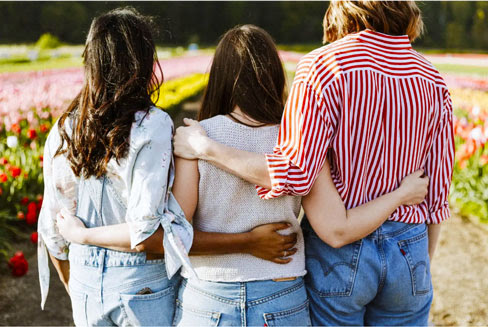
Triad of three people with arms around each other, seen from the back
●  Another cautionary piece: Five Reasons Polyamory Might Not Be Right For You, and What to Consider Instead (Rebellious, "magazine for women," Jan. 1)


By Jera Brown

...In polyamorous circles, there can be an air of superiority over those who choose monogamy. A belief that polyamorous folks are somehow more enlightened for having escaped the trap of monogamy.

But this misses the point [of the poly-awareness movement], which is that how you do relationships should be a choice. To me, understanding that you have a choice is where any sort of “relationship enlightenment” starts.

So anyway, polyamory is great. But is it right for you? 

Four Reasons Polyamory Might Not Be Right For You:

1. You’re Just Trying To Save a Failing Relationship

In my experience, this is one of the most common reasons why couples open up their relationship. And it’s not a good idea.... [Exception:] In the past, I’ve encouraged folks in relationships with mismatched sex drives to consider non-monogamy. ... So what’s the difference?  Communication.

2. You’re Not Great at Articulating Boundaries/Needs And You’re Not Going to Start Now...
3. You’re Not Willing to Sit With Jealousy
4. You’re Primarily In it for the Sex
5. You’re Feeling Pressured Into It

If you’re convinced that polyamory might not be for you, here are some alternatives to consider.

1.  Swinging...
2. Monogamish...
3. Relationship Anarchy...
4. Deliberate Monogamy... [also called "conscious monogamy," as opposed to "default monogamy."]
5. Ambiamory...  It’s a relationship structure or identity which means people can find satisfaction in either monogamy or non-monogamy.  And it’s basically a nod to the reality that everything in life is fluid. ...


●  Speaking of not-for-most: An early goal in the polyamory movement was to make it a widespread social norm for couples, when a relationship starts becoming serious, to discuss whether they want to be open or closed — before getting in too deep to back out of a major incompatibility.

Right up there with the "Do you ever want kids?" question.

This would save so much misery and divorce from assuming "Everybody goes monogamous when they love someone!" and never talking about it. Or daring to.

Fourteen years ago, sitting in a discussion circle at a Loving More retreat in upstate New York listening to Diana Adams strategizing, I remember thinking that reversing such a deep, cultural talk-taboo in a country of 300 million people... well... good luck with that.

But now it's happening. Especially among the upcoming generation. Including couples explicitly committing to monogamy. The Gen Z term is "defining the relationship," as in (shyly offering with moo eyes) "Maybe it's time to define our relationship." 

One example of many: Monogamy Agreements Are a Thing — and Relationship Experts Think You Should Make One (InStyle, a big women's mag; Dec. 14). As the article says, monogamy-agreed couples may have very different unspoken ideas about what would go against their agreement.


Yes, even if you think you're on the same page about what constitutes cheating in your monogamous relationship.

Couple sitting together writing a monogamy agreement
Monogamy agreement in formation. (InStyle / Getty)


By Dr. Jenn Mann

...Typically, couples who practice non-monogamy outline in detail what non-monogamous activities are considered OK in the coupledom. One of the strengths of these types of relationships is a tendency to talk through all of the possibilities of where things could go wrong and very clearly outline the boundaries. This is where monogamous couples have a lot to learn from their non-monogamous counterparts.

Now, more and more monogamous couples in long-term relationships or marriages are catching on, and choosing to create monogamy agreements. These agreements outline, in writing, how monogamy is defined in your particular relationship. By outlining different nuances and categories where things could go wrong, they are attempting to preemptively avoid cheating (however they define it) and keep the lines of communication open.

...  Putting your monogamous agreement in writing requires the two of you to have deep discussions, define what is monogamy to each of you, and get clarity on how the two of you will define it in your relationship. This type of high-level communication can help avoid problems in the future and strengthen the bond between the two of you.

...Not to mention, it could allow the two of you to enjoy certain behaviors that you might not have shared together without the clarity. For example, one couple I know is sexually exclusive but allow one another to flirt via text or messaging.
 
....In order to create a monogamy agreement, you need to sit down with your partner and have some serious conversations. ... What is most important about monogamy to each of you? Get specific about what exactly constitutes cheating and what might be grounds for a breakup? 

....Here are some categories to consider....
Sexual contact....
Social media...
Flirting...
Emotional intimacy...
Sexting...
Pornography...
Sex workers...
Masturbation....


...That night over wine and sushi in a booth at one of our favorite restaurants, I asked my boyfriend for an open relationship—and he agreed!

…Two weeks later, we were broken up. And I was…actually kind of relieved, TBH. I was forced to confront an uncomfortable truth, one I knew I’d been hiding from for a while: I didn’t actually want an open relationship. What I wanted was to be single.

...As consensual non-monogamy becomes increasingly visible, I think there’s a growing tendency to view open relationships as a panacea for any and all relationship problems, particularly when those problems involve a desire for sex outside of said relationships. ... 

...“Opening up to other sexual partners is a good alternative for couples who are relatively happy in their relationship overall, and the major reason for dissatisfaction comes from the monogamous nature of the relationship itself,” says [Dr. Zhana] Vrangalova.

That said, open relationships are very much not the free ticket to the Have Your Cake and Eat It Too buffet we sometimes fancy them. For one thing, the emotional energy and communication that goes into maintaining an open relationship is no joke. This means they need a rock-solid foundation to actually work. Introducing non-monogamy to a failing relationship in an attempt to salvage it is, frankly, unlikely to go well. Think of it as the modern version of having a baby to save your marriage. It may be a temporary distraction, but it’s probably going to do more harm than good in the long run.

...As I learned firsthand, however, it’s harder than it sounds to tell whether opening up is actually a healthy move that will strengthen your relationship, or a Band-Aid you’re slapping over issues you’d simply rather ignore. ...


Men's Health: What 'Polycule' Means in the World of Polyamory (Dec. 19). A  heart-warming educational piece, long.


By Suzannah Weiss

A polycule is a group of polyamorous people who join to create a family of sorts.


Well okay, if "family" can also mean "extended family," where some may have little to do with others but still feel they're in this thing together.

     
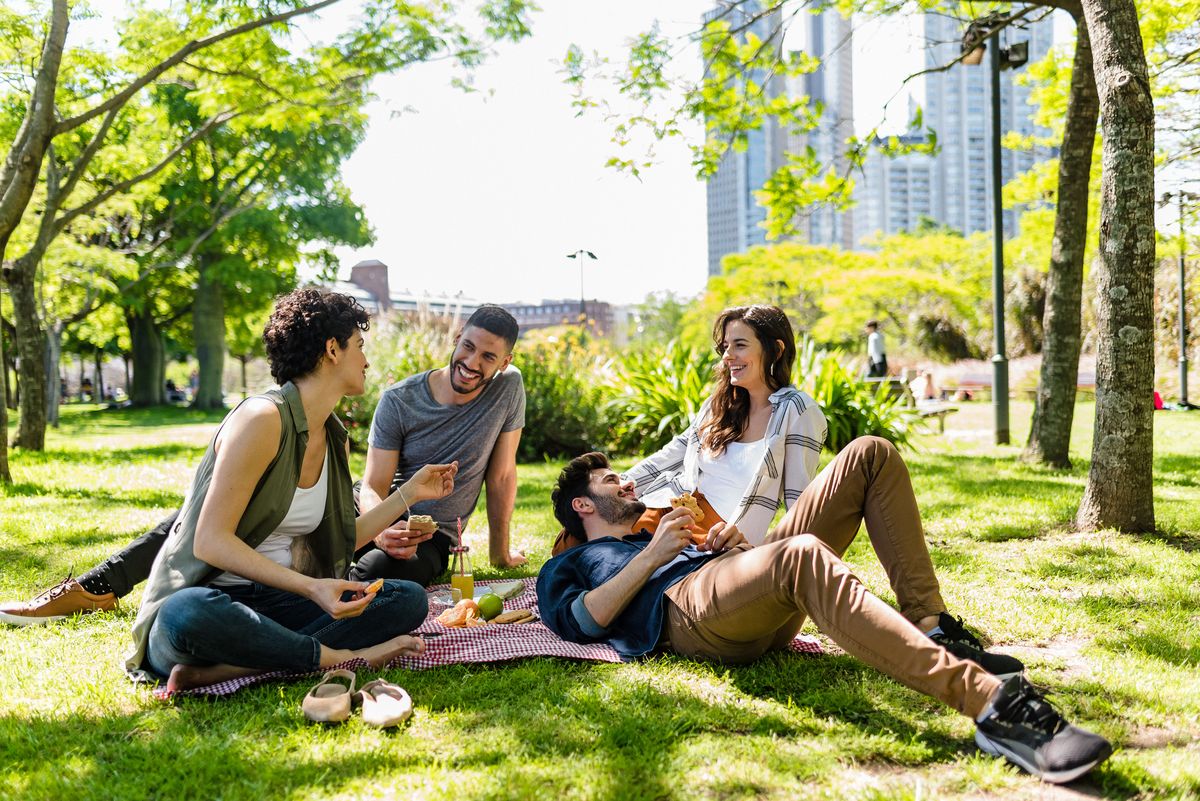
Four young adults happily chatting over a picnic in a city park
Igor Alecsander / Getty
...People in a polycule may all be dating one another, or some members of a polycule may only date one person within it. ... Some members of polycules will have a primary partner, which may be a live-in partner, a spouse, or someone they spend most of their time with. Other polycules may be less hierarchical, where all people are equally intertwined with one another and may even all live together.

...“Polycules may function like a family, where everyone gets together and enjoys each other's company, but not necessarily on a romantic level,” explains Rhiannon John, a sexologist at BedBible. “But other polycules may have less to do with each other, only meeting on certain occasions, like the birthday of a common partner.”

The one thing all polycules have in common, though, is that they sign on to the arrangement and respect one another’s boundaries. “A key aspect to practicing nonmonogamy is that all participants are aware of the relationships formed, and open discussion occurs to ensure everyone agrees to the terms of [their] relationships,” says Williams.

How do rules and boundaries work within polycules?...

How do I have a healthy polycule?

...“It's important to form some infrastructure for the members to check in with one another on a proactive basis,” DeRosa says. This may mean blocking out time each week for everyone to talk....

Many of the discussions that [Jon] Simons has to maintain healthy relationships with his partners, especially those he lives with, involve humdrum things like schedules, chores, and finances. “Not having these conversations can build up resentment,” he says. ...

Why do people form polycules?

...For some people, polycules provide a community that allows them to connect with the partners of someone they already know and love. “I like that everyone gets along, so then, I can spend time with multiple partners at once,” says [Leanne] Yau. “My partners can bond over their mutual appreciation of me.”

For Sallie, being in a polycule means more love and support, as well as sexual variety. “I can experience quite poor mental health, and having more people to support me helps enormously,” she says. “I don’t feel like I’m such a burden, and my partners can feel less isolated.”

Simons also enjoys having a support network of different people who meet different needs. ...“I’m a big proponent of chosen family, and polyamory is definitely one of the ways I achieve that.”


Six smiling young adults pressing together in a cityscapeale
●  Sociologist Elisabeth Sheff, in her blog The Polyamorists Next Door, considers some unromantic reasons why millennials and zoomers are taking so naturally to the concept: Polyamory as an Adaptive Strategy in an Unstable World (Dec. 28). "While CNM is in its third wave in the United States, having started with the anarchists of the 1880s and enjoyed a robust resurgence in the 1960s, its current wave is the most socially significant and widespread by far."

Some unsexy factors she proposes are that the rising generations expect a long life of unstable employment, frequent moves, and economic precariousness permanently.


Red bumpersticker reading "Monogamy? In this economy?"
SquidlyCo

They will have 12 jobs before they are 40 and then change careers yet again, live in five different cities by the time they turn 60 and still need to start a new job when they “retire.”... The majority of millennials and zoomers will almost certainly have lives of constant change. Why should their relationships be the only thing that takes one form and remains that way for the rest of their lives? Choosing a relationship style that flexes with their changing circumstances makes a lot of sense.... 


But here's another factor I've observed: People under 35 have spent more years living in group apartments and group houses than any other generation alive today. Because of the economy. Accordingly, as they've matured, I've seen them develop better roommate skills on average than we had. A fair amount of polycule group life simply boils down to good roommate skills.


Movie and TV list: Can somebody please make a really good one?? More than two dozen movies and TV shows with poly themes are posted by Reddit user u/halvoid, who briefly rates the 14 they've watched and asks readers to help fill out the list.

Does anyone know of a comprehensive list, limited to actual polyam relationships, with descriptions and reviews? Many people have started lists online, but I don't know of one that is even slightly complete and clearly defined (unburdened by clutter entries) and informative and maintained. If you know of one, or start one, I'll help publicize it!               

●  Last year Ken Haslam endowed a permanent annual $5,000 Relationship Diversity Research Fellowship through the Kinsey Institute for grad students and other researchers studying ethical non-monogamy. Last year's award went to Dr. Amy Moors of Chapman University. This year's recipient was just announced: Dr. Rhonda Balzarini of Texas State University. Press release.


-----------------------------------------------------------------------------------


Meanwhile,

“This struggle will define in what world our children and grandchildren will live, and then their children and grandchildren. It will define whether it will be a democracy for Ukrainians and for Americans.

Volodymyr Zelensky to the U.S. Congress

Why have I been ending posts to this polyamory news site with Ukraine?

Because I've seen many good progressive movements die out because they failed to scan the wider world correctly and understand their position in it strategically.

We polyamorous people are a small, weird minority of social-rule breakers. Increasingly powerful people call us a threat to society — because by living successfully outside their worldview, we expose its incompleteness.

Our freedom to choose our relationship structures, and to speak up for ourselves about the truth of ourselves, is just one way we depend totally on a free and pluralistic society that respects people's dignity to create their own lives, to access facts, and to speak of what they know.

Russian cartoon character Masyanya proudly holding a Ukraine flag
The Russian family-cartoon series Masyanya
turned dissident. Watch. The cartoonist has fled.
Update: a brilliant sequel of turnabout, with a
coda of empathy in wartime. 
 
Such a society is only possible where people have power to govern themselves, combined with legal structures that are at least supposed to guarantee the rights of all.

People, communities, and societies who create their own lives, and who insist on the democratic structures and legal rights that enable them to do so safely, infuriate and terrify the authoritarians who are growing in power around the world and in our own United States.

Such rulers and would-be rulers seek to stamp out other people's freedom to choose their lives — by intimidation, repressive laws, inflammatory disinformation and public incitement, abusive police powers, or eventually, artillery and terror.

For what it's worth, this site has received more pagereads from Ukraine over the years (56,400) than from any other country in eastern Europe.

For now, you can donate to Ukraine relief through this list of vetted organizations or many others. We're giving to a big one, Razom, and to a little one, Pizza for Ukraine in Kharkiv, a project of an old friend of my wife (story).

But that is only the start. For those of us born since World War II, we unexpectedly find ourselves witnessing the most consequential war of our lifetimes. Because we have entered another time when calculating fascism, at home and abroad, is rising and sees freedom and liberalism and social tolerance as weak, degenerate, delusional  inviting easy pushovers. As Russia thought it saw in Ukraine.

The coming times are going to require hard things of us. We don't get to choose the time and place in history we find ourselves born into. We do get to choose how we respond to it. Buck up and be ready.

Need a little help bucking up? Play thisAnother version, on the streets of Kherson the night after its liberation November 11. More? Just some guys in Kharkiv (our Pizza for Ukraine town) helping to hold onto a free and open society, a shrinking thing in the world. The tossed grenade seems to have saved them. Maybe your granddad did this across a trench from Hitler's troops — for you, and for us, because a world fascist movement was successfully defeated that time, opening the way for the rest of the 2oth century. Although the outcome didn't look good for a couple of years there.

Remember, these people say they're doing it for us too. They are correct.  The global struggle between a free, open future and a fearful revival of the dark past that's shaping up, including in our own country, is still in its early stages. It's likely to get worse before it gets better. The outcome is again uncertain, and it will determine the 21st century and the handling of all its other problems.

----------------------------------

PS: Ukraine should not be idealized as the paragon of an open democratic society. For instance, see If Ukraine Wants To Stand for Liberty and Democracy, It Should Rethink Some of Its Wartime Policies. And it has quite the history of being run by corrupt oligarchs — until the Maidan Uprising of 2013, the Revolution of Dignity in 2014, and Zelensky's overwhelming election in 2019 as the anti-corruption candidate. So they're working on that. (More.)

Now, writes US war correspondent George Packer in The Atlantic (Sept. 7), 


Here was a country with a tragic history that had at last begun to build, with great effort, a better society. What made Ukraine different from any other country I had ever seen—certainly from my own—was its spirit of constant self-improvement, which included frank self-criticism. For example, there’s no cult of Volodymyr Zelensky in Ukraine—a number of Ukrainians told me that he had made mistakes, that they’d vote against him after the war was won. Maxim Prykupenko, a hospital director in Lviv, called Ukraine “a free country aspiring to be better all the time.” The Russians, he added, “are destroying a beautiful country for no logical reason to do it. Maybe they are destroying us just because we have a better life.”


They have a word there, with a deep history, for the horizontal, self-organized mutual get-it-done that grows from community social trusthromada. Learn that word. It's getting them through as well as they've been able. We polyfolks often dream of creating something like that community spirit in miniature, in our polycules and networks. Occasionally we succeed.

Social attitudes in Ukraine are generally traditional, but not bitterly so like often in the US; the ideal of modern European civil society is widely treasured, and social progressivism has room to thrive. Some 57,000 women volunteer in all roles in the armed forces, flooding traditionally male bastions, including as combat officers, platoon leadersartillery gunners, tankers, and snipers. LGBT folx in the armed forces openly wear symbols of LGBT pride on their uniforms, whereas in Russia it's a crime for even a civilian to show a rainbow pin or "say gay."

And in November, Russia made it a crime not just to speak for LGBT recognition, but to speak for "non-traditional sexual relations." Until recently Russia had a polyamory education and awareness movement.

Polyfolks are like one ten-thousandth of what's at stake globally. Ukraine must receive our support for as long as it takes. Speak up and demand it.

"Defenders of Bakhmut": painting of a woman soldier under fire in a trench holding up a Ukraine flag
"Defenders of Bakhmut," where Zelensky spoke to soldiers at the front line a day before he spoke to Congress. They gave him a battle flag that they signed, which he presented to Nancy Pelosi. Art by Natasha Le in Mikolaiv, who reinterprets traditional guardian angels as riot grrls for an upcoming generation.
--------------------

PS: A real-life version in Bakhmut; the artwork is more than fantasy.  (Jan. 3, 2023)


[Permalink]

Labels: , , , , , ,