Polyamory in the News
. . . by Alan M.


May 13, 2022

The polyamory model opens lives for non-poly people. Plus new novels, TV, theater, an Irish activist, and other poly in the news


The polyamory movement is making waves apart from sexual and romantic openness. We model how intimate partners can break rigid social assumptions and strictures about what is a "real relationship", so that they can design one of their own. One that fits, that lets them breathe and thrive.

Sometimes our model shows monogamous couples how they can take better charge of their own path as just two. Especially, we read, older couples with kids grown and gone.

This piece in The Observer / Guardian touches on poly only as a model for the main topic: long-term partners discovering ways out of unspoken models that can kill relationships: Nifty ways to leave a lover (temporarily) – how a gap year could save your marriage (April 23).


By Lucy Cavendish

Is life with your spouse stale and limiting? Maybe, instead of a divorce, all you need is a few months apart.

...They were in their mid-50s and they told me they had been married for more than 30 years. They loved each other. They had a marriage that had survived the ups and downs of most unions. They had three children all of whom had left home. Yet they were looking at a future together with apprehension. They didn’t want to divorce, they just wanted to work out how to stay together while also being apart. The wife was a homebody.... The husband had rediscovered an adventurous side in himself that had lain dormant for a couple of decades.

What they were proposing was a marriage gap year.

“I’m a doctor,” the husband told me. “I just want to experience something different.” His intention was to go and spend a year working as a volunteer in Malawi.

...His wife, understandably, was nervous about it. “I don’t want to go to Africa,” she said. However she also did understand how important it felt to her husband. “I love him so I don’t want to stop him from having this year out,” she said.

...But, in reality, how does this work? It’s not easy to explain to your long-term partner that you want to take a break.

As a counsellor I find this fascinating. ...

...My gap-year couple agreed that sex with other people was off the agenda. ... But for some people it is also about having different sexual experiences. ... My friend’s sister and her husband agreed they would be free to date and have intimate relationships with other people. ... She had a fabulous two years travelling the world and taking lovers, then came home and the marriage continued. “It’s better than ever now,” she said. “I feel settled. I’ve done my thing and now I am home and I’m happy to be here.”

Younger couples are far more au fait with this sort of thing – polyamory and “ethical non-monogamy” appear to be growing in popularity – but it’s a whole new game for my generation of forty- to fifty-somethings. ... We were brought up to believe in The One. And in... a kind of stoicism. Young people don’t see it like this. They can have very strong prime relationships that are open and communicative and connected while also having relationships with other people. They have a completely different working model. ...

For older couples, it is not easy.

...For most it’s about relocating for a while, working at a different job, volunteering. ... The marriage or relationship can even be enhanced as the couple involve each other in hearing about these new adventures – bonding them more securely.

My original couple ended up being excited at the prospect of the gap year. “I can’t wait to wake up in the African sun,” the man said, “and then I’ll come home to suburbia and begin again.” ...


Read the whole article.

 
Lots of poly arts and culture items have popped up in the last couple weeks: novels, plays, news of TV series. For instance, 

● More poly in Young Adult fiction. I recently linked to Why Not Both? 8 [YA] Books With Love Triangles That End In Polyamory and The State of Polyamory in YA Fiction; both appeared on BookRiot. Here's more, from the University of Utah's independent student newspaper The Daily Utah Chronicle: Healthy Depictions of Non-Monogamous Relationships in Books (May 1).


“Endless Love” (Fredrik Kleppe / WBUR)

By Whit Fuller

...When the subject of non-monogamy first appeared to me in literature, it came in the form of Gabby Rivera’s young adult novel Juliet Takes A Breath. Protagonist Juliet learns of non-monogamous relationships during her internship with feminist author Harlowe Brisbane. Brisbane and her primary partner Maxine have a conversation with Juliet about their relationship structure and introduce her to the concept of hierarchical polyamory. Rivera’s novel explores the concept of consensual non-monogamous relationships honestly and through intersectional feminist lenses that discuss the importance of acknowledging and understanding connections formed in polyamorous relationships with interracial dynamics.

In reading Mary McCoy’s Indestructible Object, I [saw how] books can involve polyamory without centering it in their narratives. McCoy explores relationship dynamics through main character Lee and her boyfriend Vincent. There are moments of discomfort and betrayal, but the book culminates in a moment of growth and an understanding that loving multiple people doesn’t make one flawed, but allows the indestructible object of the heart, as McCoy wrote about it, to keep beating and loving in its own time. ...

...To see young adult literature engaging with non-monogamous relationships amid self-discovery and coming of age is particularly powerful....


Appearing on TV (spoilers ahead):

●  S.W.A.T. is a police action series on CBS. From Movieweb comes S.W.A.T.: How the CBS Police Drama Explores Polyamory with Respect and Grace (April 27).


By Kassie King

One of the main cast of characters is fan-favorite Officer Christina "Chris" Alsonso, the only woman SWAT member in the department and a total badass. ... In addition to having superior tactical skills and a delightfully sardonic personality, Chris is also openly bisexual. ... In seasons 2 and 3 as she and the show itself explore a subject matter that is still somewhat taboo for primetime television police procedurals: a polyamorous relationship. And it wasn’t a joke. Or a disaster.

Kira, Chris, Ty


In early season 2, it's revealed that Chris has begun dating a woman named Kira, who admits that she is engaged to a man and that they practice polyamory. The couple is looking for a third person to join their relationship as an equal partner — colloquially known as a "throuple." Chris declines at first... but soon realizes how deep her feelings for Kira are and decides that she’s interested in meeting her fiancé Ty and exploring the possibility of a relationship. ... Chris looks to Street for some guidance before making the leap, and he thoughtfully suggests, “Who knows? They could be the loves of your life. You should just do what you want to do. Don’t worry about what anyone else thinks.”

...Since she doesn't fully understand the dynamics of polyamory yet, we as viewers are able to learn about it alongside her. S.W.A.T. does an excellent job bringing us inside this new experience, rather than presenting viewers with something they might not understand and expecting them to just get on board with it. ...

Ty and Kira explain some of their "we rules,” which focus primarily on open communication. They tell her, “This only works if we all feel secure and valued.” One of Chris' major concerns is that the relationship won’t remain equal between the three of them because Ty and Kira are getting married. Chris confides in her only married teammate, Deacon (Jay Harrington), [who] warns her, “That couple is in a relationship that predates you. They’re getting married, and you’re not part of that marriage, no matter how they try to sell it to you. I think you’re setting yourself up for heartache.” Despite her fear, Chris moves forward with the relationship and eventually accepts Ty and Kira’s offer to move in with them.

Although some of Chris' teammates seem concerned about this new development in her life, it is always treated as a worry that she will be heart-broken due to the complicated nature of the relationship, rather than a disdain for polyamory itself. In fact, the only significant pushback within the narrative comes from Annie (Bre Blair), Deacon’s wife. The couple’s daughter Lila asks Chris about Ty and Kira, and she tries to explain to the little girl that it’s okay to love more than one person. This conversation upsets Annie, and she tells Chris that she doesn't believe polyamory is moral, nor does she want her kids to grow up thinking that it is.

...Although this confrontation was heartbreaking for Chris, and for viewers who care about the story, it was important for S.W.A.T. to portray an opposing viewpoint. Public contempt, especially from loved ones, is a realistic complication that people who practice polyamory have to deal with in the real world. 

...Although the relationship between Chris, Kira, and Ty did eventually end, S.W.A.T. never treated it as a silly plot device or something taboo that was just presented to be criticized. Instead, the show explored the real dynamics of polyamory, the complexity of the emotions involved, and the external pushback that can arise, all with the same attention and grace they would have given any other relationship on the show. ...


●  Also: 90 Day Fiance: Love in Paradise. From Showbiz CheatSheet, May 5: "The new season features two new LGBTQ couples, including the franchise’s first triad (a polyamorous relationship consisting of three people)."  It's on TLC. 


●  Afterglow, a queer poly play. I just posted about Fiveplay, a new theater piece about a rollicking queer poly household that recently ran in DC. Now the better-established play Afterglow has opened in the Los Angeles area. West Hollywood's WEHOville reviews it and interviews the writer/director: ‘Afterglow’ explores the naked truth of open relationships (May 5).


By Brandon Garcia

S. Asher Gelman gets letters from people who said seeing “Afterglow” led to the end of their relationships.

“That is fantastic,” the writer/director says. 

“It’s a fantastic thing that you were able to communicate effectively. We are so primed to consider that the worst thing in the world is to be alone. That’s not true. The worst thing in the world is to be with the wrong person.”

S. Asher Gelman

Five years ago, “Afterglow” took the off-Broadway world by storm with its frank depiction of an open gay relationship and its generous helping of on-stage, full-frontal male nudity. The tiny off-Broadway production was only supposed to run for about eight weeks. Instead, it blew up, ran for 14 months and spun off productions all over the world. ...

While the show makes headlines for its fearless erotic flair, “Afterglow” exerts its true power after the curtain closes, raising taboo questions and inspiring tough conversations in the minds of its audience.

“I think it really paints a real picture of what relationships actually are. We have a very romanticized version of what relationships are and it’s unrealistic and these characters get into the grip of it all,” [Gelman] said.

The tale of two men who embark on a polyamorous relationship with a third was drawn from the writer/director’s real-life experiences. 

...He has found peace and satisfaction in the romantic paradigm depicted in the play – but the road to happy polyamory was not without its perils. ...

“I wrote this play because I realized I had done something wrong but I couldn’t figure out what. So I essentially used the play to troubleshoot what I always thought the ‘crime’ that I committed was — allowing myself to fall in love with someone else — which is actually not true. The crime that I committed was that I was not being completely honest with everybody and just thinking that if I fudge the truth a bit, it’ll all work out. Of course my dishonesty thinking that I was being so good about everything by telling everybody 90 percent of the truth, it was awful and caused a lot of pain. ... 

“Being honest and forthcoming with everybody about boundaries and wants and needs is just the most freeing thing,” he said. “When there’s nothing to hide it’s kind of amazing what you can do.”


----------------------------------------

●  In Ireland, the major newspaper Independent.ie spotlights therapist Ruth Crean, a member of the parade-marching Polyamory Ireland: ‘There’s a perception that polyamorous people are highly sexed, which I find really annoying’ (April 12).


Ruth Crean (Eamon Ward photo)


I was always a little bit different. When I was a teenager, I was the person who was trawling second-hand shops and wearing the things that made me feel good about being myself. My mum was great. I remember someone saying to her, ‘How do you let her dress that way?’ And she just said, ‘Because they’re expressing themselves. Why would I stop that?’

So from a young age I had support around expressing myself. But that took longer to filter through to other things. Relationship-wise, I was really steeped in that rom-com idea that one person fulfills you. Like you could have happiness and success, but if you were alone then something was missing in your life. ...


It's paywalled after that, but Ireland's NewsTalk followed up a day later interviewing Crean for radio: Polyamory: 'It's more about an expanded sense of what a relationship can be'.  


There is a common misconception that polyamory is all about having as much sex as you can, with as many people as you can.

Ruth Crean, psychotherapist and a member of Polyamory Ireland joined Sean on the show to dispel that myth....


●  From Israel: 'Polyamory is playing with fire': Israeli couples' navigation of non-monogamy. Originally published in Maariv. Here it's in English on YnetNews, April 23. The title sounds dire, but the article is upbeat.


...Keren [left photo above, with Shavit] started researching polyamory online. "I suddenly discovered that there was such a thing as polyamory, whereby being married, I could go out on dates, feel excited and fall in love – I could have my cake and eat it," she says with a smile.

Shavit, 37, sensing changes in Keren, told himself that this was a passing phase of post-natal depression. "I remember her feeling that something was missing. Things weren't right for about two years. She was looking everywhere for some kind of freedom. She started writing Facebook posts, expressing support in non-monogamy. Anyone reading these postings assumed that we were in an open relationship and I wasn't there, not even in my mind.

I asked her to remove the Facebook posts and I didn't ask nicely," he admits. "I now understand that for quite a long time, I'd been feeling everything that Keren was talking about... but at the time it was the cause of a lot of friction between us." 
  
Tell us a little about the process you went through. ...
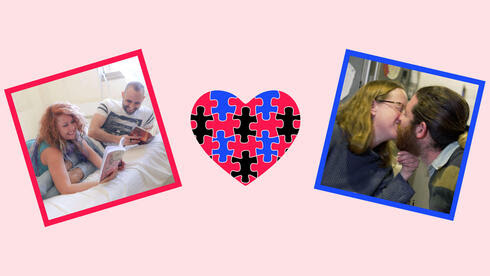

BTW, yes: Carelessness with poly can indeed be like being careless with fire. But we've learned how to use fire. You probably have a stove in your kitchen, a furnace in your basement, and gasoline in your car. If a religious outfit tried to frighten you into rejecting those things, you would know they had an ulterior motive that was not about your well-being.


●  And, the latest from the British tabloids: WHO'S THE DADDY? We don’t know who our kids’ fathers are – our unusual family dynamic may surprise you. (in The Sun May 6, and many other outlets since).

They're a quad with adorable pix.

Sean, Taya, Alysia, and Tyler with their two older kids. The dads are giving early kisses to the next two, who were still on the way.

Romantic, yes. However, the learned-by-experience advice that you will hear in the poly community — the topic comes up fairly often — is that it's a bad idea to not find out who the bio dad is. If there's any uncertainty you should arrange for DNA tests at the time of birth.

Why? Several reasons.

First and foremost, for the kid. Their genetic lineage could have vital medical relevance, maybe not until years from now. And, the kid will likely want to know which dad is the bio dad as they get older, and it is wrong to withhold it or prevent them from finding out. The grandparents (or non-grandparents) will almost certainly want to know and could make trouble in court; it happens. And if you ever break up, the kid deserves proper legal access to support.

The advice you will hear is do the test now, while you're all together and in love, rather than later when you may be broken up, and maybe on bad terms or unable to find each other.

Another reason, from my own observation of quads with kids. The child's bio dad will become pretty clear anyway, especially if the dads don't look alike. But this will happen gradually. Everyone will slowly see and slowly know. But if no one is supposed to talk about it, it'll always be an elephant in the room. Room elephants damage relationships, families, and children.

If you are romantic enough that you really don't want to know, do the tests and put the unopened results envelope in a safe-deposit box or on file in a lawyer's office. That way, you'll have it when the time comes.

-----------------------------------------

SPEAKING OF ELEPHANTS IN THE ROOM. . . .

We polyamorous people are a small, weird minority of social-rule breakers. Some people call us a threat to society, because by living outside their worldview successfully, we expose its incompleteness. Our freedom to choose our relationship structures, and to speak up for ourselves about the truth of ourselves, is just one way we depend on a free and pluralistic society that respects people's dignity to create their own lives, to access facts, and to speak of what they know.

Such a society is only possible where people have the ability to govern themselves, combined with legal structures that are at least supposed to protect the rights of all. 

People and communities who create their own lives, and who insist on the democratic structures and legal protections that enable them to do so safely, infuriate and terrify the authoritarians who are growing in power around the world and in our own United States.

Such rulers and would-be rulers seek to stamp out other people's freedom to choose their own way — by intimidation, repressive laws, propaganda and public incitement, or, eventually, artillery.

For what it's worth, this site has received more pagereads from Ukraine over the years (56,400) than from any other country in Eastern Europe.

For now, you can donate to Ukrainian relief through this list of organizations vetted by the Washington Post, or many others. (Avoid scams.)

But that is only the start. For those of us born since World War II, this is the most consequential war of our lifetimes.

The coming times are going to require tough things of us. We don't get to choose the time and place in history we are born into. But we do get to choose how we respond to it. Buck up and be ready.

PS: Need a little help bucking up? Play this new release from Pink Floyd. Loud.
Another version.

_________________________
 Don't miss Polyamory in the News!
 SUBSCRIBE by a feed, or
 SUBSCRIBE by email

_________________________

[Permalink]

Labels: , , , , ,


July 21, 2021

Polyamory in the news all over


Pexels
Many goings-on worldwide:

●  Marriage Is Going to Look Different After the Pandemic, says a long article in the major women's fashion magazine InStyle (May 20). They don't, however, provide a lot of support for that bold claim.  


The pandemic exposed the pitfalls of traditional marriage, and some couples [sic] are turning to polyamory to meet their needs. 

Stocksy
...Post-pandemic, ethical non-monogamy could be getting a long-overdue pop-culture rebrand. ... The past year of quarantine has only accelerated this mainstreaming of non-monogamy. ...

...It would seem, then, that polyamory is a modern solution for a modern world, a world in which we're conditioned to believe that our partners should be our everything — not just our lovers, but our co-parents, best friends, travel buddies, therapists, intellectual equals, and more. Acting on attraction outside of monogamous relationships, [Dr. Tammy Nelson] continues, "will be seen as more normal, more reasonable, more legit."...


Not that "turning to polyamory to meet your needs" as a couple has a great track record or reputation in the community. In the UK's Independent, ‘It put us in a pressure cooker’ (July 1): "From shifting into polyamory to rediscovering solace in a home base, lockdown has been a sink or swim period for some couples." From one newly opening couple: "He reacted defensively at first, but eventually came around, and we agreed that we’d decide on alternate partners together, and be completely open, always.” Tl;dr: It didn't work.


●  More on South Africa's national polyandry proposal, which if enacted (in 2023 or 2024) would legalize and recognize group marriages regardless of gender — not just traditional male-centered polygamy, which is legal there already. Polyamory, polyandry remain hot topics as discussion on new marriage proposals wraps up (The Cape Argus, Cape Town, July 6):


By Mwangi Githahu

...Home Affairs Minister Aaron Motsolaledi has said the main purpose of the hotly debated green paper on marriage was to start a national dialogue.

Aaron Motsolaledi

Wrapping up public comment on the issue at a national colloquium on the marriage policy, Motsoaledi said: “Since we gazetted it on May 4, the green paper has sparked a lot of debate causing most of us to confront long-standing beliefs, sometimes in an uncomfortable manner.”

...“The proposed marriage policy must aim to eradicate all forms of discrimination, and uphold the constitutional obligations in pursuit of equality in various communities that have been sidelined or prejudiced,” said Motsoaledi.

Pexels
The department will now start the process of consolidating all the proposals received from citizens into a white paper which sets out proposals for legislative changes.

...He said that South Africa needs a new marriage policy based on three of the pillars of its Constitution, equality, non-discrimination and human dignity was “incontestible”. ... 


By Pumza Fihlani
BBC News, Johannesburg

A proposal by the South African government to legalise polyandry — when a woman has more than one husband at the same time — has led to howls of protest from conservative quarters.

This does not surprise Professor Collis Machoko, a renowned academic on the topic.

The objections are "about control," he told the BBC. "African societies are not ready for true equality. We don't know what to do with women we cannot control." ...

Prof Machoko researched polyandry in his country of birth — neighbouring Zimbabwe. He spoke to 20 women and 45 co-husbands who practised it, even though such marriages are socially taboo and not legally recognised.

"Polyandry, because it is shunned by parts of society, has been forced underground. The secrecy is similar to the one found in freemasons," he said.

"When confronted by somebody whom they do not trust or do not know, they even deny that such a marriage exists. All this is because of fear of reprisals and persecution."

...Prof Machoko said polyandry was once practised in Kenya, the Democratic Republic of Congo and Nigeria, and it is still practised in Gabon, where the law allows it.

"With the arrival of Christianity and colonisation the role of the woman became diminished. They were no longer equal. Marriage became one of the tools used to establish hierarchy." ...


Elsewhere around the world,  

●  Russia will not outlaw discussion of polyamory after all. In March a proposal to do so was mentioned in world news. But Olga Kvi writes to us from Russia (May 18),


Thank you for your website! It was a great pleasure for me to find a place I could read the news about polyamory from different parts of our world.
 
1)  On the first days of March 2021, [at] a round table discussion organized by a deputy of our State Duma [parliament], it was suggested to ban “the polyamorous propaganda” and some other things. [See Moscow Times, March 5: Russia’s Ruling Party Campaigns to Ban 'Propaganda' of Polyamory, Bisexuality – Reports]. Polyamorous people from Russia had a lot of fear, but some days later our State Duma told it was a personal opinion of this deputy and no more.
 
2)  On 24-28 of March we had a book fair where it was possible to find books about polyamory. The books are in Russian and from Russian authors. Some polyamorous people in Russia didn’t like them (in their opinion these books have some controversial pages), but it is a great progress for polyamory in our country.


Meanwhile, also from Russia: Russia Beyond is a state-sponsored public-relations paper in English and other languages for foreigners. It bubbled with enthusiasm presenting this: There is polygamy in Russia, and here is how it works (June 15). Talk of gender-neutral polyamory may seem to threaten the state, but authorities were happy to spotlight this:


There are over a dozen Russian-speaking communities on VKontakte and Instagram dedicated to polygamous marriages. There, men and women discuss and promote the ideas of group relationships, and look for second and third wives to join their families. Interestingly, ads for additional wives are posted not only by men, but also by their ‘first’ wives.

...The bulk of the group are Orthodox Russians. They believe that polygamy is an ancient Slavic custom that should be observed to this day. ...


● From Ireland: Polyamory in Ireland, it’s not “having your cake and eating it” (April 29). "Reducing the mystery and stigma around polyamory. We hear from Psychotherapist Ruth Crean, who facilitates polyamory support groups in Ireland. It’s about “Multiple loving relationships but openly and consensually between all parties." Six-minute radio interview. Listen here:


And a roundup of items closer to home:

●  Forbes covers two academic items recently out: Love And Sex With Many: Research On The Health And Wellness Of Consensual Non-Monogamy (July 13). One is a new survey of relationship satisfaction in CNM vs. monogamy. The other reviews the poly lives of some famous figures in the arts and sciences of the late 19th and early 20th centuries: 

– Forbes's takeaway from the first:


In the rated measures of satisfaction in sex and love, people in CNM relationships generally outscored people in monogamous relationships. Perhaps not incidentally, people practicing CNM reported using positive problem-solving with their intimate partners, while those practicing monogamy more often reported that they emotionally withdraw from conflict with their relationship partner.


Here's the paper itself: The Vices and Virtues of Consensual Non-Monogamy: A Relational Dimension Investigation by Thomas R. Brooks, Jennifer Shaw, Stephen Reysen, and Tracy B. Henley, in Psychology and Sexuality (online Mar. 28, 2021).

– The other paper Forbes describes is "Storming then Performing": Historical Non-Monogamy and Metamour Collaboration by Brian M. Watson and Sarah Stein Lubrano, in Archives of Sexual Behavior (online May 24, 2021). It recognizes the key fact that polyamory, as opposed to other consensual non-monogamy, can be defined by the significance of metamour relations. From the paper's abstract:


We present the results of an investigation into the biographies, letters, and archives of approximately 50 well-known figures in Western intellectual and artistic history in the post-Enlightenment era. In this article, in the interest of space, we have limited our remarks to the biographies and partners of Virginia Woolf, Frida Kahlo, Max Weber, Edna St. Vincent Millay, William Moulton Marston, Erwin Schrodinger, and Victor Hugo.

While some of these non-monogamous relationships are well known, some of the evidence of their existence has been ignored, misrecognized, or intentionally obscured. The results of this survey demonstrate that contemporary patterns of non-monogamies are deeply rooted in historical precedence. 


●  More research: The title of a recent study from Canada is “It’s a Little Bit Tricky”: Results from the POLYamorous Childbearing and Birth Experiences Study (POLYBABES) by Samantha Landry, Erika Arseneau & Elizabeth K. Darling, Archives of Sexual Behavior (online June 1, 2021). From the abstract:


...Four primary themes were identified: deliberately planning families, more is more, presenting polyamory, and living in a mononormative world. ... By exploring the pregnancy and birth experiences of polyamorous families and focusing on participant voices, this research adds to the limited research on polyamorous families and contributes to the process of breaking down stigma associated with alternative family structures.


● The Dallas Observer, the city's large, thriving alternative weekly paper, presented Conscious Throupling: Poly People Give Tips on Making It Work (May 11)


Martin Meyer/ Getty
By Alex Gonzalez

...Kam was in a relationship with a woman for eight years before a mutual friend of his and his then-girlfriend's expressed interest in having a more “active role” within their dynamic. He describes the experience as “liberating” and says there was never a lack of “sexually charged energy.”

Although he admits they could’ve done better when splitting their time fairly.

“Honestly, we didn’t do a great job of [managing time], and I think that’s why there were a lot of trust issues that developed,” Kam says. “I'm not quite sure if we accepted the fact that we were all in a relationship together. Expectations weren't defined as far as how much time they needed for themselves.”

...Certainly, the idea of having three pairs of hands in the home sounds ideal for household chores, which Kam says came naturally. ...

While the idea of polyamory relationships may seem appealing as a way to share expenses, Kam says that most of their time was spent talking with each other or going “out and about.”

...While some throuples choose to focus on the individual pairings within the three-person dynamic, Kam says all three of them spent most of their time together. He says he enjoyed the non-sexual side of the relationship, and there was less pressure “to be everything to one person.”

When two parties got into an argument or had a disagreement, Kam says having someone to offer objectivity helped alleviate tensions.

“If all of your eggs are in one basket, sometimes the lows and the downs can feel really low and down,” Kam says, “because you're giving everything to this particular relationship. With three people in a relationship, there tends to be one person who can meditate, or at least reflect in a more credible way, what's being said.”

...“Living in a place with three people is a big undertaking,” Kam says. “You have to set those norms based upon everybody's preferences. And no secrets. Secrets will kill you.”


●  In the Advocate, "the oldest and largest LGBT publication in the United States," 21 Tips for Opening Up Your Relationship (May 26). Good, thoughtful advice for anyone.


●  5 Myths About Polyamorous Relationships You Should Stop Believing In, from the women's life and fashion mag Femina (July 15). The myths still circulate and continue to need you activists to take them apart when you see them; this article is a pretty good model.


They Have Commitment Issues
It’s Just A Phase!
It’s All About Sex
It is Synonymous to Cheating
There Is No Happy Ending


●  At PopSugar, Being Black and Polyamorous: Love as Liberation (May 14).


By Safiya Osei

...Receiving so much love and care from Black people (specifically gender-oppressed Black people; read: not men) opened my mind and heart to the joys one can get from Black love. ... Here I want to share the way that I currently practice polyamory. 

...I was dating someone I met while studying abroad in Ghana. ... It was through that experience that I found out that I had the capacity to love multiple people very deeply at the same time. When I was in Ghana, many of the Black people in my study-abroad program were also queer and went to small liberal arts schools in New England that had done a lot of damage to us mentally and emotionally. Being Black and queer on a predominately white campus is never ideal when you want to be held by someone who knows exactly what it means to grow up as a Black person in the United States on top of your other intersecting identities. Getting to be in a community with so many beautiful and insightful beings, as we all experienced Ghana together, helped settle in my mind that love can be found in so many places, not just whomever you happen to be romantically dating at the time. ...

...Being Black in the US is such a unique experience that Black people globally don't always get until they come here and live it themselves. ... The resilience and knowledge passed down through generations has kept us alive this long, so who am I to deny the security I feel in the arms of another Black person?

...Polyamory isn't for everyone, but whenever I see Black people I love and care for being happy, building bonds, and being in community with each other, my heart is full from the joy that a deep and meaningful love like that radiates. ...


●  In Newsweek, 'I've Had Three Long-Term Polyamorous Relationships' (May 23). Author Gillian Myhill is building audience for her Bare Dating site in the works. 


The author
By Gillian Myhill

...I met the couple for drinks and we hit it off immediately; there was very clear chemistry straight away. ... But the chemistry was just as emotional as it was sexual. When I say I felt completely whole, a lot of that comes from the emotional side; it comes from feeling like I was being heard and felt. The connection between the three of us was wonderful and I saw them again and again.

...All three of us, myself and the couple, had a moment where we understood the relationship was more serious. I think that happens a lot at around the three-month point.

We always thought it would run its course after a little while, but we ended up being together for three and a half years. It was great and incredibly intense. ... Within the relationship, sometimes I would sleep with just the wife and sometimes just the husband, but mostly it was all three of us. And there was never any jealousy. The word polyamory comes from the Greek word for "many" and Latin word for "love" and I believe you're meant to feel safe and secure within that arrangement of many loves. ...

But with polyamory, like with any relationship....


rawpixel.com / Unsplash
●  Lastly: Want a thoughtful model reply for well-meaning unicorn-hunting newbies? You really ought to have one on tap, and IMO you couldn't do better than to model yours on this, from reddit user jsulliv1.

That person helps make the whole reddit/r/polyfamilies subreddit look good. Which is, by and large, a known haven for kind, thoughtful people amid the larger wilds of reddit. With exceptions of course; it has 22,000 members. There's also reddit/r/polyamory, also a generally nice place but a little less intimate with 212,000 members.

Also to keep on tap to share out: To Unicorn Hunters, from an Ex-Unicorn by Jesse Dagger. Who also recommends, for greater length and depth, So Someone Called You a Unicorn Hunter by David Noble.


That's all for now! Coming next: How to get on that volunteer international committee for a new and better polyamory flag. 

_________________________
 Don't miss Polyamory in the News!
 SUBSCRIBE by a feed, or
 SUBSCRIBE by email

_________________________
 

Labels: , , , , , ,


February 23, 2019

A little more insight than usual, in the Irish Times


Serious mainstream media pay attention to polyamory often enough now that you can usually guess how it'll go — they get the basics right, thankfully, but may have an outsider's tin ear to subtleties. The feature story in this morning's Irish Times, a leading daily in Ireland, strikes me as a little more perceptive than usual, once it gets rolling.

Its jumping-off point is Jenny Yuen's recent book Polyamorous, part autobiography and partly a professional newspaperwoman's report on poly in Canada and elsewhere.

The piece is by a writer on women's "life & style" topics, hence the headline.


Polyamory: The women in love with more than one person

"Jenny Yuen lives with her husband and nesting partner, Charlie, and her other partner, Adam, who is 31 years her senior, lives up the street."

 
By Laura Kennedy

...It is difficult to definitively say whether polyamory is more common than it used to be or simply more visible, but it is certainly the latter.

...A reporter for the Toronto Sun, [Jenny Yuen] writes frankly in the book about her relationships and her route to motherhood. ... It helps, she says, that she has an excellent support system. ... Yuen describes their relationship as a V – she and Adam are romantically involved, as are she and Charlie, but Adam and Charlie don’t share a romantic relationship, though they are close and the three operate as a family unit.

People ask Yuen how her daughter will be raised in a poly family – “I want people to know that she’s going to have more support. My partner lives up the street. My husband’s at work right now; my partner was able to spend some time with me this afternoon and also take care of the baby. That’s a benefit and a luxury that not everyone has and that we are lucky to have . . . thanks to polyamory.”

...All of the emotionally laden conversations and interactions that characterise a serious monogamous relationship feature in polyamory. Quite literally everything is a conversation. If you live with multiple partners, the tedium of asking who takes out the bins has to be performed with more than one person; ditto where the new sofa is going. Even if you live alone but have multiple partners, there are conversations about who you are having dinner with when, and where partners should leave their things at your home. Does everyone get a sock drawer? Poly people are and must be skilled, emotionally sensitive and enthusiastic communicators.

Lea, a bisexual poly student from Cork, who has a long-distance relationship with a male anchor partner (the term primary partner is frowned upon, because it suggests a hierarchy), chuckles when I mention that some people consider polyamory a vehicle which enables male promiscuity. If anything, she says, it encourages men to improve their communication skills in relating how they feel.

It seems clear that polyamory is too much work for anyone who is just in the mood to sleep with a stranger without strings attached; there are apps for that. Lea describes polyamory as empowering for women, just as it is for men, because it prioritises clear communication of one’s needs and regularly checking in with how partners are feeling.

...There can be issues unique to polyamory, however. Some poly women face being fetishised or commodified as “thirds” by married couples – termed unicorn hunters – who seek someone (normally a bisexual woman) to be brought in as a third without being allowed to form her own outside relationships. Of course, some women enjoy this, but it seems that most don’t and demand for such thirds far outweighs supply.

Erica from Louth describes herself as a 35-year-old cisgendered bisexual woman who works in tech. ... She has found that some men who don’t understand what polyamory is can make presumptions: “Men I know who would be in relationships have hit on me once they find out I’m polyamorous or want me to help them cheat, and that’s just not what it’s about.”

This is a subversion of what is considered “good” poly practice, which suggests that everyone’s needs must be equally recognised and respected. Of course, as in monogamy, this is a delicate balancing act which may be desired more than it is observed.

...If polyamory had a dirty secret that unsettles the monogamous norm, it would be that it is qualitatively like monogamy, except that the emotional work of relationships is multiplied by the number of partners.

While many people unfamiliar with the mechanics of polyamory are hand wringing over the idea of orgies, the reality of polyamory seems to be seeking out the same deep connection that monogamy instantiates, but more of it. This idea is offensive to some who consider such connection possible only with one person at a given time. However, that really seems like a determination each of us can only make for ourselves.

Perhaps the most striking aspect of polyamory is that it is counter-cultural, which could easily be – and has been – mistaken for being controversial. ...


The whole article (February 23, 2019).

Also from Ireland:

● In the Irish Examiner, Is fidelity old school as – it appears – open relationships become more common? (Jan. 9, 2019)


...Polyamory in all its ethical-non monogamy shouldn’t be confused with having an open relationship. In the latter, sex with others is part of the package. Falling in love is not.

Polyamory makes sense. Expecting a lifetime of willing or enforced monogamy often leads to disappointment, betrayal and heartbreak, and that’s just among the ones who discover they’ve been deceived. ...


● In RSVP Live ("the modern Irish woman’s destination of choice for news, information and entertainment"): Irish people reveal what it's like to be in an open relationship (July 2, 2018):


...Sarah from Mayo said they initially wanted to be in an open relationship to help them deal with their insecurities.

"I recognised in myself that having a desire to see someone other than my partner didn't negate my love for them, and I want to try to unlearn the feeling in myself of insecurity that I think we are socialised to feel when someone we are in a relationship with is interested in someone else," they said.

...Jamie, who lives in Ireland but is originally from the US, also said that honesty is paramount.

"I'm seeing a bunch of people non-hierarchically, so since I am the only constant my only rules are to be extremely honest with everyone pretty much from the get-go....

"I find that I'm only jealous when I'm with someone else that is also jealous, which doesn't come up as much when poly stuff is set as the norm from the start." ...


● All the poly in Ireland's media on this site since 2006 (including this post; scroll down).

[Permalink]

Labels: ,


October 5, 2017

In Ireland's largest newspaper, "Woman opens up about the benefits of polyamory"

The Irish Independent

Irish society has, in the last few decades, thrown off with a vengeance much of the Catholic Church's historical oppression and domination, especially after the exposure of floods of horrors that the Irish Church long perpetrated and concealed. I know that's harshing on some people's faith, but there is no honest way to say it nicely. Today Ireland is a much freer and more open society.

Emotional challenges: Beth says being polyamorous forces you to deal with insecurities.

One sign is that Ireland's largest, most established newspaper just published, in print and online, the story below, told by a lady who is not afraid to be out about her life and practice.


What it feels like to have more than one partner – one woman opens up about the benefits of polyamory

Tired of conventional romances, sex coach Beth Wallace embraced polyamory – being in more than one relationship at a time – and has reaped the emotional rewards

By Beth Wallace

...The idea that you meet someone, marry them, have kids and stay together until the day you die — that works for some people, but I think it's a relationship choice that's largely born out of societal norms and expectations. If you throw out that rule book of what a relationship 'should' look like, then what goes in its place?

Polyamory means quite simply having a loving relationship with more than one person at a time, or being open to having a love relationship with more than one person at a time. Imagine a monogamous relationship and then imagine that with several people.

...In my 40s I met a man who was already in an open relationship and if I wanted to be in a relationship with him then I had to be okay with how his life was already set up. That took a while to get my head around. We would be out for dinner with 12 or so people including his wife and he and I would leave together to be with each other for the night and she was fine with it. ... It redefined for me what love is.

In my experience, polyamory is something like being gay, lesbian or bi, it's an orientation, it's who I am, not something that I do. ... If you're a polyamorous person who finds it easy to love and be intimate with, and find a connection with, lots of people, you can't switch that off just because someone isn't okay with it, because then you're going to feel like you're not being true to yourself.

People make a lot of assumptions. One of the most common reactions I get from women is that they think the men I'm involved with 'just want to have their cake and eat it'. I find that very insulting because they're assuming the male in whatever group of people it is the one calling all the shots, which isn't my experience.

...In fact there's so much discussion around boundaries, and time planning that goes on, there's often more talking than sex. People assume being polyamorous is all about getting as much sex as you can, but it's not like swinging or open relationships which tend to be more about sex, being polyamorous is about having a full-on relationship.

It can be a logistical nightmare. Three relationships at once is my max. Recently I was seeing three men, two in Ireland and one outside the country. Each relationship offered me something different. With one of them, we had lots of fun. He was quite a bit younger than me and it was a very fun-based relationship where we laughed a lot and did fun, stupid things. The second guy was quite a bit older and we would have very deep meaningful conversations about life and spirituality, he brought out the philosophical aspect of my personality. The other guy was an artist who brought out the creative side of who I am.

It can be the most emotionally challenging and difficult relationship to be in, because it really forces you to be vulnerable and deal with insecurities and excruciating jealousies. But, done right, polyamory can teach you to be an excellent communicator, very self-aware and good at listening. It also offers a very deep love for people that transcends what a relationship 'should' look like. ...

...I think Ireland is becoming more open to non-traditional relationships. My family has mixed feelings about me being polyamorous varying from 'sure whatever, if it works for you, great!' through to 'don't talk to me about it'. Most of my friends are absolutely fine with my choices, although I reckon a few think, 'Oh Beth just hasn't met the right man yet, she'll settle down when she does' — good luck with that!"

Beth runs a relationship course on polyamory; see www.bethwallace.org.


The whole article (online October 4, 2017; in the print issue October 3 across a two-page spread).

The poly movement in Ireland has had other media attention in recent years, most of it quite positive. (In the link, scroll down.)

[Permalink]

Labels:


June 23, 2016

In Ireland, "Meet the couples in love with polyamory"

Irish Independent

Polyamory Ireland just got a stellar full-page-plus article, including a link to its Meetup site, in Ireland's best-selling daily newspaper. Thanks to Randy Ralston (Polyamory Ireland's founder eight years ago) for the tip. He says the group actually did not initiate this story; "the journalist simply contacted me with questions and I answered them. She did her own research (and, as you will see, got the definition of poly a bit off…it is not about sex…)"


The truth about life in an open relationship

For growing numbers of people, monogamy just doesn't work. So what happens when you throw out the rule book? Tanya Sweeney meets the couples [sic] in love with polyamory

By Tanya Sweeney

...And now a growing number of people are seeking emotional fulfilment with an alternative relationship model: polyamory. The results, it must be said, are often effective.

Much as its name suggests, polyamory is the practice of engaging in multiple sexual relationships with the consent of everyone involved. It's a different entity to 'swinging' (which is simply sex with different partners), or having a bit on the side (most polyamorous people see their partners as equal in terms of love).

Catalina Vieru, a 29-year-old European Voluntary Service worker from Dundalk, first heard the word 'polyamory' six years ago. As it happens, she was already in an open relationship with another man.

"I never felt like I could be monogamous," she explains. "With my ex-partner, we decided that the safest for us would be to have a sexually open relationship, meaning that it was okay for both of us to date or have sex with others, as long as we didn't get involved emotionally.

"During that time, I started wondering about what would happen if I'd allow myself to develop feelings also.... "At the moment, I am also involved with three more people and a couple, and I have a different type of connection, all very special, with each of them."

...Part of the power of polyamory, say its practitioners, is that honesty, respect and communication are paramount to keeping the wheels of the relationships greased. Polyamorous people aren't oversexed or promiscuous, and no one is cheating or coercing a partner into a relationship they don't want. There is no need for clandestine encounters or affairs, because everyone in a poly relationship is on the same page.

Monogamous relationships aren't without their complications, certainly, but the fact that three or more people are involved in a poly relationship means that the interpersonal combinations are plentiful....

...IT engineer Balazs Balogh, 31, originally from Hungary but living in Galway, became aware of the concept through a web-comic, and found his mind sufficiently 'blown'.

"Up until that point I believed I came up with the whole thing, then I discovered there's a worldwide community with more or less the same idea," he explains....

..."One thing that particularly stuck with me was when they were cooking together while having a chat, it was so heartwarming I could've watched them for hours. There's this saying that gets thrown around a lot by poly people that by loving more, love doesn't run out, but multiplies. I felt exactly that."

That's not to say that complications don't arise: "Some poly people say they just don't feel jealous and never did — God, I wish I was like that, because feeling envious or jealous is really not fun," Catalina reflects.

"I think most of my current partners feel the same way....

...Polyamory Ireland — a 300-strong faction of people — hold regular meetings in Dublin. Its members range in age from teenagers to grandparents, and are highly multicultural and well-travelled....

...Among the other commonly held misconceptions is that polyamory is bad for children in the relationships.

"All the evidence and research to date says that children who come from polyamorous families are, at worst, no more dysfunctional than those who come from traditional monogamous ones. And, at best, are much happier and more well-adjusted," reveals Randy....

...Visibility for the poly community will be at an all-time high as Polyamory Ireland are set to march in the Dublin Pride Festival for the first time this month.

"Our community has the right mix of people to provide a beautiful and supportive presence," says Randy. "The struggles Pride represents are all of our struggles. We will be there in solidarity, essentially, for freedom of relationship choice. But also for equality, diversity, tolerance, and justice for all.

"Personally, I think it is entirely natural for us to love multiple people," he adds....

For more details on Polyamory Ireland, see meetup.com/Polyamory-Ireland/


Read the whole article (online June 24, 2016; print issue June 23).

This is the kind of positive image-making, and free advertising for your group, that you can get when people are out. Just be careful about the agenda of the writer and the publication, and ask that your quotes be sent to you for checking before they are published.

[Permalink]

Labels: ,


May 17, 2015

Reality star prompts a closer look at Ireland's poly community

Sunday Irish Independent


The celebrity buzz about Jade-Martina Lynch, the self-professed polyamorous cast member of Big Brother UK's new season, prompts a newspaper in her hometown of Dublin to take a look this morning at Ireland's actual poly community (which she has not been part of).

As happens so often, the writer came away impressed. Thanks, people, for representing us well.


Meeting Ireland's polyamory community: 'If you have the time you can be in love with lots of people'

By Barbara McCarthy

Some years back, I saw a wedding photo on social media of a girl I met at a festival in the Nevada desert. It grabbed my attention because it was of her, her husband and their new wife.

They had married each other in a triad ceremony in Los Angeles. After some snooping, I found out that they were on a US reality TV show about polyamory. It followed the lives of people who enjoyed several loving relationships at the same time, in many cases under one roof.

Since then polyamory has become more talked about in Ireland, and last week, the newest Irish Big Brother contestant, Jade-Martina Lynch, stated that she was polyamorous.

"My soul is just so free I can't be in a monogamous relationship," she said.

You could think that it's just an excuse for people to enjoy libidinous acts with lots of people at the same time, but it's not. Because we live in a society that favours monogamy, most of us can't get our heads around polyamory, which by definition means loving more than one person at a time and all partners knowing each other exists.

In order to find out more, I went along to a monthly meet-up. I found the attendees, who came from all ages and backgrounds, to be warm, eloquent and open. They weren't here to flirt, more to meet with like-minded souls and discuss issues pertinent to them.

"Polyamory is all about love", founder of the group, Californian somatic sexologist Randy Ralston informed me. "It's not about casual sex, swinging or cheating, rather it is about having loving, honest, deeply committed relationships. I formed the group in 2008 for anyone who doesn't feel that monogamy works for them."

The group has over 350 members, but that's not representative of how many 'poly' people live in Ireland.

...
People in the group presented a mixed bag. Some were currently single and 'poly'; in a relationship with someone who was monogamous; in a relationship with a 'poly' person and a monogamous person; in relationships with several people. "Trying to define polyamory is difficult. It manifests in various relationship forms. Sex is part of it, but it's not the focus," Ralston added.

I had many questions. "How do you meet poly people within a small community in Ireland? How do you find the time and energy? Can you be in love with more than one person at the same time?

"Yes," one erudite, liberated gentleman informed me. "You can be in love with more than one person at a time, I'm in love with two people, a woman I love is deeply in love with three people." He spoke so respectfully and lovingly of his situation, who was I to disagree. Someone likened it to having a second and third child. "You won't love them any less than your first. If you have time and energy you can be in love with many people."

But what about that old chestnut, jealousy? "It happens too. But when my partner is in a new relationship, I find it enhances our relationship," 26-year-old 'Bianca' said.

"Poly relationships aren't about tolerating other people's partners, they are about 'compersion', a term coined to represent the opposite of jealousy, which is rampant in our culture," Ralston added.

So what happens when you want to have children? "I know people in poly families and it works well. In a practical sense it means there is an extra adult in the relationship. For others, polyamory fell by the wayside for a while," says Bianca.

The reactions from monogamous people to poly arrangements are varied....


Read the rest (May 17, 2015).

[Permalink]

Labels: