Polyamory in the News
. . . by Alan M.


May 13, 2022

The polyamory model opens lives for non-poly people. Plus new novels, TV, theater, an Irish activist, and other poly in the news


The polyamory movement is making waves apart from sexual and romantic openness. We model how intimate partners can break rigid social assumptions and strictures about what is a "real relationship", so that they can design one of their own. One that fits, that lets them breathe and thrive.

Sometimes our model shows monogamous couples how they can take better charge of their own path as just two. Especially, we read, older couples with kids grown and gone.

This piece in The Observer / Guardian touches on poly only as a model for the main topic: long-term partners discovering ways out of unspoken models that can kill relationships: Nifty ways to leave a lover (temporarily) – how a gap year could save your marriage (April 23).


By Lucy Cavendish

Is life with your spouse stale and limiting? Maybe, instead of a divorce, all you need is a few months apart.

...They were in their mid-50s and they told me they had been married for more than 30 years. They loved each other. They had a marriage that had survived the ups and downs of most unions. They had three children all of whom had left home. Yet they were looking at a future together with apprehension. They didn’t want to divorce, they just wanted to work out how to stay together while also being apart. The wife was a homebody.... The husband had rediscovered an adventurous side in himself that had lain dormant for a couple of decades.

What they were proposing was a marriage gap year.

“I’m a doctor,” the husband told me. “I just want to experience something different.” His intention was to go and spend a year working as a volunteer in Malawi.

...His wife, understandably, was nervous about it. “I don’t want to go to Africa,” she said. However she also did understand how important it felt to her husband. “I love him so I don’t want to stop him from having this year out,” she said.

...But, in reality, how does this work? It’s not easy to explain to your long-term partner that you want to take a break.

As a counsellor I find this fascinating. ...

...My gap-year couple agreed that sex with other people was off the agenda. ... But for some people it is also about having different sexual experiences. ... My friend’s sister and her husband agreed they would be free to date and have intimate relationships with other people. ... She had a fabulous two years travelling the world and taking lovers, then came home and the marriage continued. “It’s better than ever now,” she said. “I feel settled. I’ve done my thing and now I am home and I’m happy to be here.”

Younger couples are far more au fait with this sort of thing – polyamory and “ethical non-monogamy” appear to be growing in popularity – but it’s a whole new game for my generation of forty- to fifty-somethings. ... We were brought up to believe in The One. And in... a kind of stoicism. Young people don’t see it like this. They can have very strong prime relationships that are open and communicative and connected while also having relationships with other people. They have a completely different working model. ...

For older couples, it is not easy.

...For most it’s about relocating for a while, working at a different job, volunteering. ... The marriage or relationship can even be enhanced as the couple involve each other in hearing about these new adventures – bonding them more securely.

My original couple ended up being excited at the prospect of the gap year. “I can’t wait to wake up in the African sun,” the man said, “and then I’ll come home to suburbia and begin again.” ...


Read the whole article.

 
Lots of poly arts and culture items have popped up in the last couple weeks: novels, plays, news of TV series. For instance, 

More poly in Young Adult fiction. I recently linked to Why Not Both? 8 [YA] Books With Love Triangles That End In Polyamory and The State of Polyamory in YA Fiction; both appeared on BookRiot. Here's more, from the University of Utah's independent student newspaper The Daily Utah Chronicle: Healthy Depictions of Non-Monogamous Relationships in Books (May 1).


“Endless Love” (Fredrik Kleppe / WBUR)

By Whit Fuller

...When the subject of non-monogamy first appeared to me in literature, it came in the form of Gabby Rivera’s young adult novel Juliet Takes A Breath. Protagonist Juliet learns of non-monogamous relationships during her internship with feminist author Harlowe Brisbane. Brisbane and her primary partner Maxine have a conversation with Juliet about their relationship structure and introduce her to the concept of hierarchical polyamory. Rivera’s novel explores the concept of consensual non-monogamous relationships honestly and through intersectional feminist lenses that discuss the importance of acknowledging and understanding connections formed in polyamorous relationships with interracial dynamics.

In reading Mary McCoy’s Indestructible Object, I [saw how] books can involve polyamory without centering it in their narratives. McCoy explores relationship dynamics through main character Lee and her boyfriend Vincent. There are moments of discomfort and betrayal, but the book culminates in a moment of growth and an understanding that loving multiple people doesn’t make one flawed, but allows the indestructible object of the heart, as McCoy wrote about it, to keep beating and loving in its own time. ...

...To see young adult literature engaging with non-monogamous relationships amid self-discovery and coming of age is particularly powerful....


Appearing on TV (spoilers ahead):

  S.W.A.T. is a police action series on CBS. From Movieweb comes S.W.A.T.: How the CBS Police Drama Explores Polyamory with Respect and Grace (April 27).


By Kassie King

One of the main cast of characters is fan-favorite Officer Christina "Chris" Alsonso, the only woman SWAT member in the department and a total badass. ... In addition to having superior tactical skills and a delightfully sardonic personality, Chris is also openly bisexual. ... In seasons 2 and 3 as she and the show itself explore a subject matter that is still somewhat taboo for primetime television police procedurals: a polyamorous relationship. And it wasn’t a joke. Or a disaster.

Kira, Chris, Ty


In early season 2, it's revealed that Chris has begun dating a woman named Kira, who admits that she is engaged to a man and that they practice polyamory. The couple is looking for a third person to join their relationship as an equal partner — colloquially known as a "throuple." Chris declines at first... but soon realizes how deep her feelings for Kira are and decides that she’s interested in meeting her fiancé Ty and exploring the possibility of a relationship. ... Chris looks to Street for some guidance before making the leap, and he thoughtfully suggests, “Who knows? They could be the loves of your life. You should just do what you want to do. Don’t worry about what anyone else thinks.”

...Since she doesn't fully understand the dynamics of polyamory yet, we as viewers are able to learn about it alongside her. S.W.A.T. does an excellent job bringing us inside this new experience, rather than presenting viewers with something they might not understand and expecting them to just get on board with it. ...

Ty and Kira explain some of their "we rules,” which focus primarily on open communication. They tell her, “This only works if we all feel secure and valued.” One of Chris' major concerns is that the relationship won’t remain equal between the three of them because Ty and Kira are getting married. Chris confides in her only married teammate, Deacon (Jay Harrington), [who] warns her, “That couple is in a relationship that predates you. They’re getting married, and you’re not part of that marriage, no matter how they try to sell it to you. I think you’re setting yourself up for heartache.” Despite her fear, Chris moves forward with the relationship and eventually accepts Ty and Kira’s offer to move in with them.

Although some of Chris' teammates seem concerned about this new development in her life, it is always treated as a worry that she will be heart-broken due to the complicated nature of the relationship, rather than a disdain for polyamory itself. In fact, the only significant pushback within the narrative comes from Annie (Bre Blair), Deacon’s wife. The couple’s daughter Lila asks Chris about Ty and Kira, and she tries to explain to the little girl that it’s okay to love more than one person. This conversation upsets Annie, and she tells Chris that she doesn't believe polyamory is moral, nor does she want her kids to grow up thinking that it is.

...Although this confrontation was heartbreaking for Chris, and for viewers who care about the story, it was important for S.W.A.T. to portray an opposing viewpoint. Public contempt, especially from loved ones, is a realistic complication that people who practice polyamory have to deal with in the real world. 

...Although the relationship between Chris, Kira, and Ty did eventually end, S.W.A.T. never treated it as a silly plot device or something taboo that was just presented to be criticized. Instead, the show explored the real dynamics of polyamory, the complexity of the emotions involved, and the external pushback that can arise, all with the same attention and grace they would have given any other relationship on the show. ...


●  Also: 90 Day Fiance: Love in Paradise. From Showbiz CheatSheet, May 5: "The new season features two new LGBTQ couples, including the franchise’s first triad (a polyamorous relationship consisting of three people)."  It's on TLC. 


●  Afterglow, a queer poly play. I just posted about Fiveplay, a new theater piece about a rollicking queer poly household that recently ran in DC. Now the better-established play Afterglow has opened in the Los Angeles area. West Hollywood's WEHOville reviews it and interviews the writer/director: ‘Afterglow’ explores the naked truth of open relationships (May 5).


By Brandon Garcia

S. Asher Gelman gets letters from people who said seeing “Afterglow” led to the end of their relationships.

“That is fantastic,” the writer/director says. 

“It’s a fantastic thing that you were able to communicate effectively. We are so primed to consider that the worst thing in the world is to be alone. That’s not true. The worst thing in the world is to be with the wrong person.”

S. Asher Gelman

Five years ago, “Afterglow” took the off-Broadway world by storm with its frank depiction of an open gay relationship and its generous helping of on-stage, full-frontal male nudity. The tiny off-Broadway production was only supposed to run for about eight weeks. Instead, it blew up, ran for 14 months and spun off productions all over the world. ...

While the show makes headlines for its fearless erotic flair, “Afterglow” exerts its true power after the curtain closes, raising taboo questions and inspiring tough conversations in the minds of its audience.

“I think it really paints a real picture of what relationships actually are. We have a very romanticized version of what relationships are and it’s unrealistic and these characters get into the grip of it all,” [Gelman] said.

The tale of two men who embark on a polyamorous relationship with a third was drawn from the writer/director’s real-life experiences. 

...He has found peace and satisfaction in the romantic paradigm depicted in the play – but the road to happy polyamory was not without its perils. ...

“I wrote this play because I realized I had done something wrong but I couldn’t figure out what. So I essentially used the play to troubleshoot what I always thought the ‘crime’ that I committed was — allowing myself to fall in love with someone else — which is actually not true. The crime that I committed was that I was not being completely honest with everybody and just thinking that if I fudge the truth a bit, it’ll all work out. Of course my dishonesty thinking that I was being so good about everything by telling everybody 90 percent of the truth, it was awful and caused a lot of pain. ... 

“Being honest and forthcoming with everybody about boundaries and wants and needs is just the most freeing thing,” he said. “When there’s nothing to hide it’s kind of amazing what you can do.”


----------------------------------------

●  In Ireland, the major newspaper Independent.ie spotlights therapist Ruth Crean, a member of the parade-marching Polyamory Ireland: ‘There’s a perception that polyamorous people are highly sexed, which I find really annoying’ (April 12).


Ruth Crean (Eamon Ward photo)


I was always a little bit different. When I was a teenager, I was the person who was trawling second-hand shops and wearing the things that made me feel good about being myself. My mum was great. I remember someone saying to her, ‘How do you let her dress that way?’ And she just said, ‘Because they’re expressing themselves. Why would I stop that?’

So from a young age I had support around expressing myself. But that took longer to filter through to other things. Relationship-wise, I was really steeped in that rom-com idea that one person fulfills you. Like you could have happiness and success, but if you were alone then something was missing in your life. ...


It's paywalled after that, but Ireland's NewsTalk followed up a day later interviewing Crean for radio: Polyamory: 'It's more about an expanded sense of what a relationship can be' 


There is a common misconception that polyamory is all about having as much sex as you can, with as many people as you can.

Ruth Crean, psychotherapist and a member of Polyamory Ireland joined Sean on the show to dispel that myth....


●  From Israel: 'Polyamory is playing with fire': Israeli couples' navigation of non-monogamy. Originally published in Maariv. Here it's in English on YnetNews, April 23. The title sounds dire, but the article is upbeat.


...Keren [left photo above, with Shavit] started researching polyamory online. "I suddenly discovered that there was such a thing as polyamory, whereby being married, I could go out on dates, feel excited and fall in love – I could have my cake and eat it," she says with a smile.

Shavit, 37, sensing changes in Keren, told himself that this was a passing phase of post-natal depression. "I remember her feeling that something was missing. Things weren't right for about two years. She was looking everywhere for some kind of freedom. She started writing Facebook posts, expressing support in non-monogamy. Anyone reading these postings assumed that we were in an open relationship and I wasn't there, not even in my mind.

I asked her to remove the Facebook posts and I didn't ask nicely," he admits. "I now understand that for quite a long time, I'd been feeling everything that Keren was talking about... but at the time it was the cause of a lot of friction between us." 
  
Tell us a little about the process you went through. ...
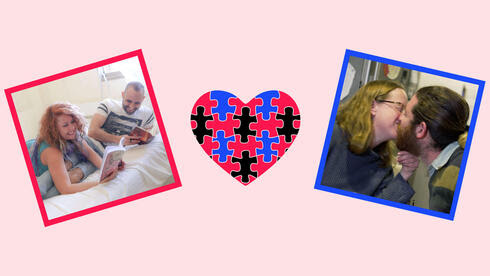

BTW, yes: Carelessness with poly can indeed be like being careless with fire. But we've learned how to use fire. You probably have a stove in your kitchen, a furnace in your basement, and gasoline in your car. If a religious outfit tried to frighten you into rejecting those things, you would know they had an ulterior motive that was not about your well-being.


●  And, the latest from the British tabloids: WHO'S THE DADDY? We don’t know who our kids’ fathers are – our unusual family dynamic may surprise you. (in The Sun May 6, and many other outlets since).

They're a quad with adorable pix.

Sean, Taya, Alysia, and Tyler with their two older kids. The dads are giving early kisses to the next two, who were still on the way.

Romantic, yes. However, the learned-by-experience advice that you will hear in the poly community — the topic comes up fairly often — is that it's a bad idea to not find out who the bio dad is. If there's any uncertainty you should arrange for DNA tests at the time of birth.

Why? Several reasons.

First and foremost, for the kid. Their genetic lineage could have vital medical relevance, maybe not until years from now. And, the kid will likely want to know which dad is the bio dad as they get older, and it is wrong to withhold it or prevent them from finding out. The grandparents (or non-grandparents) will almost certainly want to know and could make trouble in court; it happens. And if you ever break up, the kid deserves proper legal access to support.

The advice you will hear is do the test now, while you're all together and in love, rather than later when you may be broken up, and maybe on bad terms or unable to find each other.

Another reason, from my own observation of quads with kids. The child's bio dad will become pretty clear anyway, especially if the dads don't look alike. But this will happen gradually. Everyone will slowly see and slowly know. But if no one is supposed to talk about it, it'll always be an elephant in the room. Room elephants damage relationships, families, and children.

If you are romantic enough that you really don't want to know, do the tests and put the unopened results envelope in a safe-deposit box or on file in a lawyer's office. That way, you'll have it when the time comes.

-----------------------------------------

SPEAKING OF ELEPHANTS IN THE ROOM. . . .

We polyamorous people are a small, weird minority of social-rule breakers. Some people call us a threat to society, because by living outside their worldview successfully, we expose its incompleteness. Our freedom to choose our relationship structures, and to speak up for ourselves about the truth of ourselves, is just one way we depend on a free and pluralistic society that respects people's dignity to create their own lives, to access facts, and to speak of what they know.

Such a society is only possible where people have the ability to govern themselves, combined with legal structures that are at least supposed to protect the rights of all. 

People and communities who create their own lives, and who insist on the democratic structures and legal protections that enable them to do so safely, infuriate and terrify the authoritarians who are growing in power around the world and in our own United States.

Such rulers and would-be rulers seek to stamp out other people's freedom to choose their own way — by intimidation, repressive laws, propaganda and public incitement, or, eventually, artillery.

For what it's worth, this site has received more pagereads from Ukraine over the years (56,400) than from any other country in Eastern Europe.

For now, you can donate to Ukrainian relief through this list of organizations vetted by the Washington Post, or many others. (Avoid scams.)

But that is only the start. For those of us born since World War II, this is the most consequential war of our lifetimes.

The coming times are going to require tough things of us. We don't get to choose the time and place in history we are born into. But we do get to choose how we respond to it. Buck up and be ready.

PS: Need a little help bucking up? Play this new release from Pink Floyd. Loud.
Another version.

_________________________
 Don't miss Polyamory in the News!
 SUBSCRIBE by a feed, or
 SUBSCRIBE by email

_________________________

[Permalink]

Labels: , , , , ,


September 25, 2020

Friday Polyamory News Roundup: Tales of "how poly remade me for the better," and a student's radical broadening of that. The Oneidas, Brides mag, and more.


●  Psychologist and poly relationship therapist Jessica Fern, who specializes in attachment theory, has a significant new book out: Polysecure: Attachment, Trauma and Consensual Nonmonogamy. Fern has been an excellent and effective presenter at many poly conventions back when they were happening in person.

Across the Atlantic, her new book just became a jumping-off point for a long feature article in The Irish Times: Building bridges: How polyamory made me a better friend, lover and person (Sept. 19). The article is another in the "how polyamory remade me for the better" category. I posted about some others last week.  


When singer Jess Kavanagh discovered polyamory, she didn’t expect it to improve every facet of her life

Singer Jess Kavanagh: ‘Having multiple romantic partners has forced me to investigate elements of my emotional coping mechanisms that were unsustainable and hidden among the nooks and crannies of monogamous comforts.’ (Photograph: Dara Mac Dónaills) 


By Jess Kavanagh
 
My relationship with my partner has come a long way from me sobbing into a gin and tonic two years ago, clumsily asking for an open relationship. At that point, I had a very little idea of what I was asking for or what I was getting myself into.

...Although I am still extremely new to these experiences of sharing my partner and dating in a scene which is overwhelmingly catering to monogamy, some lessons I have learned from my dating journey have been very unexpected.

Jessica Fern, psychologist and author of Polysecure: Attachment, Trauma and Consensual Nonmonogamy, describes consensual non-monogamy as “the practice of having multiple sexual and/or romantic partners at the same time, where all people involved are aware of this relationship arrangement and consent to it” and polyamory as a “part of consensual monogamy . . . looking for multiple people to be in love with”.

On a Saturday afternoon I sat down for a discussion with Fern about how polyamory is becoming not only a realistic relationship choice, but also a distinct way for us to employ emotional work and express a collective love at a time where there is a global lack.

...Having multiple romantic partners has forced me to investigate elements of my emotional coping mechanisms that were unsustainable and hidden among the nooks and crannies of monogamous comforts. There is a narrative held dear in our society that once we are our loved one’s only sexual and romantic partner, that allows us to feel secure in that relationship.

Fern says: “In such cases, our self-esteem and sense of worth are contingent on our partner being monogamously committed to us instead of anchored in our own internal sense of self-worth, self-love and self-esteem.” In polyamory, when that narrative isn’t available as relationship-scaffolding, it is crucial to find other ways to make our partner(s) feel special and to re-establish a sense of inner-security. The freedom and innovation in these explorations can be transformative.

As I began to date other people, I started to experience my first bumps in the road. I was developing big crushes and chasing those butterflies to my detriment. In polyamory terms, this high is called NRE or “new relationship energy”. I was overextending myself to keep certain people interested.

...It was crucial for me to manage my insecurities and I started to take my emotional health very seriously. I started meditating more, researching attachment theory, trauma, and seeking therapy. Although all rejections and break-ups warrant varying levels of processing, the emotional maintenance I was doing reduced wallowing and self-destructive behaviour across all aspects of my life. A byproduct of polyamory I never expected.

...In the past, I found single, monogamous culture internalising what Fern calls a “hyper-independence”: a lack of accountability to casual partners' emotions, a type of frenzied everyone out for themselves behaviour. This always made me feel uncomfortable, having to extract love from sex if the outcome wasn’t monogamy. ...

Then there is friendship. Polyamory has given me the ability to see the nuance of romance, and moments of platonic intimacy with friends as much as with partners. I have found myself waking up energised and loved-up from a night out with pals in the way I would feel after a good date. I have more friend crushes. The boundaries of connection have not blurred, but shifted, where I can feel varied shades of love along the spectrum of the romantic to the platonic.

...There is something we all can take from an orientation that embraces the imperfect, heralds respectful communication, and acknowledges the many embodiments of love.

Fern says: “Non-monogamy can offer a bigger sense of love that we all need, [it] breaks down the nuclear-ness, the Us vs Them mentality and provides bridges of love to different people.” ...

Polysecure: Attachment, Trauma and Consensual Nonmonogamy is published by Thorntree Press in October.


●  And another such testimonial, in MamaMia!  'At 21, I was in a relationship with an older married man – and his wife' (Sept. 18)


By Anonymous

...At 21 I found myself dating an older, married, polyamorous man, and the way I love has never been the same since.

...It began from a simple Bumble date... on which he wore his wedding ring.

At first, I was very sceptical as to how open his relationship with his wife was, but he was incredibly honest about his previous relationships and dating patterns.

We easily clicked, and he was the most interesting person I had ever met. The way he explained his approach to love was fascinating, and I was hooked. 

..In this particular situation, he and his wife were each other’s primary partners, while she also had a long-term boyfriend and continued to date other people as well. However, as their relationship with each other changed, they dropped the hierarchical measure of relationships.

At first, I couldn’t really wrap my head around why you would actively go out and seek other people when you’re in a happy and healthy relationship to start with. ...

...I soon realised polyamory was instead about the joy of love. ...

------------------------

..So what did I learn?

My whole perception of love and relationships changed within the short span of our relationship. 

I began this experience with a very short-sighted view of what a healthy dynamic is and found that a relationship doesn’t need to conform to the traditional norms that society has defined. 

In my previous relationships, I was quite defensive and often jealous. Through the experience of polyamory, I learnt to understand where my jealousy was stemming from and to critically analyse whether it was derived from my own insecurities or rooted deeper within the relationship itself, such as needing more quality time together. 

I came to terms with facing potential conflict such as possible trust issues and relying on communication to overcome these challenges. It was also striking to me how traditional monogamous relationships are often framed with very possessive language, creating an extremely toxic culture of jealousy and controlling behaviour. 

Polyamory invigorated my sense of self-worth and inner strength which I was unaware that I had. ...

...Polyamory felt like a boot camp for these skills which significantly developed my muscles in these areas. I now feel ready and prepared for the next relationship coming my way, and I’m excited for when it does.


●  The same day, a more radical generalization of those discoveries appeared in The Campus student newspaper of Allegheny College: Could polyamorous relationships mitigate the shortcomings of the nuclear family?  (Sept. 18)


By Peyton Britt, Opinion Editor

...In her book “What Love Is: And What It Could Be,” philosopher Carrie Jenkins notes that changes in society occur against a foundation of the pre-existing conventions. She considers monogamy a principal characteristic of romantic love’s social role, that role being to curtail love between grown adults and force it into the mold of the stable nuclear family.

...I imagine a society in which children whose two parents are fighting can go stay the night with a third parent until the home environment is peaceful again. I imagine women in abusive relationships finding solace, and eventually escape, with the support and assurance of their other husbands. I imagine teenagers with qualms about their rapidly developing identities having more than two parental figures whom they can consult and with whom they can relate. I imagine a man leaving for his third shift job as a partner returns from first shift, both equally comforted to know that their wife will not be alone in the burden of childcare. I see no issue with broadening what constitutes as a family in order to strengthen a sense of community. 

I also imagine that traditionally monogamous, heterosexual relationships will continue to create nuclear family units, a possibility by which I am unbothered. The society for which I yearn is simply one in which love is unfettered by the strains of convention, and people give and receive affection in whatever multifarious fashions they desire. ...


●  Sign of the times: Brides magazine, a juggernaut of the traditional wedding-industrial complex for 85 years, now presents How to Know if an Open Marriage Is Right for You (Sept. 24). The advice is decently good, granted that it's entirely couple-centric.


Navigating non-monogamy with your partner is no small feat but, if you’re both willing to put in the work, can ultimately bring you two closer than ever. It takes two to make a thing go right—right? That math might just have a little wiggle room.

...“When people come into my practice wanting non-monogamy, it’s usually because they had a pivotal moment,” explains [relationship therapist Gwen] Lotery, but need help clarifying and communicating it with their partner. “I realize this is coming from a therapist,” she laughs, “but counseling can really help with that!” 

O'Malley Photographers
For couples that do come to her wondering if an open marriage is the right path, she empowers them to ask each other exciting, sometimes uncomfortable, and very much crucial questions such as, “Is your idea purely sexual, or more of another relationship? Do you play [outside the marriage] together, or do you play separately? Both?” Then, based on those answers, the pair can decide if and how they want to move forward.

...“The biggest mistake a couple can do is jump in,” warns Lotery. She compares opening up a marriage successfully to training for a marathon, saying, “You wouldn’t buy tennis shoes on Friday and then run the marathon Sunday—you won’t make it!” What does work, in her professional opinion, is “a lot of talking, a lot of listening … and most importantly, only going as far and fast as the slowest partner is ready for.” Below, we’ve broken down her advice into three core components....

...Lotery does have one final (and might we add excellent!) piece of advice: “More important than learning how to communicate, hands down, is listening.” In her own practice, she regularly “really [teaches] people how to listen well because, if you understand what your partner is saying or wanting or desiring, there’s bound to be more compassion and a willingness to stay curious and connect.” ...


●  Erin K. Barnes writes us, "I wrote this article about my cute relationship with my metamour for Men's Health and wanted to spread the word!"


That’s right: the love of my life is dating another woman, and she’s awesome.

By Erin K. Barnes | Sept. 24

My husband has a girlfriend...and I love her. That’s right: the love of my life is dating another woman, and she’s awesome.

The topic of my metamour—that’s my partner’s partner, in polyamorous terms—is controversial. It doesn’t matter that it was my idea to open our marriage. It doesn’t matter how my husband Cliff looks at me with heart eyes, or how many sizzling affairs I have. Most people feel sorry for me, or even disgusted, that I actually like the woman who—as they see it—threatens to replace me.

...A number of my girlfriends kept my non-monogamy a secret from their spouses for fear they wouldn’t be allowed around me. I wondered, would their husbands restrict them from associating with a single woman? Why was I so different? Cliff’s best friend pulled me aside tearfully after a night of drinking, telling me, “I don’t want to lose you.”

I didn’t blame them; despite the myriad polyamory explainers on the internet like this one, most people misunderstand our arrangement.

It wasn’t always this way. ...

--------------------------------------

One night, I lay awake with my pulse pounding, gripped with the sudden courage to tell my husband that I wanted to have sex with other people. I put his hand on my breast to cushion the blow...and woke him from a dead sleep.

“There’s something I’ve been wanting to talk to you about,” I whispered. ... I said I was grateful we were still in love after 17 years. That I felt like I was going through a change, and rather than rebel alone, I wanted him to be my partner in crime. And that it really turned me on to think of us in an open marriage.

My husband sat up in bed. “Wow,” he said. I had always been the vanilla one. “Yes,” he said, kissing me. “Yes!”

Cliff looked as giddy as I had when he had proposed; only this time, we were choosing us, and setting each other free. ...

With freedom, my pent-up sexual tension deflated. I could be around hot dads without losing my mind. I indulged in pastimes I never thought I’d relive, like lying in bed with a new man, tracing his tattoos with my fingertips and alternating between talking and rendering each other speechless. I also explored profound platonic friendships with men I’d have surely missed out on in monogamy.

Cliff wanted kitchen table polyamory, where both partners have serious secondary relationships. I wanted lust and extramarital fun. In a twist of irony, I fell in love with someone new and had my heart broken, organically extending my own boundaries. While my family didn’t need to know the details, I didn’t hide my feelings. “Children,” I began with puffy eyes, “I’d like to introduce you to the music of the Smiths. They tell people that it’s okay to feel sad sometimes.” Being a 37-year-old mom with a broken heart sucked, but knowing it was possible to love two people at once gave me stability for what was to come. ...

--------------------------------------

When the time came for Cliff to go to Allison’s house for an intimate date night, I texted her, saying, “I hope this isn’t weird, but I wanted to introduce myself so you know that I’m okay with this.”

We followed each other on Instagram and discovered we share the same absurd sense of humor. We gleefully bonded over memes. She entered our lives respectfully, without being pushy, but she also didn’t hide from me, nor I from her.

...Today, we have a happy little polycule. Allison and I hang out together, and when we do, Cliff sends us video chats that start with a grinning, “Hey ladies...” Cliff is notoriously late to everything, so Allison helps him get home on time. ...

Society wants me to hate this gem of a person -- the person who texted me after our dog died to send us “love beams,” only she accidentally wrote “love beans,” so now we often jokingly send each other “love beans.” People want to believe that I’m either a freak or uncommonly evolved to handle this unconventional arrangement. In truth, I’m not very remarkable at all; it’s simply not that hard. Concepts that once seemed terrifying are surprisingly easy when we meet the people involved...and they’re awesome.


●  The BBC just posted a 7-minute mini-documentary on the Oneida Colony, America's 19th-century attempt at a polyamorous religious utopia that seems to be getting ever more attention as the decades pass. If you've wondered what the Oneidas were actually about, it's a good quickie. Oneida: The 'free-love utopia' that chased immortality (video by Maria Badia, posted Sept. 24). It's part of the BBC's  "Hidden History" series, "delving into the mysteries of the past to shed light on the present."

I hadn't known, for one thing, that the Oneidas were preterists: Christians who believe that the Second Coming of Jesus already occurred in 70 AD (in the lifetime of his original followers as he promised), that the Kingdom of Heaven has existed on Earth ever since, and that we only need to understand this and act on it.


  Announcements:  

     – Loving More online group discussion, Tuesday October 6, 7:00 - 8:30 pm Mountain time; 9 to 10:30 Eastern. "Join Loving More for an online polyamory discussion. This is open to all Loving More meetup members and is hosted from our office in Loveland, Colorado. Topic: TBD. Discussion is always open to current issues people may be dealing with." Hosted by Robyn Trask. 

     – The Poly Dallas Millennium conference, which centers the Black experience (people of all colors welcome) will happen online this year, November 6-8. CEUs available for psychology professionals. Facebook.

     –  Polycon Canada, November 22-23. "24 hr livestream event from sundown Nov 22 to sundown Nov 23 (Pacific time). Honouring Intersectionality and Diversity in our Communities."

     – Have an announcement that ought to be here? Email me at alan7388 (at) gmail.com.

_________________________
 Don't miss Polyamory in the News!
 SUBSCRIBE by a feed, or
 SUBSCRIBE by email

_________________________


[Permalink]

Labels: , , , , ,


August 21, 2020

Friday Polyamory News Roundup – Poly as training for parenting, best polyam dating apps, Kimchi and Vajra reconcile, when 2+2 = 3+1, and more.


Welcome to Friday Polynews Roundup for August 21, 2020.

●  We start off with a two-fer. This one hits the categories of "what the poly community can teach anyone" and poly parenting. Here’s How Being Polyamorous Prepared Me For Parenting, from HuffPost Personal (Aug. 15). It was immediately written about on the new-mom site BabyGaga and was reprinted elsewhere.


“I’ve had lots of different kinds of relationships with lots of different people and all of those experiences taught me how to be the best mom I can be.”

By Marea Goodman

The author (left) and her family in Oakland, California, in March.

In my early 20s, I was passionate about polyamory.... There were times I had one “primary” partner and other more casual, “secondary” relationships. I was in a triad relationship where the three of us went on dates together and slept in the same bed. There was a year during which I maintained three serious relationships at once, where all people involved knew about each other, and two of them were also dating each other. It was like a self-studied master’s course in human dynamics.

At the time, it was the most liberating lifestyle I could imagine. But five years later, after navigating my fair share of dramatic break ups and having a time-intensive, full-time job, I found monogamy to be the approach to my romantic, sexual and family life that worked and felt best for me.

Even though I am no longer practicing polyamory, I look back happily at that part of my life, and, what’s more, I’ve come to realize that being polyamorous actually prepared me to successfully be a parent.

Here’s what it taught me.

1. How to balance (and schedule) multiple people’s needs at a time.

...In my family now, I have conversations with my partner and 10-year-old daughter that are similar to those I had with my romantic partners a decade ago. We’ve learned that my daughter needs a daily routine to feel calm and grounded, so we write her a list beginning with “brush your teeth” and ending with “get in bed.” My partner, the free spirit, appreciates having one full day per week when we don’t have anything scheduled so that we can do whatever we want as a family (and, ironically, we plan when that day will be). Our toddler needs to play outside every day or else it’s impossible to put him to sleep. And I need regular alone time to maintain my sanity.

The process of distilling our needs into practical, schedule-able pieces helps each person get what they need, and overall increases our family harmony.

2. How to be in touch with my own feelings and prioritize them

...I’ve learned that my primary relationship is with myself ― when I am taken care of, I can take care of others, and everyone in my family benefits.

3. It’s OK to have different feelings for different people ...

4. How to communicate effectively

Knowing how you feel is not always enough. During my years of polyamory, I practiced the art of communication with studious rigor. Healthy communication is not monolithic. Each of us carries traumas and stories from our past, and we often filter our experience through our baggage. For some, saying “I need a little space” feels like a clearly stated need. For others, it feels like a heartbreaking rejection.

...The same skills apply to my relationships with my partner and children. They are all different people with varied ways of taking in information. ...

5. Jealousy is an onion

Understanding jealousy as a [multilayered] onion is enormously helpful in navigating sibling dynamics. I recognize that when my daughter gets jealous of the attention we give to our toddler, that it’s not about him or about us as parents. I try to help her peel off the layers of the onion so we can get to the core of her pain and work to heal what’s motivating her feelings of jealousy in the first place.

6. The need to understand oppression dynamics 

7. How to navigate different love languages

Dr. Gary Chapman wrote a book called “The 5 Love Languages” which describes five fundamental ways that people in Western societies give and receive love. These love languages include: words of affirmation, acts of service, receiving gifts, quality time and physical touch. While there are many variations and nuances to how we love, I’ve found this framework profoundly helpful in both polyamory and parenting.

...I used to think polyamory was the greatest adventure in intimacy. Now I understand that it was, for me, a training ground for the 24-7, full-contact sport of parenting. 

We speak to our 10-year-old about different relationship dynamics including polyamory. With two moms and a sperm donor, she already knows that families look all kinds of ways. When my kids are ready, I will encourage them to explore whatever kinds of relationships they are called to. ...


●  From Cosmopolitan, The Best Dating Apps for Those Who Identify as Non-Monogamous, by Gabrielle Smith (Aug. 17). Smith also wrote that nice article at Self  magazine last week, 9 Ways Non-Monogamous People Are Dealing With the Pandemic.


By Gabrielle Smith

...For starters, there are so! many! ways! to identify under the umbrella term of non-monogamy. But the one thing everyone has in common if they do: no expectation of exclusivity. ...

Now as an ethically non-monogamous person, I’ve always used dating apps—from my first open relationship at 19 to my solo-polyamory today. Through Tinder, I’ve found two of my long-term partners. Via Hinge, I had my first relationship with another woman. And while on Feeld, I’ve met all sorts of wonderful ethically non-monogamous folks.

In general, it's been a pretty positive experience. Dating apps help people like me represent ourselves properly. We can usually state directly in our profiles "I am ethically non-monogamous" [and describe your variety of it.]

Despite meeting my first romantic female partner on Hinge, this app is one of the least amenable for ethical non-monogamy. It is, after all, coined as “designed to be deleted,” which perpetuates monogamy, so it’s not surprising that I found it difficult to be ENM on this app. ...

Tinder and Bumble, while not perfect, are pretty decent options for ENM folks. Their benefits have to do with numbers and simplicity. In the United States, Tinder and Bumble are the dating apps with the largest user base. ...

The winners for non-monogamous dating, though: Feeld and OkCupid. ... I mean, Feeld was made for ENM, and OkCupid has survived due to its willingness to adapt. ...

I [also] spoke with seven other folks who identify as non-monogamous about their favorites and definitely-not-favorites. ...


●  The online women's magazine SheKnows presents a long, solid ENM 101 that, in my opinion, covers the basic bases without fumbles or errors: Everything You Always Wanted to Know About Ethical Non-Monogamy  (Aug. 20). And it quotes people I've never heard of before. It was reprinted the same day by Yahoo News/ Life. Pieces:


Good Studio / AdobeStock
By Gina Escandon

...While a key tenet is freedom to explore and have affection with different people, there’s a lot behind the scenes that make these relationships successful. So, let’s chart the waters for everything you always wanted to know about ENM, including how to open your relationship while making everyone involved feel safe and loved. 

...“Ethically non-monogamous relationships are ones in which all people involved have negotiated the terms of and enthusiastically consented to non-monogamy, without feeling coerced into it,” explains Dr. Dulcinea Pitagora, NYC-based psychotherapist and sex therapist.

Heather McPherson, licensed supervisor of couples and sex therapy, owner of Respark Therapy, and owner of Sexual Health Alliance, which provides certification programs for therapists, coaches and healthcare providers, emphasizes that if participants aren’t feeling 100 percent on board, or they see it as a way to repair a broken relationship, it can put the arrangement in jeopardy. “It should be noted that if one partner has consented under coercion,” she says, “or because they are afraid they will lose the relationship, the agreement may be compromised.”

What are the different kinds of ethical non-monogamy?

...Think of it an umbrella term for all the ways you can, with consent, explore love and sex with multiple people. If someone says they’re non-monogamous, don’t assume you know what that means; instead respectfully ask them for more information.

...Says Hannah, who’s polyamorous and shares an apartment in Brooklyn with their primary and secondary partners, “ENM means you’re ‘opening up’ your relationship in some way. I think the only distinction is that people who identify as poly tend to have more romantic connections and significant others, where ENM can be casual, or just about sexual connections, depending on who’s defining it.” 

Common misconceptions 

To chip away at the taboos, let’s talk about what ENM is not. ...

Does consensual non-monogamy work for everyone? 

[The tl;dr: No.  To continue,] People in ENM relationships tend to have heightened communication skills, a sophisticated understanding of boundaries, and tons of empathy — because you have to do so much talking to make sure everyone involved feels safe, special, and loved. McPherson says to expect to work on your relationship and communicate twice as much as you once did, “at least for the first few years.” 

Keep in mind that you’re not going to figure it out overnight. ... [Nevertheless] a 2020 study conducted by Western University, York University and the University of Utah actually found that people with consensually non-monogamous connections had increased life satisfaction, relationship quality, and sexual contentment. 

Communication is the key to a successful ENM 

...Communication is hard and terrifying, but it’s super important to get on the same page about boundaries and limitations early on....

[Says Dr. Pitagora,] “Especially for people who are new to ethical and consensual non-monogamy, it can feel awkward to have conversations about new partners, so I always advise having conversations about conversations.” 

[And,] “Whenever there are new partners/romantic interests/sexual partners, I suggest that each dyad/triad/etc. has a conversation about what level of detail they want from their partners about who they’re seeing and what they’ll be doing with whom, and also when they would like to have that information... g. Figuring out and agreeing on how to have conversations makes it easier to have those conversations.” 

Having the courage to say what you feel takes a lot of practice! But boundaries are there to keep you safe — that’s why it’s better to set your tenets in the beginning....


●  Some Covid closure? In the poly-comics gossip department, remember those sad Kimchi Cuddles strips a couple weeks ago about a covid-boundary crisis between real-life Kim and real-life Vajra, and their little kid being fed covid-denialist crap by her friend's knucklehead mom?

"Kimchi" and "Vajra" have apparently worked it out using those, you know, communication skills. He's moving back to a nearby apartment and things are looking good, and of course she cartooned about it, to the cheers and likes of thousands of fans.

Fact is, I gather that she has not been entirely pristine in the boundary-agreement department herself, and real-life Vajra handled the kerfuffle pretty well, so no villains here please except for the kid's friend's knucklehead mom.

What's more, real-life Rajeev may finally, after all these years, be moving in next door too. The middle panel is a reference to Brokeback Mountain.
 

●  Not-quite-so-happy poly in the tabloids. The Daily Mail and others published the tale (Aug. 19) of two couples in Perth, Australia, who fell in love and "formed an almost-quadruple, where everyone dated each other except Rob and Simon." It was wonderful all around until it wasn't, and following a disagreement between the two women, they broke up as a quad late last year. Three continue as a triad, and their kids call the extra guy their "sparent." (Get it?) The other woman has dropped the other two and maintains a relationship with only her original guy.

I am reminded of Deborah Anapol's observation in the poly movement's early days that often, 2+2 = 3+1, as in this case. Or worse, 2+2 = 3–1. Some say that quads are the easiest polyfamily configuration, others say they're the hardest. At least everyone here seems amicable and settled... if you can believe anything in the tabloids.


That's it for Friday Polynews Roundup. Stay well, dear people, don't be a knucklehead, and don't breathe their aerosols.

Labels: , , , , ,


February 14, 2020

Friday Polynews Roundup — The dam bursts for poly on TV, what we offer everyone, when to stay away, and planted seeds are sprouting


It's Friday Polynews Roundup — for February 14, 2020.

Happy Val's Day. So many poly-in-the-media items poured in this week that I can't keep up. Therefore I'm holding everything that even contains the word "Valentine" for later. Even so, settle in for a long read (or a long skim).

The dam bursts for poly on TV.  Way back in 2006, Reid Mihalko came within an inch, he said, of selling HBO on a dramedy series to be called "Polly and Marie" (say it fast). A short pilot was made, but HBO backed off for fear of advertisers' fears. "There's a lot of interest in getting this [topic] on TV," Reid told an audience at the 2009 Poly Living conference, "but nobody is quite biting, because nobody knows if the advertisers will want it. It's kind of happening, but you don't see it yet, because it's not on the air yet."

And so it went for several more years. The TV industry was well aware of the dramatic potential of modern, egalitarian polyamorous bonding, and its ability to grab viewers' attention, but they didn't quite dare. The first forays were carefully distanced from mainstream America by setting them in Mormon polygamy: first fictionally ("Big Love," starting in 2006), then in real life ("Sister Wives," 2010).

Now the dam is finally bursting, as regular readers here know; see my recent posts tagged TV (they include this post; scroll down).

The latest example aired night before last (Feb. 12), and within hours People magazine was on top of it: HGTV Features Its First-Ever Throuple on House Hunters: 'Representation Matters' (Feb. 13):


Geli, Lori and Bryan


By Gabrielle Chung

With 17 seasons under its belt, House Hunters made HGTV history on Wednesday when it featured its first throuple — three people in a polyamorous romantic relationship — on one of its episodes.

Titled “Three’s Not a Crowd in Colorado Springs,” the episode followed Brian, Lori and Geli on a quest to find their dream house in Colorado.

The trio wanted to find a new home that will accommodate their unique dynamic as well as provide space for Brian and Lori’s two children.

As with any episode of House Hunters, the family came armed with a list of must-haves for their new residence, including a three-car garage and a master bathroom that will accommodate three people.

At one point in the episode, Lori remarked about the lack of space in one house they were touring, saying, “This is a couple’s kitchen, not a throuple’s kitchen.”

...The episode ended with the family choosing a house above their budget as they all loved its view of the surrounding mountain.

However, viewers had a lot more to say about their relationship than their new home. Many House Hunter fans praised HGTV on social media for being so “progressive” and “educational” about the relationship dynamics of a throuple.

“Oh my god. A throuple on House Hunters,” Bad Feminist author Roxane Gay tweeted. “Great episode!!!! Educational.”

“HGTV really might be the most progressive show on TV. About to watch a polyamory couple fight over a house!” one Twitter user wrote. “Honestly I feel like I learned a lot #HouseHunters”

“literally perfect television,” a third tweeted, while another user applauded HGTV for “STORMING into 2020.”

Fans also came to Brian, Lori and Geli’s defense following the broadcast.

“Wow, shocked that this house hunters episode not only showed a poly relationship, but they called them a throuple the whole episode and outright said the women were bisexual. Guess we gotta stan!” one wrote on Twitter.

“This throuple on house hunters… good for them 🙂” another tweeted. “representation matters.”


Update: Stories remarking on the episode — positively! — have also just appeared on USA Today, Newsweek, the queer Out Front magazine, and The Daily Wire.


An important upcoming TV series. "Trigonometry" is an 8-episode series about a poly triad that will air on HBO Max and BBC TV later this year. The production company has just put out a 1-minute trailer. The Hollywood news site Deadline has this to say (Feb. 10):


The "Trigonometry" triad at home

 
‘Trigonometry’: First Trailer For Berlin-Bound Series From House Productions, BBC & HBO Max

...Directed by Athina Rachel Tsangari (Attenberg) and Stella Corradi (On The Edge), the show will air on BBC in the UK and HBO Max in the US. Writers are Duncan Macmillan and Effie Woods. BBC Studios is handling international distribution.

Set in crowded, expensive London, the series follows a cash-strapped couple who open their small apartment to a third person, discovering a new way to live – and love – in the process.

...House Productions’ joint CEO’s Tessa Ross and Juliette Howell told us, “We are absolutely thrilled that the first five episodes of Trigonometry will be premiering in the Berlinale Series this year. Trigonometry is a warm, funny and emotionally truthful drama about modern relationships that has been brought to life in such a beautiful way by our cast Ariane Labed, Gary Carr and Thalissa Teixeira.

“The trio take us on a modern day journey of the different faces of modern love. Duncan Macmillan and Effie Woods’ exquisite scripts have been beautifully realised by our two hugely talented and award-winning directors, Athina Rachel Tsangari (who directed episodes 1 – 5) and Stella Corradi (who directed episodes 6 – 8), to give a truly special show....”


Air dates have not been announced.


● Moving on, one subgenre of poly in the media is bubbly articles about the lessons our movement and our values offer monogamous couples. A new one of these appeared this week in Business Insider: 5 lessons on jealousy and romance that couples can learn from their friends in non-monogamous relationships (Feb. 8).


Consensual non-monogamy [now or in your past] is as common as [currently] owning a cat. (Dougal Waters / Getty) 

 
By Jessica Stillman

About one in five Americans have engaged in some sort of consensual non-monogamy, or CNM, in their lifetimes — it's about as common as owning a cat, researchers say.

The ways that CNM emphasizes communication can be instructive for singles as well as people in other kinds of relationships. The process of differentiation — or knowing who you are and how you're different from your partner — is another big factor in CNM that can help just about everyone.

...The umbrella term of "consensual non-monogamy" covers everything from the casual sex of swingers to the loving, long-term relationships of polyamorists. If it involves more than two people, sex or love, and everyone has consented, then it's CNM.

...[Says] Heath Schechinger, a UC Berkeley psychologist and co-chair of the American Psychological Association's task force on CNM. "You likely have friends and colleagues who are doing this, but you just don't know about it."

"Comparison studies looking at all of the gold standards for measuring relationship quality — relationship satisfaction, sexual satisfaction, duration of the relationship, communication, etc. — show that consensually non-monogamous relationships perform equal or better than monogamous relationships," Schechinger said.

...CNM relationships tend to have unique habits that many folks involved in traditional monogamous pairings could benefit from.

1. They favor direct communication over standard scripts

Every expert agrees that non-monogamy is a communication-heavy lifestyle. ... The key lesson for others... is the fact that everything is on the table. Rather than blindly following traditional expectations for relationships, which experts refer to as relationship "scripts," non-monogamous couples tend to explicitly hash out and agree on how to run all aspects of their lives.

"Non-monogamy forces you to learn how to communicate openly and honestly with your partner(s) about awkward things, because otherwise it just doesn't work. There is no default script to fall back on. You have to define what you are doing for yourself," said Carrie Jenkins, a philosopher at the University of British Columbia and author of What Love Is and What It Could Be. "But the thing is, everyone should be defining what they're doing for themselves."

2. Fire needs oxygen to burn

...Constant closeness suffocates attraction, as well as your sense of individuality and freedom. Because of the variety built into their arrangements, non-monogamous couples often find it easier to "oxygenate" their relationships.

"Successful non-monogamous couples become good at having separate individual lives and interests, true to their own nature," explained psychotherapist Wayne Scott, who is himself in an open marriage. "People need to have independent interests and passions and experiences — it gives them richer lives and can even make them more interesting to their spouses." The term therapists use for this process is "differentiation."...

3. It takes a village

..."Non-monogamous relationships tend to challenge a little bit more the notion that we necessarily have to meet all of our partner's needs," Schechinger said. "Expecting one person to be our best friend, our lover, companion, our co-parent, can put a significant amount of pressure on the relationship."...

Whether or not you're up for opening your relationship, this principle holds. It's healthy to look to a broader base of friends, relatives, and community members rather than just your spouse.

4. Jealousy is a prompt for self-examination

According to a 2017 study, polyamorists actually experience less jealousy than the conventionally paired. Partly that may be because those who are less inclined to jealousy are drawn towards CNM, but the non-monogamous also tend to conceive of and process jealousy differently. ...

For many traditional couples jealousy is a problem out there. It stems from bad behavior on the part of one partner.... Those who practice non-monogamy more often speak of jealousy as an internal issue, something in here. They see jealousy as a symptom of insecurity or anxiety that should be handled by introspection to identify the cause and identify better ways to cope.

5. Thoughtful transitions beat messy breakups

With the messiness of infidelity largely off the table thanks to rules and communication, non-monogamous relationships often evolve rather than explode. The sexual spark might fizzle, for instance, but a couple will agree to move on to being co-parents and friends without recrimination or over-the-top drama.

...This process of self-discovery and negotiation isn't just for polyamorists, it's something that truly any relationship can benefit from.


● Another in the genre, from Insider: Polyamorous people are often experts at coping with relationship jealousy — here are some of their tips, by Julia Naftulin and Canela López (Feb. 6). The tips in brief:


Jason Boyd, 33, said acknowledging jealous feelings rather than ignoring them helps. ...

Audria O'Neill, a woman who used to be in a monogamous marriage, suggested talking about boundaries as early as possible....

O'Neill also suggested looking inwards to understand the root of your jealousy....

Kayla Lords said journaling helps her get in touch with her emotions and process them in a healthy way....

Lords also said active listening and a willingness to be vulnerable can help make jealousy-related conversations productive learning experiences....

Tara Skubella said getting to know her primary partner's other partner made her feel more secure and empathetic....

Lola Phoenix, a London-based writer, said it's important to set boundaries in your relationship to minimize jealousy. Set boundaries based on your needs, not societal expectations....

Krystal Baugher, a Colorado-based writer, said it's important to take care of yourself first before engaging with a partner....

Hailey Gill, 26, has practiced polyamory since high school and said communication about new partners is key between them and their husband....


In the last five years, I've spotlighted several dozen such articles on what we offer mono folks. Start with this latest roundup, which contains links to the previous five batches. And a pile more await my working up.


● Yahoo Lifestyle this week ran a fine little intro to the commonest poly structure. They picked it up from PureWow ("beauty, food, wellness, family"): What Is a Triad Relationship? (And What Are the Rules of Engagement?) (Feb. 8). It's a one-source quickie, with its quality coming from marriage and family therapist Rachel D. Miller in Chicago.


...Think of it as a subset of polyamory. But not all triads are the same. Miller tells us that triads can take various forms....

So why would people form this relationship?

That’s kind of like asking any couple why they’re together — there are myriad reasons for consensual non-monogamy: love, lust, convenience, stability, etc. “Truthfully,” Miller explains, “the reason people form them is often unique to the people involved, but what they have in common is an openness to a nontraditional way to love and be in a relationship.” Here are few of the reasons behind a triad relationship she’s heard over the years:

1. A couple felt like their union was overflowing with love, and they wanted to share that with another person.

2. Polyamory felt like an orientation rather than a choice, so a dyad was never part of their vision for a relationship.

3. A person fell in love with two different people and wanted to maintain relationships with both, and everyone involved was in agreement about the arrangement.

4. A friend of a couple became more than a friend for one or both partners, and they decided as a unit to expand the relationship to include all of them.

5. A couple wanted to add some spice to their sex life and, in doing so, discovered another person they connected with on a multitude of levels.

What are the dynamics of a triad relationship?

...Some common denominators of a healthy triad include genuine love and caring for all involved, large support systems (this can be emotional, financial, etc.) and a desire to remain open to all the types of love that present in their lives. Miller elaborates that within any poly or consensually non-monogamous relationship, the things that need to be present are ongoing consent and the power and ability to renegotiate the terms in order for all members to get what they need from the relationship.

What challenges do people in nontraditional relationships face?

...Per Miller, “Society is set up to support traditional ideas around marriage — e.g., only two people in the relationship can be protected by legal marital status.” The implications of this can can leave one member of a triad feeling less secure or that they have less power within the relationship. The fix? Like any relationship: good communication and open dialogue.


● Does mediocre, flawed media coverage ever do us any good?

Well, remember that much-criticized New York Times Sunday Magazine cover story, Is an Open Marriage a Happier Marriage? Its answer was "Often yes," but let's not even get into its poor representation and other stuff.

Nevertheless, on the opposite side of the continent, a student noticed it lying on a library table. It changed her life. Three years later comes her story in The Martlet, the student newspaper of the University of Victoria in British Columbia, A venture into non-monogamy (Feb. 10):


By Darian Lee

...[The NY Times Magazine lying on the table] was the first time I had heard of anything besides monogamy, and after reading the article I decided that I wanted to open up my relationship.

Darian Lee
The whole situation of asking my partner was nerve wracking. I’ve never been good with words, so I came up with a genius plan to avoid rejection and actually communicating. I’d just point out the magazine, opened to the feature, and said, “Hey, this is kinda interesting, right,” to gauge his response. He glanced at it, shrugged, and started talking about something else.

Plan A failed, so ... I just blurted out “I want to open our relationship!” and waited anxiously for a response. He said that we shouldn’t, and the disappointment crushed me. He explained it was because we weren’t good at communicating. After that, we didn’t talk much for a bit....

...I started following the “UVic Confessions & Crushes” Facebook page. A common theme in the posts was being torn between partners, and many users commented messages along the lines of “monogamy is flawed.” I decided to give it another go and propose non-monogamy to my partner again. We had grown up so much together since then and could finally communicate openly and honestly, and I actually had the words to clearly express what I wanted and why. This time, my proposal was met with enthusiasm, and I was overjoyed!

The first step was to define the terms of our relationship. We did some research and found that the idea of an “open relationship” didn’t actually line up with what I wanted. An open relationship generally refers to a relationship where you have a main partner, and are sexually non-monogamous. As a hopeless romantic, I wanted to experience all the lovey-dovey fun stuff of dating and share intimate bonds with other people. In this case, “polyamory” seemed to be the better label for our situation.

Now came the hard part: actually meeting other people. ...


Spoilers coming.


I’ve learned to combat jealousy (something I’ve always struggled with) and express how I feel in a way that I’ve never been challenged to do in the past. My partner has also grown emotionally and so far this experience has had a positive impact on our relationship, contrary to the doubt conveyed by friends. My biggest takeaway from this experience so far is that with a lot of communication and honesty, as well as getting to know oneself better, non-monogamy can really work and not damage your pre-existing relationships.

My advice is to make sure you have very open communication in the first place, and to do plenty of research regarding what you want so you can be clear-cut with how you’re feeling. I’ve met plenty of people here in Victoria who are in a variety of non-traditional relationships, so it’s not as unusual as I would have thought, and it really helped to know this to feel comfortable telling others. Hopefully, sharing my experience can have the same effect on anyone considering this.


Pass it forward.


● An open marriage sometimes manages to work in a much more traditional, old-school context. This week in the Brisbane Times and other Australian newspapers in its chain, Non-monogamy has been the real secret to our happy 37-year marriage (online Feb. 8, in the Sunday print edition Feb. 9)


By Anonymous

...Whatever John was up to, or not up to, it was ruining my life and it hit me that I didn’t have to let it. I couldn’t change him, but I could change myself.

...In her new book, A Happy Life in an Open Relationship, sex and relationship therapist Susan Wenzel argues that it is possible to have a happy, open marriage, provided you develop trust and communication skills, set healthy boundaries and overcome jealousy.

...None of this was in my mind on my wedding morning in 1982. ...


Confusion when different people may think the word means different things. The Dear Abby advice column appearing in newspapers this week fields a parent's question: Was teen daughter’s response to boy’s sexuality ‘shaming’? But did the boy, the girl, the mom, or Dear Abby know what each other were talking about?


DEAR ABBY: I’ve got a new one for you. My beautiful 16-year-old daughter was interested in a boy her age from school. He was interested in her, too. He told her he wanted to date her, but that he is “polyamorous” and would be dating many girls simultaneously. She told him he’s too young to know what he is yet, and he was just using it as an excuse to date multiple girls, and she wasn’t interested.

...He has been acting very hurt, pouty and angry. He told a mutual friend he is “deeply hurt” [that] he came out to my daughter and that she won’t accept him as he is. I’m worried this will escalate, and he will claim that she shamed him for this.

Abby, I am all about supporting how people self-identify, but this is absolutely ridiculous....

— NOT FUNNY IN COLORADO


DEAR NOT FUNNY: That boy is sulking because his pitch didn’t sell. Polyamory is the practice of openly engaging in multiple intimate relationships with the consent of ALL the people involved. What that boy may have meant was he enjoys “playing the field.” Your daughter didn’t discriminate; she showed good common sense. ...


There's still no good dating app for non-monogamous people, says Mashable in substantial and useful detail (Feb. 6). If you're on the dating market, read this.


● Sometimes the obvious needs to be restated and explained in detail. Here's Elisabeth Sheff's When Consensual Non-Monogamy Won't Work for Monogamous Folks. "3 things that make CNM unrealistic or excruciating for monogamous people" (Feb. 11).


Because public awareness of CNM is expanding in the US and abroad, people who never considered it before are suddenly becoming aware of the polyamorous possibility. For some, this opens exciting new relational vistas of multiple partner bliss. But for others, especially deeply monogamous people, this boom in the practice and awareness of CNM is uncomfortable at best and tragic at worst.

Both my research findings and my relationship coaching practice have demonstrated repeatedly that non-monogamy is not a good fit for everyone. CNM is, however, the right thing for a significant minority of the population. Research indicates that at least 20% (estimates range from a low of 21.2% to a high of 32%) of people have some lifetime experience with consensual nonmonogamy, and 4 to 5% are currently in CNM relationships. That means CNM is far more widespread than previously thought, and people in the US are thinking and talking about it a lot more than they used to. This... can feel like pressure to the other approximately 80% who practice monogamy (usually serial monogamy), cheat, or remain single.

Flickr
There are at least three factors that make CNM completely unworkable for some people....

Don’t Want CNM....

Don’t Like to Share....

Monogamous by Orientation....

...People have deep and unchanging sexual and relational characteristics. Everyone’s ability to express their innate sex/relationship characteristics is shaped by society with differing degrees of approval and stigma. Changing these deep personality structures is difficult to impossible, as the discrediting of gay conversion therapy demonstrates. ...


● At the University of Chicago, as reported in the Chicago Maroon, Visiting Professor Criticizes "Compulsory Monogamy" as a Creation of the "Settler-Colonial System" (Feb. 12).

By Chloe Brettmann

On Monday [Feb. 10], University of Alberta Associate Professor of Native Studies Kim TallBear spoke as part of an event organized by the Chicago Center for Contemporary Theory. Her lecture, “Settler Love Is Breaking My Heart,” explored the constructs and structures of “compulsory monogamy” as a tool for the colonization of indigenous peoples, and how “more than monogamous” relationships are a tool for decolonization and restitution of indigenous ways of life. ...

Briefly:

#PolyBlackHistory Month continues. See what's going on at the hashtag, and maybe contribute!

● Emma Carnes at the University of North Texas is preparing a thesis on polyamory and the law. "I am examining the relationships between polyamorous people and their attorneys (CNM-friendly or otherwise), what legal barriers exist for poly people, what legal changes would enhance their lives, and how this differs based on lines of gender/class/race/ethnicity." She needs to interview more people about their experiences. "All data will be de-identified to protect the identity of participants. Please feel free to reach out if you have any questions." Email EmmaCarnes@my.unt.edu .

Whew! All that in less than a week.

Till next time...

[Permalink]

Labels: , , , ,